This guide ranks the top 10 LTL carriers in 2026 based on service quality, geographic coverage, claims performance, and cost-effectiveness. You'll learn what sets each carrier apart and—more importantly—how to choose the right provider for your specific lanes and freight type without locking yourself into one relationship or managing dozens of contracts.
TL;DR
- US LTL is split between national and regional carriers, each stronger on different lanes, service levels, and price points
- Top 10 to evaluate: FedEx Freight, Old Dominion, XPO, Estes, Saia, ABF, R+L, TForce, Southeastern, Averitt
- Choose on lane performance, claims ratio, rate transparency, and total landed cost—not brand or revenue rank
- Brokers and TMS tools let small and mid-sized shippers tap multi-carrier negotiated rates without dozens of contracts
Overview of LTL Shipping in the US Freight Industry
LTL (less-than-truckload) shipping consolidates freight from multiple shippers into one trailer, with each customer paying only for the space they use. According to the National Motor Freight Traffic Association, LTL typically handles shipments weighing between 150 and 10,000 pounds, too large for parcel carriers but too small to justify a dedicated truck.
Why it matters for your business:
- Pay only for the trailer space you occupy, not the entire truck
- Reach any US ZIP code without running your own fleet
- Share transportation costs with other shippers on the same route
The US LTL market changed dramatically after Yellow Trucking ceased operations in July 2023, removing nearly 10% of total market capacity. The resulting capacity crunch pushed rates higher and forced many shippers to diversify their carrier mix.
Today's market sits with a handful of large national carriers. FedEx Freight leads at $8.9 billion in 2025 revenue, followed by Old Dominion at $5.8 billion, Estes at $5.0 billion, and XPO at $4.9 billion. Regional specialists often outperform these giants on specific lanes.
The carriers profiled below represent the top 10 serving the US market, ranked by on-time delivery, claims ratio, network coverage, rates, technology, and financial stability.
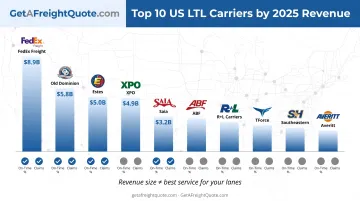
Top 10 LTL Carriers in the US for 2026
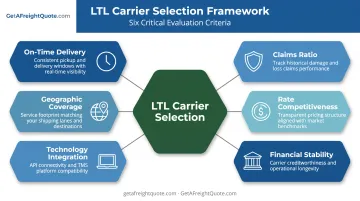
The following rankings evaluate carriers across six critical dimensions: on-time delivery, claims ratio, geographic coverage, rate competitiveness, technology capabilities, and financial stability.
1. FedEx Freight
FedEx Freight operates as part of FedEx Corporation and ranks as the largest LTL carrier by revenue in the US, posting $8.9 billion in fiscal 2025. With approximately 365 service centers across North America, it delivers coast-to-coast coverage and strong integration with FedEx's parcel and express networks.
Why it stands out: Dual-tier Priority and Economy service options let you balance speed and cost on every shipment. API and EDI connections work with major enterprise TMS platforms. Access to FedEx Ground also supports final-mile delivery to residential and limited-access locations that traditional LTL terminals can't reach.
| Attribute | Details |
|---|---|
| Service Coverage | All 50 states, Canada, Mexico, Puerto Rico, US Virgin Islands |
| Best For | Shippers needing national coverage, integrated parcel + freight solutions, and reliable technology integration |
| Key Differentiator | Dual-tier service (Priority vs. Economy) and seamless integration with FedEx Ground for final-mile delivery |
2. Old Dominion Freight Line
Founded in 1934 and headquartered in Thomasville, North Carolina, Old Dominion has become the industry benchmark for reliability. The company reported 99% on-time delivery and a 0.1% cargo-claims ratio in 2025, the lowest claims rate in the industry. It earned its 16th consecutive #1 National LTL Carrier for Quality award from Mastio & Company in 2025.
Why it stands out: Premium pricing is justified by superior service quality. Its 260 service centers provide continental-US coverage, while advanced cloud and AI-powered freight-handling technology minimizes damage and delays. Old Dominion earned the highest customer score (51.97) in the 2025 Logistics Management Quest for Quality survey.
| Attribute | Details |
|---|---|
| Service Coverage | Continental US, Canada, Mexico, Puerto Rico (limited Alaska/Hawaii service) |
| Best For | High-value, time-sensitive, or damage-prone freight; shippers who prioritize reliability over cost |
| Key Differentiator | Lowest claims ratio in the industry and 16+ consecutive years as #1 National LTL Carrier for Quality |
3. XPO Logistics
XPO Logistics operates as a public company built around technology (NYSE: XPO) with executive offices in Greenwich, Connecticut, and Boston. Its 356 LTL facilities cover approximately 99% of US ZIP codes, with service extending into Canada, Mexico, and the Caribbean.
Why it stands out: AI-powered optimization shapes pricing, linehaul routing, pickup/delivery dispatch, and dock operations. XPO reported a 0.3% damage-claims ratio in 2025, with on-time performance improving each quarter. Its open API platform and real-time tracking make it a strong fit for e-commerce businesses and high-volume shippers requiring tight TMS integration.
| Attribute | Details |
|---|---|
| Service Coverage | US, Canada, Mexico, Alaska, Hawaii, Puerto Rico |
| Best For | E-commerce businesses, retailers, high-volume shippers needing TMS integration and real-time visibility |
| Key Differentiator | Technology-first platform with API access, load optimization tools, and data analytics capabilities |
4. Estes Express Lines
Founded in 1931 by W.W. Estes, this Richmond, Virginia–based carrier remains the largest privately held LTL carrier in North America. Estes operates more than 270 terminals and offers service to all 50 states, Canada, Mexico, Puerto Rico, and the Caribbean. Private ownership allows the company to focus on long-term service consistency rather than quarterly earnings pressures.
Why it stands out: Nearly 7,000 next-day lanes provide competitive transit times across the Mid-Atlantic and Southeast, where Estes has historically concentrated terminal density. The carrier handles industrial, manufacturing, and building-materials freight. Total Quality Logistics named Estes a 2025 Preferred LTL Carrier based on partnership quality, communication, pricing, claims, and service.
| Attribute | Details |
|---|---|
| Service Coverage | All 50 states, Canada, Mexico, Puerto Rico, Caribbean |
| Best For | Mid-Atlantic and Southeast lanes; industrial freight, building materials, and manufacturing components |
| Key Differentiator | Largest privately held LTL carrier; no quarterly earnings pressure allows focus on service consistency and long-term relationships |
5. Saia LTL Freight
Founded in 1924 and headquartered in Johns Creek, Georgia, Saia has expanded aggressively since acquiring 28 former Yellow Corporation terminals in 2023–2024. The carrier now operates a 213-terminal network (as of December 31, 2025) covering the contiguous US, with 2025 revenue of $3.2 billion.
Why it stands out: Rapid network growth created a favorable pricing window as Saia fills newly acquired terminal capacity. The company covers more than 60,000 ZIP codes and reports that 85% of shipments arrive within 48 hours. Strong Southeast and Gulf Coast presence gives it an edge on southern lanes. Saia won the 2026 Logistics Management Quest for Quality National LTL award.
| Attribute | Details |
|---|---|
| Service Coverage | Contiguous US (partner networks extend to Alaska, Hawaii, Puerto Rico, Canada, Mexico) |
| Best For | Southeast and Gulf Coast lanes; shippers seeking competitive pricing from a growing national carrier |
| Key Differentiator | Aggressive post-Yellow expansion; favorable pricing window as Saia fills newly acquired terminal capacity |
6. ABF Freight (ArcBest)
ABF Freight has provided continuous service since 1923 as part of ArcBest Corporation, headquartered in Fort Smith, Arkansas. The carrier operates approximately 239 service centers serving all 50 states, Canada, and Puerto Rico, reaching about 51,000 communities. ABF is a 10-time winner of the American Trucking Association's Excellence in Cargo Claims award.
Why it stands out: ABF handles complex, oversized, and high-value freight requiring special care. Above-average driver compensation correlates with better freight handling and lower damage rates. ABF earned a 2025 Quest for Quality National LTL award. Its managed solutions division supports shippers needing more than standard pickup and delivery.
| Attribute | Details |
|---|---|
| Service Coverage | All 50 states, Canada, Puerto Rico |
| Best For | Complex, oversized, or high-value freight requiring special handling; shippers who value award-winning claims performance |
| Key Differentiator | Industry-leading claims and security record; better-than-average driver pay improves freight care |
7. R+L Carriers
R+L Carriers was founded in 1965 by Ralph L. Roberts and remains family-owned, operating from Wilmington, Ohio. The carrier serves all 50 states, Canada, Puerto Rico, the Dominican Republic, and the Caribbean through more than 100 service centers. R+L has won 12 Logistics Management Quest for Quality awards, including recognition in 2025.
Why it stands out: Liftgate capability on the vast majority of its fleet significantly reduces accessorial costs for locations without loading docks. The carrier claims 99.6% exception-free delivery and provides personalized account management that larger corporate carriers often can't match. Residential, liftgate-required, and dock-restricted deliveries are core strengths.
| Attribute | Details |
|---|---|
| Service Coverage | All 50 states, Canada, Puerto Rico, Dominican Republic, Caribbean |
| Best For | Residential, liftgate-required, or dock-restricted deliveries; shippers who value family-owned stability and personalized service |
| Key Differentiator | Broad liftgate availability significantly reduces accessorial costs for locations without loading docks |
8. TForce Freight (formerly UPS Freight)
TForce Freight operates as part of TFI International following its 2021 acquisition of UPS Freight for approximately $800 million. The carrier serves all 50 states, Canada, Mexico, and Puerto Rico through the legacy UPS Freight terminal network. TForce reported the largest service-performance improvement among major carriers in the 2025 Mastio Survey.
Why it stands out: Accelerated Guaranteed service advertises transit up to three days faster than standard LTL, while the extensive terminal network delivers strong Midwest and East Coast coverage. Competitive pricing following the acquisition makes TForce an attractive alternative for shippers with existing UPS relationships who want to keep using familiar infrastructure.
| Attribute | Details |
|---|---|
| Service Coverage | All 50 states, Canada, Mexico, Puerto Rico |
| Best For | Shippers with existing UPS relationships; Midwest and East Coast regional lanes |
| Key Differentiator | Legacy UPS terminal network and infrastructure; competitive pricing as TForce grows its independent market presence |
9. Southeastern Freight Lines
Founded in 1950 and headquartered in Lexington, South Carolina, Southeastern Freight Lines operates 89 service centers across 13 southern states plus Puerto Rico. The carrier provides extended US coverage through service partners. Southeastern earned a 50.86 score in the 2025 South/South Central Quest for Quality survey.
Why it stands out: Regional density delivers superior on-time performance compared to national carriers on southern lanes. Southeastern reports more than 99.35% on-time service on next-day lanes within its direct-service footprint. Fewer terminal touches reduce damage risk—a critical advantage for fragile or high-value freight moving short to medium distances in the Southeast.
| Attribute | Details |
|---|---|
| Service Coverage | 13 southern states + Puerto Rico; extended US coverage via service partners |
| Best For | Southeast-focused shippers needing next-day regional service; businesses prioritizing local relationships and low damage rates |
| Key Differentiator | Regional density delivers superior on-time performance vs. nationals on southern lanes; fewer touches = less damage |
10. Averitt Express
Averitt Express has operated under current ownership since 1971 from its Cookeville, Tennessee headquarters. The privately held carrier maintains 143 locations serving the Southern US, Canada, Mexico, and the Caribbean. Averitt has been recognized in the Logistics Management Quest for Quality survey for 27 consecutive years, including three awards in 2025 (Quest score 50.81 in the regional category).
Why it stands out: Asset-based regional LTL across the South and Southeast gives Averitt an edge over larger nationals on Tennessee, Florida, and Gulf Coast lanes. The carrier won Clarios' 2024 LTL Carrier of the Year award and pairs local network depth with a strong customer-service reputation. Web shipping tools, EDI, and integrated operations systems support both small-business and enterprise shippers.
| Attribute | Details |
|---|---|
| Service Coverage | Southeast and South-Central US; partner-based North American coverage |
| Best For | Southeast and Gulf Coast regional shipping; businesses valuing local relationships and award-winning service |
| Key Differentiator | Regional depth and customer service reputation; competitive on South-Central lanes and strong in Florida |
How We Chose the Best LTL Carriers
These rankings combine six core criteria: on-time delivery, cargo-claims ratio, geographic coverage, rate competitiveness, technology capabilities, and financial stability.
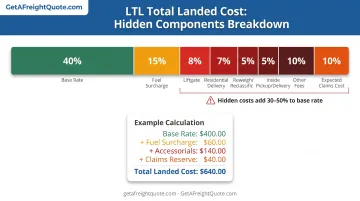
Revenue size and brand recognition were intentionally not primary factors. Large carriers often underperform smaller regional specialists on specific lanes, and the lowest base rate rarely equals true landed cost once accessorials and claims risk are included.
Common mistakes shippers make:
- National averages only – A carrier’s 98% on-time average means little if your Detroit-to-Atlanta lane runs late
- Ignoring landed cost – Base rate + fuel + accessorials (liftgate, residential, reweigh) + expected claims cost is the real expense
- Skipping carrier pilots – Run 5–10 test shipments on a new lane before committing volume
What matters most to small and mid-sized businesses:
- Rate transparency – Know the full cost before booking; avoid surprise accessorials at invoice
- Claims handling – Damage and service-failure claims should resolve quickly without legal escalation
- Terminal proximity – Fewer touches cut damage risk and improve transit time
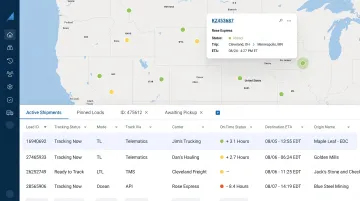
- TMS integration – Quote, book, track, and invoice in one platform instead of multiple carrier portals
The best approach is rarely picking one carrier. Qualify 2–3 carriers by lane, monitor on-time and claims performance, and adjust routing based on results.
Freight brokers with direct carrier integrations (such as GetAFreightQuote.com) automate that comparison. Small and mid-sized shippers get negotiated rates across top carriers in one platform—without juggling separate contracts for every option.
Conclusion
The best LTL carrier depends on your specific lanes, freight type, and service requirements. No single carrier wins everywhere.
Old Dominion leads in reliability and claims performance, XPO excels in technology integration, Southeastern dominates next-day southern lanes, and FedEx Freight offers unmatched national scale with parcel integration. Rate and service quality vary significantly by lane, so national on-time averages tell you less than carrier performance between your origin and destination ZIPs.
Evaluate carriers based on:
- Lane-specific on-time delivery
- Total landed cost (not just base rate)
- Technology and tracking capabilities
Pilot new carriers on a handful of shipments before routing significant volume, and keep at least one qualified alternative for your most critical lanes.
GetAFreightQuote.com gives small and mid-sized businesses the same negotiated carrier rates and enterprise-grade TMS tools that Fortune 500 companies use, without the overhead of managing multiple carrier contracts. You get full rate transparency with no hidden fees and can compare options across 70+ top LTL carriers in one platform. Whether you're shipping three pallets per week or three hundred, you get the same buying power as high-volume shippers, backed by hands-on support and technology that scales with your business.
Frequently Asked Questions
What are the top 10 LTL freight companies?
The top 10 carriers by service quality, coverage, and reliability are FedEx Freight, Old Dominion, XPO, Estes, Saia, ABF, R+L, TForce, Southeastern, and Averitt. The best carrier for your business depends on your specific lanes and freight profile. Regional specialists often outperform nationals on short-to-medium distances within their footprint.
Who are the largest LTL carriers in the US?
By revenue, the largest LTL carriers are FedEx Freight ($8.9B), Old Dominion ($5.5B), Estes ($5.0B), XPO ($4.8B), and Saia ($3.2B) based on 2025 figures. However, "largest" does not always mean "best." Service quality, claims ratio, and lane-specific performance matter more than size for most shippers.
What should I look for when choosing an LTL carrier?
Prioritize on-time delivery rate and claims ratio for your specific lanes, not national averages. Also weigh terminal proximity, total landed cost (base rate + fuel + accessorials), tracking and API integration, and financial stability. Request lane-specific performance data before committing volume.
How do LTL carriers calculate shipping rates?
LTL rates are based on freight class (NMFC classification driven by density and value), shipment weight, origin and destination ZIP codes, distance, and accessorial charges such as liftgate, residential delivery, and inside pickup. Fuel surcharges and accessorials can add 20–40% to the base rate, making total landed cost the true decision metric.
What is the difference between national and regional LTL carriers?
National carriers (FedEx Freight, Old Dominion, XPO) offer coast-to-coast coverage and consistent service standards across all regions. Regional carriers (Southeastern, Averitt) focus on specific geographies and often outperform nationals on short-to-medium lanes within their footprint due to fewer terminal touches, stronger local density, and next-day service on direct lanes.
Can a freight broker get better LTL rates than going direct to a carrier?
Yes. Brokers often secure better rates by aggregating volume across customers, unlocking contracted pricing small and mid-sized shippers can't get alone. They also handle multi-carrier comparison, tracking, and claims, so you spend less time managing carrier relationships.