Cloud-based transportation management systems are changing that dynamic. By pooling volume across hundreds of shippers and delivering enterprise-grade shipping tools through web-based software, these platforms give businesses of all sizes access to carrier rates and logistics capabilities once reserved exclusively for large corporations. The result is measurably lower freight costs, faster shipment execution, and the operational visibility needed to compete in today's market.
Key Takeaways
- Cloud TMS platforms automate planning, carrier selection, execution, tracking, and settlement in one web app
- Small businesses gain Fortune 500-level shipping tools without IT infrastructure investments or internal technical staff
- Cost savings come from better carrier rates, optimized routing, automated documentation, and smarter shipping decisions
- Subscription pricing and vendor-managed maintenance deliver faster go-live, automatic updates, and easy scaling
What Is a Cloud-Based Transportation Management System?
A cloud-based Transportation Management System (TMS) is web-accessible software that manages the entire freight shipping lifecycle from initial planning through final delivery.
Users log in through a web browser to quote shipments, compare carrier rates, book freight, track deliveries, manage documentation, and analyze spending. You don’t install software on company servers or hire IT staff to maintain it.
How It Differs From Legacy Systems
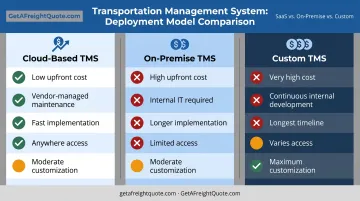
On-premise TMS runs on servers inside your company's facility. You own the hardware, manage the software updates, handle security patches, and staff the technical support. That model requires significant upfront capital investment and ongoing IT overhead.
Cloud-based TMS is hosted by the vendor and accessed via the internet. The vendor maintains the servers, applies security updates, rolls out new features, and manages system performance. You pay a subscription fee and access the platform from any device with an internet connection.
Custom-built TMS is developed specifically for one organization's unique workflows. It offers maximum flexibility but demands the highest cost, longest implementation timeline, and dedicated internal resources to maintain and evolve the system as business needs change.
Core TMS Components
According to Gartner's 2026 category definition, a TMS must support:
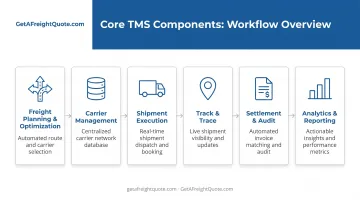
- Freight planning and optimization – Select optimal carriers and routes by cost, speed, and distance, including multi-stop deliveries
- Carrier management – Maintain carrier databases, compare rates in real time, and use platform rates alongside your own carrier accounts
- Shipment execution – Book freight, tender loads to carriers, and communicate pickup and delivery requirements
- Track and trace – Monitor shipment status from pickup through delivery, with automated updates and exception alerts
- Settlement and audit – Match expected charges with actual invoices, identify billing errors, and process payments
- Analytics and reporting – Visualize shipping costs, carrier performance, on-time delivery rates, and cost-saving opportunities
Who Benefits Most
Cloud-based TMS delivers the greatest value to:
- Manufacturers shipping finished goods and raw materials regularly
- Distributors managing daily LTL and FTL freight
- Ecommerce companies handling high parcel volumes
- Retailers balancing parcel and pallet shipments
- Wholesalers coordinating multi-stop deliveries
Any business spending more than $100,000 annually on freight typically sees measurable ROI through reduced carrier rates, improved routing efficiency, and fewer billing errors.
Why "Cloud-Based" Matters
The cloud deployment model removes traditional barriers:
- Accessible from anywhere – Quote and book shipments from the office, warehouse, or remotely
- Vendor-managed maintenance – Security patches, system updates, and infrastructure upgrades happen automatically
- Subscription-based pricing – Pay a predictable monthly fee rather than funding large capital purchases
- Automatic feature updates – New capabilities appear without reinstalling software or coordinating IT projects
In a 2020 study of 126 logistics decision-makers, 36% were already running TMS in the cloud, while another 13% were running on-premise systems and actively evaluating cloud migration. New adopters favor cloud for lower entry barriers and no internal IT support burden.
Key Capabilities of Cloud-Based TMS
Freight Planning and Route Optimization
Cloud TMS analyzes each shipment's weight, dimensions, destination, and delivery timeline to recommend the most cost-effective carrier and route. The system compares current freight rates across multiple carriers, evaluates historical lane performance, and considers carrier availability in real time.
For multi-stop deliveries, the platform sequences stops to minimize empty miles and total transit time. Automated routing and tendering cut manual phone calls and email chains, speeding execution and reducing human error.
Carrier Management and Rate Comparison
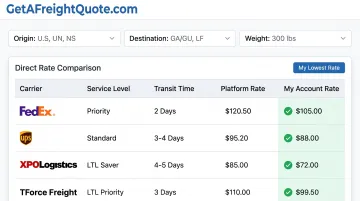
Modern cloud TMS maintains a database of carrier partners (often 100 or more) and displays live rate options side by side. Shippers enter shipment details once and receive instant quotes across parcel, LTL, and FTL carriers, complete with transit times and service levels.
The best platforms also let you integrate your own carrier accounts. If you've negotiated UPS or FedEx rates directly, the TMS compares those rates against its pre-negotiated platform rates and highlights the lowest option. You keep existing carrier relationships and still pay the best available price.
Small businesses should also check whether a platform closes the rate gap with larger shippers. GetAFreightQuote.com resells enterprise TMS technology and pools volume from hundreds of shippers to unlock pre-negotiated rates typically reserved for Fortune 500 volumes.
You can add your own carrier accounts alongside those rates and compare both, so every shipment books at the lowest available cost.
Real-Time Tracking and Visibility
Cloud TMS centralizes shipment tracking across all carriers in one dashboard, providing 24/7 visibility without logging into separate carrier websites. The system delivers automated status updates as shipments move through the network and generates exception alerts when potential delays occur.
A 2023 FreightWaves survey of more than 500 logistics professionals found that only 20% of shippers were satisfied with their shipment visibility, and more than 80% wanted real-time insight into their freight. Cloud TMS closes that gap by consolidating tracking data and surfacing actionable alerts.
Automated Documentation and Compliance
Cloud TMS generates shipping documents automatically from data entered during quoting:
- Bills of lading
- Commercial invoices
- Packing lists
For international shipments, the platform manages customs paperwork and supports cross-border compliance requirements.
The system also tracks Hours of Service compliance for drivers, maintains audit trails for all transactions, and stores documentation electronically. That makes retrieval straightforward during freight claims or billing disputes and cuts the need to dig through emails or file cabinets.
Reporting and Analytics
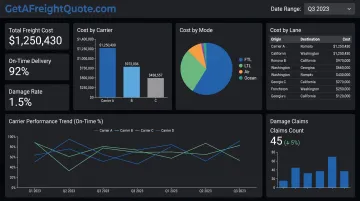
Cloud TMS dashboards visualize shipping costs by carrier, mode, lane, and time period. Users monitor carrier performance metrics such as:
- On-time delivery rates
- Transit-time accuracy
- Damage claims
From there, teams can spot cost-saving opportunities in the data.
Advanced platforms add predictive analytics that flag shipments at risk of delay and recommend carriers based on historical performance. Executive dashboards track savings against baseline costs and surface trends by region or product line.
Benefits of Cloud-Based TMS for Growing Businesses
Cost Efficiency and Predictable Pricing
Cloud TMS uses subscription pricing that eliminates the large upfront license fees required by on-premise systems. You pay a predictable monthly fee based on shipment volume or feature set, avoiding budget surprises.
Operational savings come from several places:
- Better carrier rate access
- Optimized routing that cuts mileage and fuel costs
- Automated documentation that reduces labor hours
- Freight audit tools that recover billing errors
In interviews with TMS users, Nucleus Research found an average 11% reduction in transportation spending. Those savings often self-fund the platform subscription.
Scalability Without IT Overhead
As your business grows, cloud TMS scales with your volume. Add users, raise shipment volume, or turn on new features without buying servers or hiring IT staff. The vendor handles updates, security patches, and infrastructure expansion.
On-premise TMS ties up internal technical resources as shipping complexity grows. Cloud TMS shifts that work to the vendor, so your team can focus on logistics strategy instead of software maintenance.
Improved Carrier Rate Access
Cloud TMS providers negotiate volume-based rates with carriers that individual small businesses couldn't secure alone. By pooling shipments across hundreds of clients, the platform accesses pricing tiers reserved for Fortune 500-level shipping volumes.
The platform then enables instant rate comparison across multiple carriers for every shipment. Rather than accepting the first quote or relying on a single carrier relationship, you compare options and pick the best price on each shipment. Documented savings typically range from 20% to 50% below retail carrier rates for parcel and LTL freight.
Enhanced Operational Visibility
Cloud TMS delivers a centralized view of all shipments across carriers and modes. Instead of checking separate carrier websites or waiting for email updates, your team monitors every load from one dashboard.
Real-time data speeds up decisions. If a shipment is delayed, you know immediately and can alert customers or adjust inventory plans.
Accurate delivery information also:
- Improves customer service
- Reduces inbound status inquiries
- Builds trust through transparency
Cloud-Based vs. On-Premise vs. Custom TMS: Understanding Your Options
| Criteria | Cloud-Based TMS | On-Premise TMS | Custom TMS |
|---|---|---|---|
| Upfront Cost | Low – subscription model | High – software licenses, servers, implementation | Very high – development, testing, deployment |
| Ongoing Maintenance | Vendor-managed – updates, security, infrastructure handled externally | Internal IT team – patches, upgrades, troubleshooting required | Internal IT team – continuous development, bug fixes, feature updates |
| Implementation Timeline | Faster – often weeks | Longer – often months | Longest – often 12+ months |
| Accessibility | Anywhere with internet – web browser access from any device | Limited – typically office or VPN access only | Varies – depends on architecture |
| Customization | Moderate – configurable workflows, limited deep customization | Moderate – some vendor customization possible | Maximum – built to exact specifications |
Why Cloud-Based Systems Are the Preferred Choice for SMBs
Cloud-based TMS has become the default deployment model for small to mid-sized businesses because it removes three critical barriers:
- Lower entry barrier – No capital investment in servers or software licenses; start with a monthly subscription
- Vendor-managed security and compliance – The vendor applies security patches, maintains compliance certifications, and handles infrastructure monitoring
- Faster time-to-value – Begin comparing carrier rates and booking shipments within days or weeks, not months
Flexibility shows up in day-to-day operations too. Teams can access the platform from any location and scale usage up or down without waiting on internal IT, which is a major reason cloud TMS fits growing shippers.
When On-Premise Might Still Be Considered
On-premise TMS remains relevant in specific scenarios:
- Highly specialized workflows requiring extensive customization that exceeds cloud-platform flexibility
- Strict data residency requirements in industries like defense or healthcare where regulations mandate on-site data storage
- Substantial existing IT infrastructure already staffed and maintained, reducing the incremental cost of managing another on-premise system
When Custom TMS Makes Sense
Custom-built TMS is rarely the right first move. It fits organizations with proprietary workflows no commercial platform supports, complex multi-system integrations, and budget for 12+ months of build time plus ongoing internal maintenance. Most shippers get stronger ROI from a configurable cloud platform.
For most growing businesses, the total cost of ownership and operational overhead of on-premise or custom systems outweigh the extra customization. Cloud-based TMS usually wins on speed, cost, and enough flexibility for typical shipping operations.
How to Evaluate a Cloud-Based TMS for Your Business
Choosing a cloud TMS only works if the platform matches how you actually ship—not a generic feature list. Use the checks below to score fit before you buy.
Assess Your Shipping Profile
Before evaluating platforms, quantify your freight requirements:
- Annual freight spend – Total carrier invoices across all modes (parcel, LTL, FTL, international)
- Shipping frequency – Average shipments per day, week, or month
- Average shipment size – Weight and dimensions to determine mode fit
- Geographic scope – Local, regional, national, or international destinations
- Current pain points – Rate visibility gaps, tracking delays, billing errors, manual data entry, carrier communication issues
Document these details to match platform capabilities to your actual needs rather than selecting based on feature lists that may exceed your requirements.
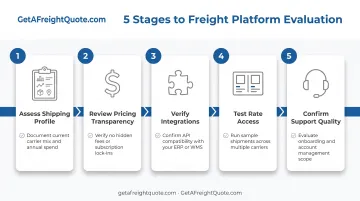
Look for Transparent Pricing and Genuine Rate Access
Verify that the platform provides:
- Clear subscription pricing – Monthly fees stated upfront with no hidden charges
- Access to negotiated carrier rates – Pre-negotiated discounts you could not get on your own, not only a tool that resurfaces your current carrier prices
- Ability to add your own carrier accounts – Connect UPS, FedEx, or LTL accounts you already negotiated so you can compare every rate side by side
- No surprise accessorial fees – Transparency around potential liftgate, residential, or detention charges before booking
Ask vendors for sample rate comparisons using your actual shipment data. If they can't demonstrate measurable savings on your lanes, the platform may not deliver ROI.
Verify Integration Capabilities and Support Quality
Check compatibility with your existing systems:
- Accounting software – QuickBooks, NetSuite, or other ERP platforms to automate freight-cost posting
- Ecommerce platforms – Shopify, WooCommerce, or other order-management systems to synchronize shipments with online orders
- Carrier APIs – Direct connections to carrier systems for real-time rate updates and automated tendering
Confirm the quality of customer support:
- Responsive customer service – Availability during your business hours, response-time commitments
- Implementation assistance – Onboarding process, training resources, dedicated support during setup
- Typical implementation timeline – Realistic estimate from contract signing to full operational use
Beyond support and go-live help, confirm the platform covers the modes and regions you use now and may need later. Gartner recommends testing global rollout and required modes such as parcel, ocean, and rail, since vendors differ widely on international and extended capabilities. If you ship cross-border or plan to expand abroad, verify customs documentation and compliance support in your target regions.
The Future of Cloud-Based TMS Technology
AI and Machine Learning Integration
Cloud TMS platforms are embedding artificial intelligence and machine learning to automate decisions that previously required manual analysis. Emerging applications include:
- Predictive transit times – Algorithms blend historical lane performance, weather, and carrier capacity to forecast delivery dates more accurately than static schedules
- Carrier recommendation engines – Models score past shipments to match lanes with carriers that balance cost, speed, and reliability
- At-risk shipment identification – Real-time tracking plus delay history flags loads likely to miss delivery windows
- Automated exception management – When delays hit, AI suggests alternate carriers or routes and can rebook against your rules
These tools are still maturing, but cloud TMS is already shifting from reactive tracking to real-time decision engines that optimize freight as conditions change.
Democratization of Logistics Technology
The bigger shift is economic. Tools that once required Fortune 500 logistics teams and seven-figure IT budgets now reach businesses of every size through cloud platforms and shared-cost pricing models.
Cloud TMS providers make that possible in three practical ways:
- Pool shipper volume to unlock carrier rates smaller businesses could not negotiate alone
- Host software centrally so enterprise features ride on affordable subscriptions
- Automate rate comparison, documentation, and invoice auditing so shops need fewer specialized logistics hires
The result is a more competitive freight market where small and mid-sized businesses can operate with the same shipping efficiency and carrier rate access as their largest competitors.
Frequently Asked Questions
What is a cloud-based transportation management system used for?
Cloud-based TMS helps businesses plan, execute, and optimize freight shipments. Teams use it to compare carrier rates in real time, track shipments, manage documents electronically, and analyze costs for savings opportunities.
How much does a cloud-based transportation management system cost?
Pricing depends on shipping volume and features. Subscriptions often run from a few hundred dollars a month for small businesses to several thousand for larger operations, and many platforms charge per shipment instead of large upfront license fees.
What's the difference between on-premise and cloud-based TMS?
On-premise TMS runs on company servers and needs internal IT for updates, security, and maintenance. Cloud-based TMS is vendor-hosted and accessed in a browser, so the provider handles maintenance, updates, and security.
How long does it take to implement a cloud-based TMS?
Most cloud-based TMS rollouts take 4–12 weeks, depending on integrations with accounting, e-commerce, or ERP systems. Simpler platforms can offer basic rate-shopping and booking within days of registration.
Do small businesses really need a TMS?
Shippers spending $100,000 or more a year on freight usually see ROI through better rates, efficiency gains, and fewer billing errors. As cloud TMS gets more affordable, that bar keeps dropping for smaller operations.
Can I use my own carrier accounts with a cloud-based TMS?
Most modern cloud TMS platforms let you connect your existing carrier accounts alongside the platform’s rates. You keep current carrier relationships while comparing options so every shipment gets the best available price.