That delivery is inbound freight, and it's often the least-managed part of a company's supply chain. Most businesses obsess over outbound shipping to customers while treating inbound freight as the supplier's problem. It isn't. Left unmanaged, inbound freight quietly drains margins through inflated carrier rates, missed delivery windows, and inventory chaos.
This guide breaks down what inbound freight actually is, walks through the process step by step, compares it to outbound freight, and shares practical ways to take back control of the costs.
Key Takeaways
- Inbound freight includes any materials or supplies shipped into your business from a supplier.
- Though customers never see it, inbound freight shapes production schedules, inventory accuracy, and total cost.
- Suppliers often control carrier selection, meaning businesses can overpay without realizing it.
- Knowing the inbound-outbound split helps you negotiate better terms and consolidate freight spend.
What Is Inbound Freight?
Inbound freight is the transportation of raw materials, components, inventory, or supplies from a supplier, manufacturer, or distribution center into your facility. It's the physical movement side of your supply chain, separate from procurement's buying decision.
That distinction matters. Procurement decides what to order and from whom. Inbound freight determines how that order physically arrives, including which carrier handles it, how long transit takes, and who's on the hook if something goes wrong.
That operational weight is what makes inbound freight foundational: it determines whether your business actually has what it needs to produce, stock, or fulfill orders on schedule. A perfectly negotiated purchase order means nothing if the freight behind it shows up two weeks late.
Common Examples of Inbound Freight
Inbound freight shows up across nearly every industry:
- Shipping raw materials to a manufacturing plant
- Replenishing inventory from suppliers to a warehouse
- Moving parts and components to assembly lines
- Transporting equipment or replacement parts for maintenance
- Delivering packaging materials in bulk
- Receiving bulk goods at a distribution center
Whether you run a small e-commerce operation or a multi-site manufacturer, some version of this list applies to you.
The Inbound Freight Process, Step by Step
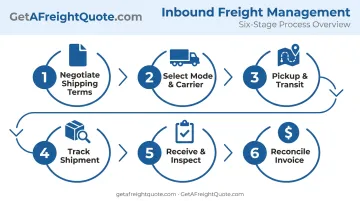
The inbound freight process follows a fairly consistent sequence, regardless of industry or shipment size.
- Set shipping terms before the PO is issued. Negotiate who controls carrier selection and who pays for freight before the purchase order is finalized. This is the single most overlooked step in the entire process.
- Select the mode and carrier. Choose based on cost, transit time, and the nature of the goods, whether that's parcel, LTL, or full truckload.
- Pickup and transit. The carrier takes possession of the freight and moves it toward your facility.
- Track the shipment. Monitor status and flag exceptions before they become delivery-day surprises.
- Receive and inspect at the dock. Check quantity and condition against what was ordered, and document any discrepancies immediately.
- Reconcile the invoice. Audit the freight bill against contracted rates, accessorials, and fuel surcharges before payment. Freight audit software flags these discrepancies automatically, catching overcharges that manual review often misses.
Three documents matter at nearly every stage of this process:
- Bill of lading: the carrier's receipt and contract of carriage
- Freight bill: the invoice listing actual transport charges
- Delivery receipt: signed by the consignee to confirm what arrived and in what condition
Get any of these wrong, and you're stuck disputing a claim months after the truck has left.
Why Inbound Freight Management Matters
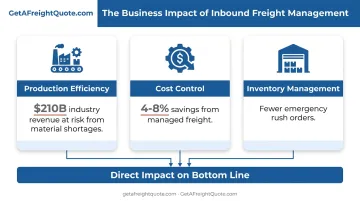
Inbound freight looks like a back-office detail until it isn't. Three factors show why it deserves the same attention as customer-facing logistics.
Production Efficiency
Late or incomplete inbound shipments stall production lines fast. The scale of this risk isn't hypothetical.
During the 2021 semiconductor shortage, AlixPartners forecast that materials disruptions would cost the global automotive industry $210 billion in revenue and 7.7 million units of lost production. That's an extreme, industry-wide example, but the underlying mechanism applies at any scale: no inbound materials means no output.
Cost Control
Many suppliers select the carrier and pass freight costs straight to the buyer, often at inflated rates. Gartner research cited by Inbound Logistics found that shippers who actively manage inbound freight themselves save 4% to 8% compared to leaving it in the supplier's hands.
That's real money sitting on the table for businesses that never renegotiate who controls the truck. Managed freight programs, such as GetAFreightQuote.com's Managed LTL Services, put that control back in the buyer's hands through direct carrier procurement.
Inventory Management & Supplier Reliability
Late or inaccurate inbound deliveries throw off safety stock levels and reorder points, often forcing costly emergency replacement orders at rush freight rates just to keep the line running.
Poor communication with vendors adds to the strain: wrong quantities, damaged packaging, and missing paperwork create friction that compounds over dozens of shipments a year.
Together, these factors prove inbound freight isn't background noise. It has a direct, measurable effect on your bottom line.
Inbound vs. Outbound Freight: What's the Difference?
Inbound and outbound freight move in opposite directions, and they're typically controlled by different parties.
| Factor | Inbound Freight | Outbound Freight |
|---|---|---|
| Direction | Moves toward your business | Moves away from your business |
| Typical control | Supplier-controlled | Shipper-controlled |
| Cost responsibility | Set by freight terms (FOB origin vs. destination) | Set by your own shipping policy |
| Accounting treatment | Freight-in is added to inventory cost | Freight-out is generally expensed as incurred |
| Primary impact | Production schedules and inventory accuracy | Customer satisfaction and delivery performance |
Freight terms decide who pays. Under FOB origin, cost and risk transfer to the buyer once the carrier takes possession. Under FOB destination, the seller carries both until the goods physically arrive. Negotiating these terms upfront can shift meaningful cost and risk in your favor.
The common mistake: treating inbound and outbound freight as two separate, unrelated functions, especially after negotiating favorable terms on paper. In reality, combining volume across both directions often unlocks better overall carrier rates, since carriers value predictable, consolidated freight more than isolated one-off shipments.
GetAFreightQuote.com's Managed LTL Services build this consolidation into carrier negotiations, turning scattered volume into pricing leverage.
Common Inbound Freight Challenges
Even businesses that recognize the importance of inbound freight run into the same recurring problems.
- Limited visibility. When multiple vendors each use their own carriers, tracking becomes a patchwork of portals and phone calls instead of one clear view.
- Damage and delay from unfamiliar carriers. Suppliers sometimes default to the cheapest available carrier rather than the most reliable one, and that shows up in freight claims.
- Freight cost buried in product cost. Supply Chain Management Review notes inbound freight can run "perhaps 10% of material cost," often hidden in prepaid invoices the buyer never sees.
These challenges share a root cause: businesses ceding control of a cost center they don't have to give up.
How to Control Inbound Freight Costs (and Choose the Right Partner)
Regaining control of inbound freight starts before the purchase order is even signed.
- Negotiate shipping instructions upfront. Avoid vague language like "best way" on a PO, which usually tells the supplier to pick whatever's cheapest for them, not most reliable for you.
- Take over carrier selection. Rather than defaulting to supplier-arranged freight, route shipments through your own negotiated carrier accounts.
- Consolidate shipments. Combining inbound loads across vendors and locations unlocks volume-based pricing that individual shipments never reach.
Smaller businesses have historically struggled here. Fortune 500 shippers negotiate deep carrier discounts and run enterprise TMS platforms; a mid-sized manufacturer or distributor typically can't justify that same technology spend on its own.
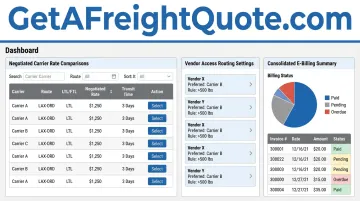
That gap is exactly what GetAFreightQuote.com was built to close. As an authorized reseller of a leading TMS platform, it gives small and mid-sized businesses:
- Negotiated carrier rates averaging 20–50% below retail across parcel, LTL, and FTL
- Vendor Access routing, letting suppliers ship on your own account instead of theirs
- Bring Your Own Rates, so your existing carrier contracts get compared side-by-side against platform rates on every shipment
- Consolidated e-billing and automated freight audits that catch incorrect classifications, unapproved accessorials, and duplicate charges before you pay
- A TMS implementation valued at $150,000–$250,000, included at no additional cost, with a dedicated operations team managing it
Businesses pursuing dedicated inbound LTL negotiation can also tap the Managed LTL Services program, which runs an 8–10 week benchmarking and bid process. It has generated over $500 million in collective client savings and typically delivers 15–35% in rate reductions.
Because it's paid through carrier-funded Off-Bill Incentives, the client keeps 100% of the savings with no line-item fee on their books.
If you're not sure which approach fits your shipment volume, GetAFreightQuote.com's team can walk through your inbound freight profile directly.
Frequently Asked Questions
What is inbound freight?
Inbound freight is any shipment of raw materials, components, or supplies moving from a supplier or vendor into a business's facility. It's a core part of supply chain operations that keeps production and inventory running on schedule.
What is the inbound freight process?
The process runs through setting shipping terms, selecting a carrier and mode, transit and tracking, then receiving and inspecting goods on arrival. Invoice reconciliation closes out the cycle, verifying the freight bill matches what was actually shipped.
What is the difference between inbound and outbound freight?
Inbound freight moves goods into your business and is usually supplier-controlled. Outbound freight moves goods out to customers and is controlled by your own shipping policy.
Who pays for inbound freight costs?
It depends on the negotiated freight terms, such as FOB origin versus FOB destination. Many buyers have more control over this than they realize, but only if they negotiate it before the PO is issued.
Is inbound freight part of the cost of goods sold (COGS)?
Yes. Companies typically capitalize freight-in into inventory cost, which then flows into COGS once the inventory sells, rather than expensing it immediately.
How can businesses reduce inbound freight costs?
Reduce inbound freight costs by:
- Taking control of carrier selection instead of leaving it to suppliers
- Consolidating shipments to qualify for volume pricing
- Using a TMS platform with negotiated rates, such as GetAFreightQuote.com, to access enterprise-level pricing without enterprise-level volume