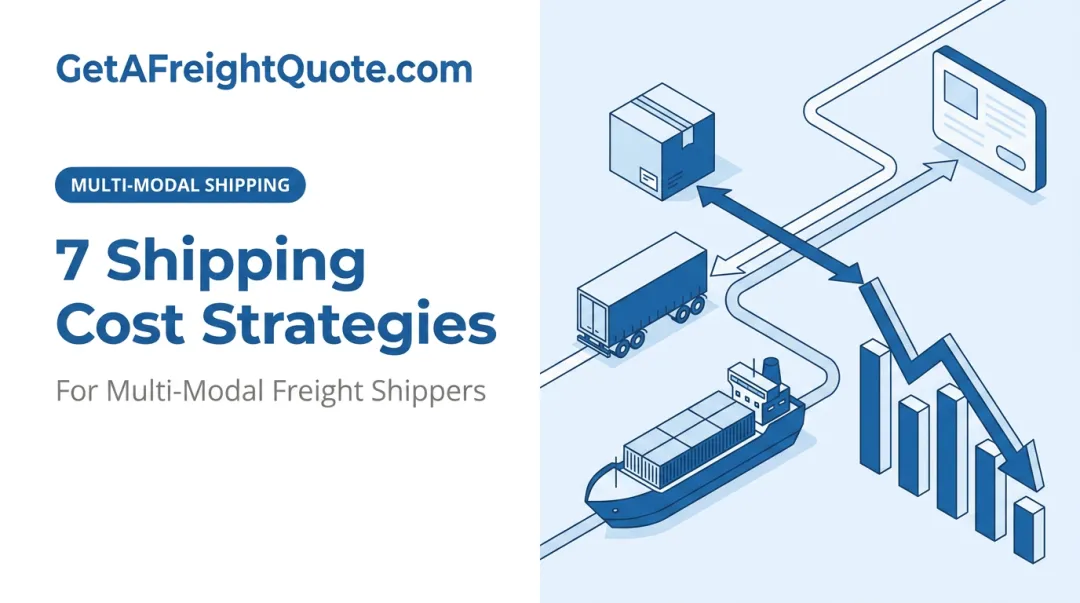
This pricing inequity forces small businesses to operate at a structural disadvantage. But shipping optimization—the systematic process of reducing costs and improving efficiency across every stage of the shipping process—offers a practical path forward. By combining smart technology, data-driven decisions, and strategic carrier relationships, small businesses can close the rate gap and compete more effectively without needing enterprise-level shipping volume.
Key Takeaways
- Shipping optimization typically reduces costs by 10-30% without sacrificing delivery speed or customer satisfaction
- Small businesses can now access enterprise-grade shipping tools and negotiated carrier rates that were previously out of reach
- Starting with just 2-3 optimization tactics delivers immediate savings while building toward a comprehensive strategy
- Combining technology, smart packaging, and strategic carrier relationships multiplies savings beyond any single tactic
What is Shipping Optimization and Why It Matters for Small Businesses
Shipping optimization is the systematic process of reducing costs and improving efficiency across every stage of the shipping process, from carrier selection to final delivery.
The Council of Supply Chain Management Professionals (CSCMP) places this work inside logistics management: planning, implementing, and controlling efficient forward and reverse flows while coordinating the activities around them.
For small businesses, that process matters more than it does for large corporations. Both may ship the same products through the same carriers, but smaller shippers face structural disadvantages:
- Higher per-unit costs from lower shipment volume
- Less negotiating leverage with major carriers
- Tighter margins, so every shipping dollar hits profit harder
The reality: UPS structures Ground incentives from 37% for shippers averaging 1-10 weekly packages up to 49% for those shipping 51+ packages per week. Volume directly influences published commercial pricing, creating a measurable advantage for larger shippers.
Done well, shipping optimization uses rate shopping, carrier data, and smarter service choices so you can lower cost per shipment without giving up delivery reliability, even when your volume is limited.
Core Shipping Optimization Strategies
Optimize Your Packaging to Reduce Dimensional Weight Charges
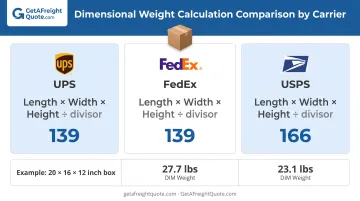
Carriers charge based on dimensional (DIM) weight, not just actual weight. If your package is large but lightweight, you'll pay based on the space it occupies in the truck. This pricing method penalizes inefficient packaging.
How dimensional weight is calculated:
- UPS: Length × Width × Height ÷ 139 (Daily Rates)
- FedEx: Length × Width × Height ÷ 139 (Dimensional Weight Guide)
- USPS Ground Advantage (Commercial): Length × Width × Height ÷ 166 for packages over 1,728 cubic inches (USPS DMM)
Actionable steps to reduce DIM weight charges:
- Measure your 10 most common products and identify 3-5 standard box sizes that minimize wasted space
- Train fulfillment staff on right-sizing principles: use the smallest box that safely fits the product
- Eliminate excessive void fill materials that increase package dimensions
- Consider custom packaging for high-volume SKUs to maximize density
By avoiding oversized boxes, you avoid DIM weight surcharges that can silently inflate costs by 10-25%.
Consolidate Shipments to Maximize Efficiency
Combining multiple small shipments into fewer, fuller loads reduces per-unit shipping costs. Consolidation takes advantage of volume-based pricing tiers and improves truck utilization.
Practical consolidation tactics:
- Set shipping schedules by region—ship orders to the same geographic area on specific days
- Use zone skipping for high-volume routes (bypass local carrier hubs and inject freight closer to the destination)
- Batch orders strategically rather than shipping every order the moment it's packed
Fewer shipments mean lower fuel costs, fewer carrier pickups, and better use of available trailer space. For businesses with predictable order patterns, consolidation can be one of the fastest wins.
Choose the Right Shipping Speed for Each Order
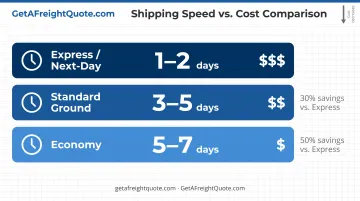
Many businesses default to expedited shipping, assuming customers always want the fastest option. Not every shipment needs next-day delivery. Research on delivery speed and supply chain responsiveness shows reliability often matters as much as raw transit time.
Key insight: Economy shipping options can be 30-50% cheaper than express. Many customers will accept 3-5 day delivery if the price is right, especially for non-urgent orders.
Recommended approach:
- Offer customers shipping speed choices at checkout so they can self-select based on urgency and price sensitivity
- Use express shipping for time-sensitive or high-value orders where delivery speed justifies the cost
- Default to economy or standard ground for routine replenishment orders
Letting customers choose often cuts average shipping cost without hurting satisfaction.
Negotiate Carrier Contracts Even with Low Volume
Small businesses often assume negotiation is only for high-volume shippers. That's a myth. While volume helps, consistency and strategic positioning also create leverage.
Negotiation tactics for low-volume shippers:
- Leverage your consistency—even modest regular volume demonstrates reliability
- Ask about regional discounts if most of your shipments go to specific zones
- Request accessorial fee waivers for services you don't use (residential delivery surcharges, liftgate fees)
- Demonstrate knowledge of competitor rates to create pricing pressure
Alternative approach: Work with freight brokers or shipping platforms that use pre-negotiated rates built on aggregated volume across many small shippers. The U.S. Commerce Department notes that shipper associations pool member volumes so the combined freight can unlock carrier discounts.
Platforms like GetAFreightQuote.com aggregate customer volume the same way and negotiate rates typically 20-50% below retail. Small businesses get pricing power closer to large corporations without Fortune 500-level volume.
Leveraging Technology for Shipping Efficiency
Technology once reserved for enterprise logistics is now within reach for small businesses—often at a monthly cost less than a single misrouted freight bill. Cloud platforms mean you can compare carriers, print labels, and track spend without standing up IT infrastructure.
Use Multi-Carrier Rate Shopping to Find the Best Price Every Time
Different carriers offer better rates for different package sizes, weights, and destinations. LTL pricing varies by lane, and carriers maintain different base rates, discount schedules, and accessorial fees. No single carrier wins on every shipment.
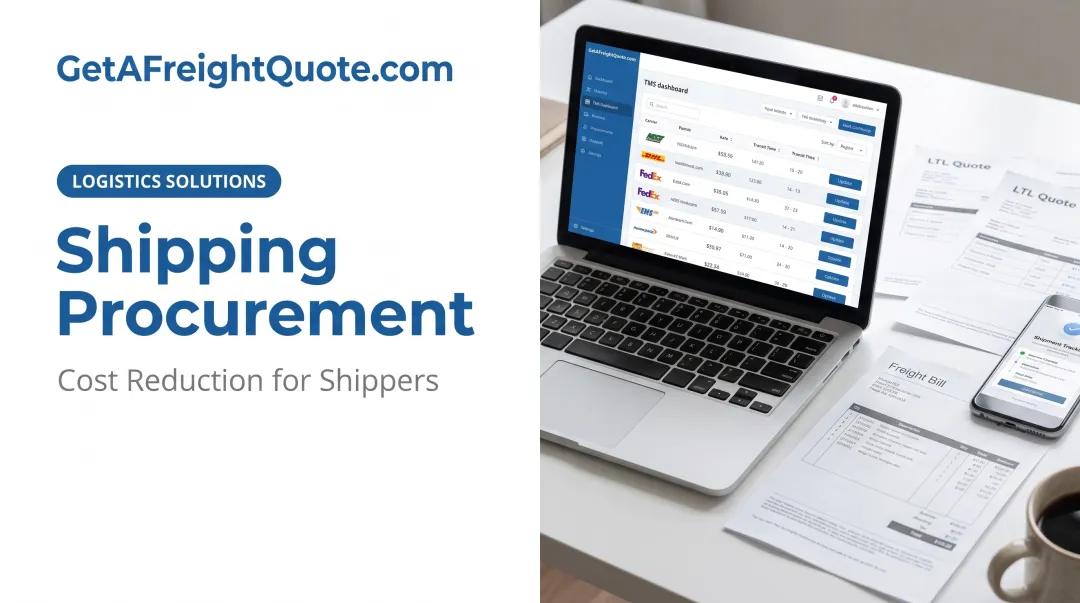
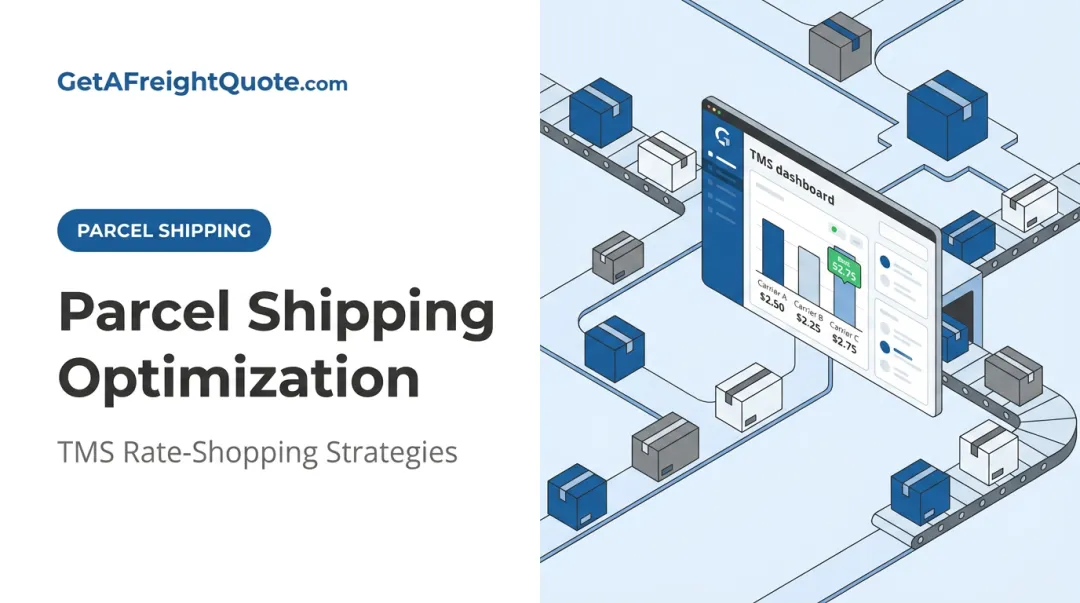
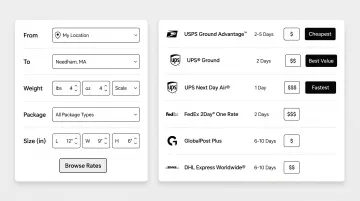
Rate shopping tools automatically compare options across USPS, UPS, FedEx, and regional carriers in real-time. Instead of manually checking multiple carrier websites, you see side-by-side pricing and transit times for each shipment.
That comparison keeps you on the lowest available rate. USPS often wins on packages under 1 lb; a regional carrier may beat national rates on a 150-lb LTL move into a specific metro.
GetAFreightQuote.com surfaces pre-negotiated rates across 100+ carriers next to any accounts you already hold, so small businesses can book the least-cost option with the same pricing leverage larger shippers use.
Implement a Transportation Management System (TMS) Scaled for Small Business
A Transportation Management System (TMS) is software that supports multimodal sourcing, planning, and execution of physical transportation. For small businesses, a TMS centralizes carrier selection, label printing, tracking, and reporting in one place.
What a right-sized TMS delivers:
- Eliminates manual data entry and cuts shipping errors
- Shows spend by carrier, mode, and time period
- Frees hours each week by automating repetitive tasks
- Surfaces performance reports that flag cost-saving opportunities
You sign in online, connect your ecommerce or order system, and start booking—no servers, no lengthy IT project.
Automate Repetitive Shipping Tasks
Automation reduces labor costs and speeds up fulfillment, allowing small teams to handle higher order volumes without adding headcount.
High-impact tasks to automate first:
- Generate shipping labels as soon as an order confirms
- Send tracking notifications to customers without manual follow-up
- Push real-time order status back into your system
- Route each shipment to the best carrier using rules for weight, destination, and service level
Your team then spends time on exceptions and customer issues—not copy-paste label work.
Cost Management and Carrier Relationships
Understand and Minimize Hidden Fees (Accessorials)
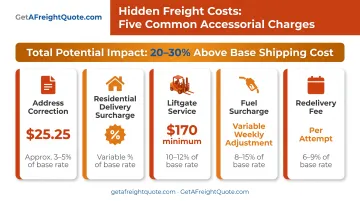
Accessorial charges are extra fees carriers add for services beyond standard pickup and delivery. Common examples include residential delivery, liftgate use, address corrections, and fuel surcharges. These fees can add 20-30% to your base shipping cost if not monitored.
Examples of accessorial charges:
- Address correction: UPS charges $25.25 for package and Worldwide Express Freight services when a shipment has an incorrect or incomplete address
- Liftgate service: UPS North American Air Freight charges $14/cwt with a $170 minimum for sites without a dock
- Fuel surcharges: UPS Ground fuel surcharge is indexed weekly to the EIA's national on-highway diesel price; Domestic Air uses Gulf Coast jet fuel
How to minimize accessorials:
- Conduct a quarterly invoice audit to identify recurring charges
- Ensure accurate, complete addresses before shipping (use address validation tools)
- Avoid residential surcharges by using commercial addresses when possible
- Communicate delivery requirements clearly to avoid redelivery or appointment fees
Conduct Regular Freight Invoice Audits
Carrier invoices often disagree with what you actually shipped. Mismatched actual vs. DIM weight, wrong service levels, and duplicate line items are common sources of overcharges.
What to look for during audits:
- Incorrect weights (actual or dimensional)
- Duplicate charges for the same shipment
- Applied surcharges that don't match your contract terms
- Accessorials billed without a matching service event
Recommended approach: Use audit tools or a freight audit service to flag discrepancies automatically and recover overcharges. Even a 2-3% error rate adds up fast over a full year of freight spend.
Build Strategic Relationships with Carriers
Once invoice leakage is under control, the next cost lever is how carriers treat you when capacity tightens. Treating them as partners—not only vendors—improves service and priority when space is scarce.
Tactics to build carrier relationships:
- Maintain consistent shipping volume so carriers view you as reliable
- Communicate proactively about seasonal spikes or changes in volume
- Provide feedback on service issues professionally and constructively
Carriers that see you as a reliable account are more likely to concede on rate, prioritize your freight in peak season, and help when something breaks in transit.
Diversify Your Carrier Mix to Reduce Risk
A strong primary relationship still should not mean a single point of failure. One carrier leaves you exposed to outages, sudden rate hikes, and capacity shortages that can stop shipments with little warning.
How to spread the risk:
- Keep 2-3 active carriers across tiers (national, regional, last-mile specialists)
- Shift volume based on performance, rates, and available capacity
- Make it clear each carrier is competing for share—that leverage shows up at renewal
Split volume this way and you keep freight moving when one network stumbles, and you negotiate from options instead of dependence.
Measuring and Improving Shipping Performance
Clear shipping metrics turn rate shopping, carrier switches, and packaging changes from guesswork into decisions you can defend. Track a short KPI set, then review it on a fixed cadence.
Track Key Shipping Metrics to Identify Opportunities
The most important KPIs for small businesses:
- Cost per shipment – Average shipping cost per order or package
- On-time delivery rate – Share of packages delivered by the promised date
- Average delivery time – Mean transit time from pickup to delivery
- Shipping cost as a percentage of order value – Freight cost relative to order value (flags margin erosion)
- Carrier performance by route – On-time rate, damage rate, and cost by lane
These metrics reveal optimization opportunities. For example, high cost-per-shipment in certain zones might indicate the need for a different carrier or consolidation strategy.
Implement a Continuous Improvement Process
Shipping optimization works best as a recurring discipline, not a one-off project.
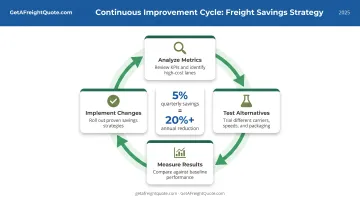
Quarterly shipping review process:
- Analyze your key metrics and identify your highest-cost shipping lanes
- Test alternative strategies (different carriers, shipping speeds, packaging)
- Measure results and compare against baseline
- Implement changes that deliver measurable savings
Small gains compound. A 5% cost cut each quarter can stack into double-digit annual savings without a full network redesign.
Frequently Asked Questions
What is optimization in logistics?
Logistics optimization improves efficiency and cuts costs across the supply chain, from inventory management to transportation and final delivery. It relies on data, technology, and strategic planning to drive better operational decisions.
How can small businesses negotiate better shipping rates with carriers?
Small businesses can negotiate by demonstrating shipping consistency, bundling services, and requesting regional discounts. Alternatively, work with platforms that aggregate volume across multiple shippers to access pre-negotiated enterprise rates.
What is dimensional weight pricing and how can I reduce its impact?
Dimensional weight is a pricing method where carriers charge based on package size rather than actual weight. Reduce its impact by right-sizing packaging, using custom boxes that minimize empty space, and avoiding oversized packaging materials.
What technology do I need to start optimizing my shipping costs?
Start with a cloud-based TMS or shipping platform for rate comparison and label generation. Add basic analytics to track shipping spend, plus integration with your ecommerce or order management system for automation.
How much can I realistically save by optimizing my shipping process?
Most small businesses can reduce shipping costs by 10-30% through a combination of better carrier rates, packaging optimization, rate shopping, and reducing accessorial charges. Larger savings are possible for businesses with significant shipping volume.
What's the difference between a freight broker and a TMS platform?
A freight broker negotiates and arranges shipments on your behalf, acting as an intermediary. A TMS platform is software that gives you the tools to manage shipping yourself. Some platforms like GetAFreightQuote.com combine both by providing access to pre-negotiated broker rates plus TMS functionality.