Small parcel shipping covers individual packages moved through carrier networks like USPS, UPS, FedEx, and DHL. Understanding how it works, and how it differs from freight, is the difference between predictable shipping costs and constant margin erosion.
This guide breaks down what small parcel shipping actually is, when it makes sense versus freight (LTL), and practical ways to cut your shipping spend.
Key Takeaways
- Small parcel shipping covers packages under 70-150 lbs via carrier sortation networks
- Freight/LTL often becomes cheaper once a shipment nears 150 lbs or 108 inches
- Accessorial fees like Large Package surcharges can quietly double your shipping cost
- Mid-sized and smaller businesses can access enterprise-grade rates through the right platform
What Is Small Parcel Shipping?
Small parcel shipping refers to individual package shipments, typically under 150 lbs, that move through a carrier's sortation network rather than on a pallet. A parcel's journey usually looks like this:
- Pickup from your business or a drop-off location
- Hub sorting, where the package is scanned and routed
- Regional facility processing based on destination zone
- Last-mile delivery to the final address

Weight and Size Thresholds
Carriers draw firm lines around what counts as "small parcel":
- USPS Ground Advantage: up to 70 lbs, with a 130-inch length-plus-girth maximum
- UPS: maximum 150 lbs, 108 inches in length, 165 inches length plus girth
- FedEx: maximum 150 lbs, 108 inches in length, 165 inches length plus girth
Cross those lines, and you're pushed into freight territory, often at a much higher per-package accessorial cost.
Dimensional Weight Pricing
Here's where a lot of businesses get caught off guard. Dimensional (DIM) weight pricing charges you based on the box's size, not just its actual weight.
Carriers calculate length × width × height, divide by a set factor (139 for many current methods), and bill whichever number is higher: actual weight or DIM weight. Ship a light but bulky item, and you may pay for a package that "weighs" three times more than what's on the scale.
US parcel volume hit roughly 23.1 billion shipments in 2025, according to Pitney Bowes' Parcel Shipping Index. At that scale, small differences in box size and carrier DIM rules add up fast, so comparing thresholds before you ship matters as much as the rate on the label.
Small Parcel vs. Freight (LTL): Which Should You Use?
The core distinction is simple: parcel moves individual packages through a sortation network, while freight (LTL) consolidates palletized shipments from multiple shippers in one trailer.
Where the Line Gets Drawn
Most carriers and industry bodies point to similar breakpoints:
- Weight approaching or exceeding 150 lbs
- Length over 108 inches
- Length plus girth over 165 inches
According to the National Motor Freight Traffic Association, parcel is typically the better choice below 150 lbs, while LTL commonly handles freight from 150 lbs up to 10,000 lbs — usually palletized.
Why Oversized "Parcels" Get Expensive Fast
An oversized box that technically qualifies as a "small parcel" can trigger accessorial charges that make it more expensive than sending the same item via LTL freight. UPS's 2026 rate guide shows just how steep this gets:
| Surcharge | Trigger | Cost (Zone 2 to 7+) |
|---|---|---|
| Large Package | Over 130" length+girth or 96" length | $219.50–$331 |
| Additional Handling | Weight, dimension, or packaging trigger | $26.75–$58.75 |
| Over Maximum Limits | Over 150 lbs, 108", or 165" combined | $1,875 flat |

A single Over Maximum Limits fee can wipe out weeks of shipping savings on other orders.
Common Accessorial and Surcharge Fees to Watch
Beyond the big ones above, watch for these recurring charges that erode margins:
- Residential delivery surcharges on home deliveries
- Fuel surcharges that fluctuate monthly
- Additional Handling fees for irregular shapes or soft packaging
- Address correction fees for incomplete shipping data
Quick Decision Guide
- Use parcel for single small orders, residential deliveries, and e-commerce fulfillment
- Use freight/LTL for multiple pallets, oversized items, or shipments nearing carrier weight/size limits
- Price both modes when a shipment sits near the 150 lb or dimensional breakpoints; accessorials can reverse which option costs less
Best Carriers for Small Parcel Shipping
Not every carrier fits every shipment. Here's how the main options compare:
- USPS — Best for lightweight packages under a few pounds; often the cheapest option for small items
- UPS Ground — Reliable ground delivery in 1–5 business days across all 50 states
- FedEx Ground — Comparable 1–5 business day ground coverage to business addresses nationwide
- Regional carriers (OnTrac, GLS, LSO, Spee-Dee) — Worth considering if your shipping volume concentrates in specific regions
Rate differences between these carriers can be significant for the same package. Comparison shopping across carriers is the real cost-control lever.
Benefits and Challenges of Small Parcel Shipping
The Upside
- Visibility: Tracking is built into nearly every carrier service, so you and your customer both know where a package is.
- Flexibility: No minimum volume requirements, making it ideal for direct-to-consumer and low-volume orders.
- Speed: Most domestic parcels move in 1–5 business days without booking a full freight shipment.
- Reach: Carriers deliver to nearly any business or residential address nationwide.
The Downside
Small businesses face two persistent problems:
- Limited negotiating power. Smaller shippers rarely unlock the contract discounts large accounts negotiate.
- More touchpoints, more risk. Each hub and hand-off is a chance for delay or damage, something that doesn't happen with a single palletized LTL shipment.
A 2022 PARCEL Industry survey found that 42.86% of smaller shippers didn't analyze their pricing at all, versus 15.38% of large shippers. Larger shippers also secured deeper discounts: up to 70% off at higher weight breaks, compared with roughly 60% for smaller shippers at lower weights.

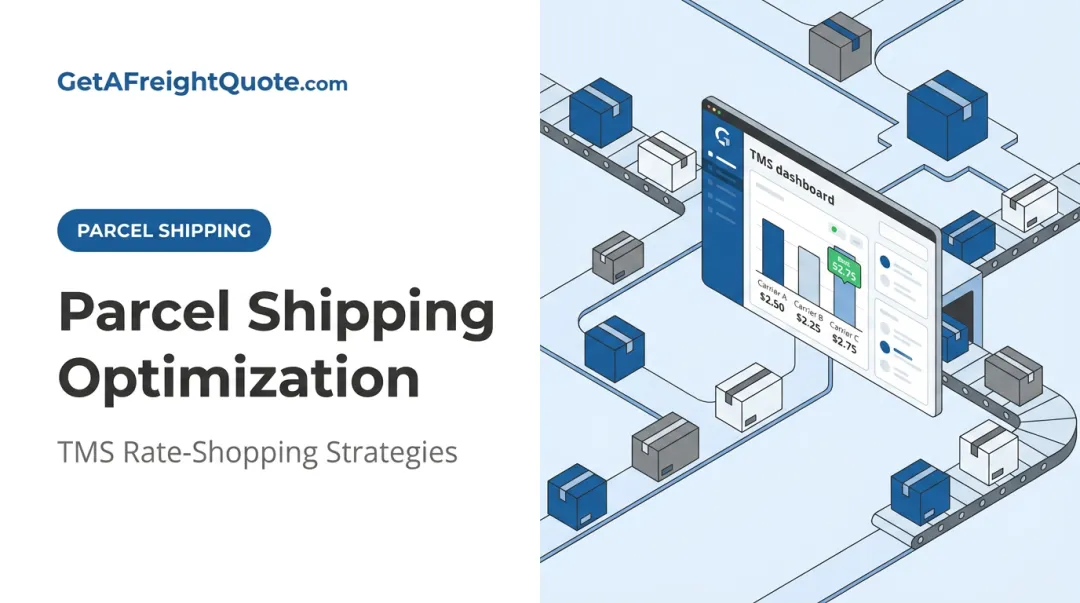
GetAFreightQuote.com was built to close that gap. Its TMS lets you connect your own UPS or FedEx accounts and rate-shop them next to pre-negotiated rates, pooling volume across many shippers so you can reach pricing that is hard to get alone.
How to Lower Your Small Parcel Shipping Costs
Compare Rates Before You Book
The single most effective lever is comparing rates across carriers before clicking "ship." A rate that looks competitive from one carrier might be 20% higher than another for the exact same box, zone, and speed.
Demand Full Rate Transparency
Review your invoices regularly. Look for:
- Accessorial charges that don't match your actual package dimensions
- Duplicate or misapplied surcharges
- Fuel surcharge rates that don't match published tables
Access Enterprise-Level Rates
Small businesses rarely unlock Fortune 500 carrier pricing on their own. GetAFreightQuote.com is an authorized reseller of a leading TMS platform that combines:
- Negotiated USPS, UPS, and FedEx rates typically 20-50% below retail
- Full rate visibility before booking, so there are no surprises
- The ability to compare your own carrier accounts against negotiated rates in one interface
Its QuickShip tier, built for businesses shipping 0–3 shipments a week, charges no label fee. You pay the carrier rate only and still get the same rate comparison tools higher-volume shippers use.

For businesses that want more hands-on support, GetAFreightQuote.com's parcel advisory service operates on an Off-Bill Incentive model. There is no upfront cost, and compensation comes only from a share of the savings generated. Clients keep the savings; the company gets paid only after results show up.
Audit Your Shipment Data Regularly
Set a recurring calendar reminder, monthly or quarterly, to review:
- Which packages are creeping toward the 150 lb or 108-inch thresholds
- Whether recurring shipments would be cheaper as LTL freight
- Which accessorial fees appear most often on your invoices
Tools like ParcelSpend Intelligence turn this raw shipment data into actionable flags, helping identify billing errors and cost patterns before they become a recurring drain.
Frequently Asked Questions
What is small parcel freight?
Small parcel freight refers to individual packages, typically under about 150 lbs, shipped through carrier networks like USPS, UPS, FedEx, or DHL. It's distinct from palletized LTL freight, which consolidates multiple shipments in one trailer.
How big is considered a small parcel?
Most carriers set the threshold at under 70-150 lbs, with dimensions generally under 108 inches in length. Exceeding these limits usually pushes a shipment into freight/LTL territory.
How much does small parcel shipping cost?
Costs vary widely, from around $8 for a lightweight USPS package to $100 or more depending on weight, distance, dimensional weight, and delivery speed. Accessorials such as residential, delivery-area, and peak surcharges can raise the final bill further.
When should I switch from parcel to freight shipping?
Consider freight once a shipment approaches 150 lbs, 108 inches in length, or requires multiple boxes to one destination. These shipments are often cheaper moved as LTL freight than as oversized parcel.
How can small businesses get better small parcel shipping rates?
Compare rates across carriers on every shipment and audit invoices for hidden accessorial fees. A TMS rate-shopping platform like GetAFreightQuote.com lets you stack pre-negotiated pricing next to your own carrier accounts and pick the lowest rate.
What's the difference between small parcel and LTL freight?
Parcel moves individual packages through a carrier's sortation network with per-package pricing. LTL consolidates palletized freight from multiple shippers into one trailer, priced by weight, density, and freight class.