For first-time shippers, though, "dry van" can feel like a vague catch-all. Is it right for your product? What does it cost? Many shippers end up overpaying for specialized equipment they didn't need, or worse, booking a dry van for freight it was never built to handle.
This guide breaks down what dry van shipping actually is, what freight belongs in one, the real pros and cons, how it stacks up against reefers and flatbeds, and what actually drives your rate. By the end, you'll know exactly how to book with confidence.
Key Takeaways
- Dry vans are enclosed, non-temperature-controlled trailers for palletized, boxed, or shelf-stable freight
- Standard 53-foot trailers offer about 3,400 cubic feet, fitting both FTL and LTL shipments
- This equipment is affordable and widely available, but unsuited for perishables or oversized loads
- Rates vary by lane, season, and capacity, so comparing quotes helps you avoid overpaying
What Is Dry Van Shipping?
Dry van shipping means transporting goods inside a fully enclosed, rectangular semi-trailer that shields cargo from rain, road debris, and theft. There's no temperature or humidity control — the trailer simply keeps freight dry and secure, nothing more.
That simplicity is exactly why dry van is the workhorse of American trucking. It's used across both full truckload (FTL) shipments, where one company's freight fills the trailer, and less-than-truckload (LTL) shipments, where multiple shippers' goods share space.
Dry Van Trailer Types & Dimensions
Not every dry van is built the same. Here's how the main configurations break down:
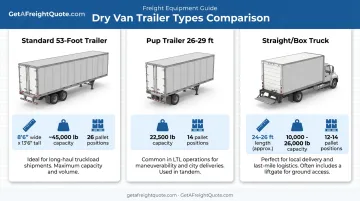
- Standard 53-foot trailers: The industry benchmark at 8'6" wide and 13'6" tall outside, with an inside of about 101" wide and 110" tall, per Penske's trailer specification guide. Shippers typically plan for around 45,000 pounds and 26 pallet positions.
- "Pup" trailers (26–29 ft): Shorter trailers used in LTL networks or paired as "doubles." ArcBest cites a 28-foot pup carrying up to 22,500 pounds across 14 standard pallet positions.
- Straight/box trucks: A smaller dry van variant on a single chassis, common for local and last-mile delivery. These often come equipped with liftgates for locations without a loading dock.
How Dry Van Shipping Works
Loading happens through the rear doors, typically with a forklift or pallet jack at a dock-height facility. Inside the trailer, e-tracks and logistics posts let crews strap or brace freight so it doesn't shift mid-transit.
That securement isn't optional. Federal regulation requires cargo to be immobilized or braced against forward, rearward, and lateral movement using dunnage, tie-downs, or shoring bars, per FMCSA's cargo securement rules. E-track and logistics posts are the hardware carriers use to meet that standard, not a separate requirement layered on top.
Once loaded, many shippers apply a numbered seal to the trailer doors. The seal stays intact from pickup to delivery, and any broken or mismatched seal number is an instant red flag for tampering.
What Is Considered Dry Van Freight?
Dry van freight is any non-perishable, non-temperature-sensitive cargo that fits within the trailer's enclosed dimensions and can be loaded through the rear doors without a crane or other special rigging.
Common categories include:
- Packaged and palletized retail goods
- Clothing, footwear, and textiles
- Furniture and home goods
- Electronics and consumer appliances
- Canned goods, dry beverages, and other shelf-stable food products
- Building materials like lumber, drywall, and fixtures
- Machinery components and auto parts
What doesn't belong in a dry van: temperature-sensitive goods like fresh produce or pharmaceuticals need a reefer. Oversized or oddly shaped loads that require top or side loading need a flatbed or conestoga.
Retail, consumer packaged goods, manufacturing, and e-commerce companies rely heavily on dry van freight because they move consistent, shelf-stable volumes where predictable equipment and cost matter more than specialized handling.
Dry van's dominance shows up in production numbers too. ACT Research reports that dry vans made up 61% of all U.S. trailer production between 2017 and 2021. That statistic highlights how central this equipment type remains to the national freight fleet, even though it doesn't reveal exactly how many dry vans operate today.
Benefits and Drawbacks of Dry Van Shipping
Dry van isn't the right fit for every shipment, but its strengths explain why it's the default choice for so much freight.
Key Benefits
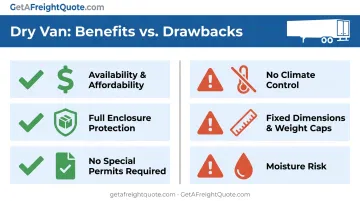
- Availability drives affordability. Dry vans make up the majority of U.S. trailer production, so carriers maintain deep fleets, keeping pricing more competitive than specialized trailers like reefers or flatbeds.
- Full enclosure protects cargo. Rain, snow, road grime, and opportunistic theft are all kept out. Add a numbered door seal, and you've got a simple but effective layer of security.
- No special permits required. Standard dry vans fit within nationwide legal size and weight limits, so route planning stays straightforward without oversize permits or escort vehicles.
Common Drawbacks
- No climate control. There's no way to regulate temperature or humidity, which rules out perishables, pharmaceuticals, and anything else sensitive to heat or cold.
- Fixed dimensions and weight caps. With interior space capped around 101 inches wide and payload typically topping out near 45,000 pounds, dry vans simply can't handle oversized or overweight freight.
- Moisture risk. Condensation or floor leaks can damage hardwood trailer floors over time, and improperly secured freight can shift or jostle during transit, making proper bracing and load bars essential.
Dry Van vs. Other Trailer Types: Choosing the Right Equipment
Picking the right trailer comes down to what your freight actually needs. Here's a quick comparison:
| Trailer Type | Best For | Key Limitation |
|---|---|---|
| Dry van | Palletized, boxed, shelf-stable goods | No temperature control |
| Reefer | Perishables, frozen goods, pharmaceuticals | Higher cost, limited fleet availability |
| Flatbed | Oversized machinery, lumber, steel | No weather protection |
| Conestoga | Oversized freight needing side/top access with tarp coverage | Not sealed like an enclosed van |
| Vented van | Produce like potatoes or onions needing airflow, not refrigeration | No active temperature control |
Reefers solve for temperature: if your freight spoils, wilts, or degrades outside a set range, a refrigerated trailer is non-negotiable.
Flatbeds and conestogas solve for size and access. Oversized machinery, construction materials, or anything requiring crane loading needs an open deck, not an enclosed box.
Vented vans sit in the middle, functioning as standard dry vans modified with front and rear vents that give airflow to crops like potatoes or onions needing ventilation but not full refrigeration.
Dry Van Shipping Costs & How to Get the Best Rate
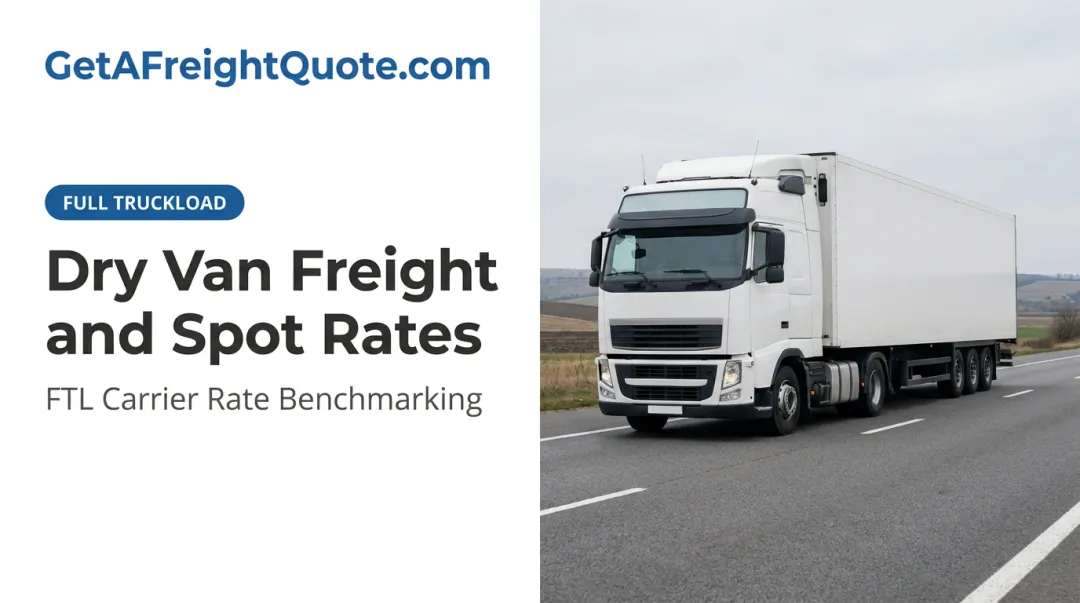
Dry van rates move constantly. DAT reported national dry van spot rates around $1.75 per mile (excluding fuel) in December 2025, up from about $1.66 per mile in June 2024. On the busiest 50 lanes, rates ran closer to $2.02 per mile — proof that averages hide a lot of lane-by-lane variation.
Several factors push your specific rate up or down:
- Distance and lane density: busy corridors with balanced freight flow price differently than remote or one-directional lanes
- Fuel surcharges: these move independently of base linehaul rates
- Seasonal demand: produce season and peak retail shipping tighten capacity and raise prices
- Weight and freight class: heavier or awkwardly shaped loads can affect pricing
- Available carrier capacity: tighter capacity means carriers can charge more
Here's the part that frustrates a lot of small and mid-sized shippers: pricing often comes down to negotiating leverage, not freight difficulty. Carriers reserve their sharpest rates for shippers who can guarantee consistent volume, leaving smaller businesses stuck with retail-level pricing.
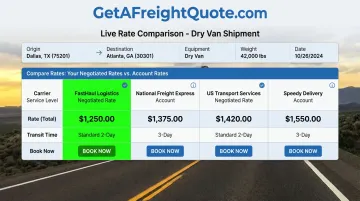
That's the gap GetAFreightQuote.com was built to close. As an authorized reseller of a leading TMS platform, it gives shippers access to pre-negotiated carrier rates without requiring Fortune-500 shipment volume.
The network includes over 20,000 truckload carrier partners covering 53-foot and 48-foot dry van equipment, with every rate visible before booking and no hidden fees added afterward.
One practical habit worth adopting: compare multiple live carrier quotes before you book. GetAFreightQuote.com's platform even lets you plug in your own existing carrier accounts alongside its negotiated rates, so the system automatically surfaces whichever option is cheapest for that specific shipment. That comparison takes seconds and ensures you always book the lower rate.
Frequently Asked Questions
What is the average cost of dry van transport?
Rates vary by mileage, lane, season, and available carrier capacity. Recent spot averages have ranged from $1.66 to $1.75 per mile, excluding fuel. Comparing multiple carrier quotes is the most reliable way to find a competitive price for your shipment.
What is considered dry van freight?
Dry van freight is any non-perishable, boxed, or palletized cargo that fits within standard trailer dimensions and can be loaded through the rear doors without cranes or special rigging. Think retail goods, furniture, canned foods, and packaged electronics.
How many pallets fit in a standard dry van trailer?
A standard 53-foot dry van commonly holds around 26 standard pallet positions, though this depends on how the freight is loaded and stacked. Pup trailers, by comparison, typically hold around 14 pallet positions.
What's the difference between dry van and reefer shipping?
Reefer trailers include refrigeration units that maintain a set temperature range, making them essential for perishables and pharmaceuticals. Dry vans have no climate control, making them better suited to shelf-stable goods that don't need cooling.
Is dry van shipping the cheapest trucking option?
Dry van is one of the most affordable trucking options because trailer supply is so widespread. Your final cost still depends heavily on the specific lane, season, and carrier you book with.
Can dry van trailers carry oversized freight?
No. Dry vans are limited to fixed interior dimensions, around 101 inches wide, and can't accommodate oversized or oddly shaped loads. Freight that exceeds those dimensions needs a flatbed, conestoga, or other specialized trailer instead.