Introduction
Small and mid-sized businesses often ship in small batches: a few pallets here, a partial load there. Each of those shipments moves as less-than-truckload (LTL) freight, and LTL carriers charge premium rates for that flexibility.
Meanwhile, large retailers and manufacturers fill entire trailers every day. That volume lets them negotiate rock-bottom rates that smaller shippers simply can't match on their own.
Freight consolidation flips that script. It's the practice of combining multiple smaller shipments, often from different shippers or orders, into one truckload-efficient load.
Instead of three half-empty trailers rolling to the same city, you get one full trailer, shared costs, and pricing that starts to resemble what the big players pay.
This guide covers what freight consolidation actually means, the different forms it takes, and the real trade-offs shippers should weigh before adopting it.
Key Takeaways
- Combines smaller LTL or LCL shipments bound for the same region into one truckload-efficient load
- Builds on standard LTL shipping to capture near-truckload pricing, not a replacement for it
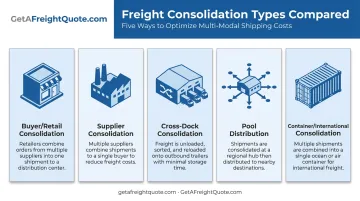
- Spans five main types: buyer/retail, supplier, cross-dock, pool distribution, and container consolidation
- Delivers savings and reduced damage risk, though added coordination makes it unsuitable for every shipment
What Is Freight Consolidation?
Freight consolidation is the logistics practice of combining multiple smaller shipments that are heading to the same destination or region. These shipments, usually LTL freight domestically or less-than-container-load (LCL) freight internationally, get moved together as one larger transportation unit.
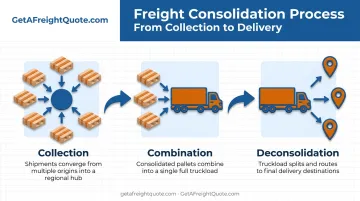
The basic flow happens in three stages:
- Collection - shipments from multiple sources arrive at a consolidation point, such as a hub, cross-dock terminal, or distribution center
- Combination - the freight is loaded together onto a single truckload or container bound for a shared destination
- Deconsolidation - once the load arrives, it's broken back down and delivered to each individual recipient
A Simple Example
Picture three small businesses, a furniture maker, a specialty food distributor, and a parts supplier, each shipping two or three pallets to the same metro area. Shipped separately, those pallets become three LTL shipments, each paying a premium for partial trailer space and subject to multiple terminal transfers.
Consolidated, those same nine pallets fill a single truckload. One line-haul move, one delivery run, and the freight gets deconsolidated for final delivery once it reaches the destination city. Same freight, fewer touches, lower cost per pallet.
Freight Consolidation vs. LTL Shipping: What's the Difference?
It's easy to conflate the two, but they aren't the same thing.
LTL is a shipping method. You pay a carrier for a portion of trailer space, and that carrier pools your shipment with others heading in a similar direction. Consolidation is a strategy that deliberately combines multiple LTL-eligible shipments, yours or pooled with other shippers', into one truckload move.
The practical differences show up across three areas:
| Factor | LTL Shipping | Freight Consolidation |
|---|---|---|
| Handling | Multiple terminal stops; unloaded and reloaded along the route | Moves as a single unit, skipping most terminal handling |
| Cost Structure | Per-shipment fees and accessorials on each load | Truckload cost split across combined shipments |
| Best Fit | Infrequent shipments, scattered destinations, urgent freight | Frequent smaller loads heading to common destinations |
Who benefits most? If you ship once a month to scattered locations, or your freight is extremely time-sensitive, direct LTL may still make more sense than waiting to build a consolidated load.
Types of Freight Consolidation
Consolidation isn't one-size-fits-all. Here's how it typically plays out:
Buyer/Retail Consolidation
Multiple suppliers' shipments, all bound for the same retailer, get combined into a single delivery. This shrinks inbound freight complexity for the receiving business and cuts down on dock appointments.
Supplier Consolidation
Multiple suppliers ship goods to a shared hub, where everything combines into one outbound load. Walmart's supplier program illustrates this well: prepaid-freight suppliers can now combine LTL shipments under one national purchase order at a single location.
This replaces the old approach of managing freight separately for each of Walmart's 42 regional distribution centers. According to Walmart's expanded LTL consolidation program, the previous workflow could require up to 42 separate POs, cases, and pallets for a single supplier.
Cross-Dock Consolidation
Shipments move directly from inbound trucks to outbound trucks with little to no storage time in between. This works well for time-sensitive or perishable goods, since freight isn't sitting in a warehouse waiting for a full load to build.
Pool Distribution
A single shipper's freight, bound for multiple locations across a region, gets consolidated into one long-haul move to a regional hub. From there, it's broken down and distributed locally—a common setup for retailers replenishing multiple stores in the same area.
Container/International Consolidation
For international freight, multiple LCL shipments from different importers are combined into one full-container-load (FCL) shipment. This spreads ocean freight costs across several importers instead of each paying LCL premiums individually.
Benefits of Freight Consolidation
Consolidation delivers value across several dimensions, not just price.
- Reduced shipping costs. Combining shipments spreads a truckload's fixed cost across multiple orders, lowering the cost per shipment.
- Fewer handling touchpoints, less damage. Consolidated freight moves through fewer loading and unloading points than shipments bouncing through multiple LTL terminals, reducing damage claims.
- Reduced carbon footprint. Fuller trucks mean fewer trucks on the road, cutting fuel use and emissions per shipment.
- Faster, more predictable transit. Consolidated loads skip the multiple terminal stops typical of LTL networks, which can shorten delivery windows and reduce variability.
- Simplified administration. Fewer shipments mean fewer invoices, fewer tracking numbers, and less time spent reconciling freight bills.
- Access to enterprise-level rates for small businesses. Pairing consolidation with pre-negotiated carrier rates lets smaller shippers compete on price with companies moving ten times their freight.
A few of these benefits are worth unpacking with real numbers.
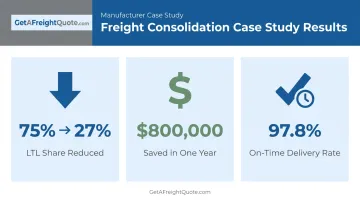
One EPA-documented case shows the scale of possible savings. A manufacturer shifted from standalone LTL to multistop truckload consolidation, cutting its LTL share from 75% to 27% and saving $800,000 in a year, with 97.8% on-time delivery, according to EPA's SmartWay freight consolidation analysis. These results reflect one shipper's experience, not a universal benchmark, but they show what's possible.
Consolidation's environmental benefit follows the same logic. The EPA SmartWay program reports that co-loading small shipments into multistop truckload moves can cut greenhouse gas emissions by up to 30%. This requires that the freight be compatible in schedule, geography, and loading sequence.
That access to enterprise-level pricing is the gap GetAFreightQuote.com was built to close: aggregating volume across hundreds of shippers to unlock rate tiers no single small business could reach alone.
Challenges to Consider
Consolidation isn't free of trade-offs. Before committing, weigh these factors:
- Scheduling complexity. Coordinating multiple shippers, carriers, and pickup or delivery windows takes more planning and communication than booking a standard LTL shipment.
- Delay risk. If one shipment in a consolidated load runs late, the entire load's delivery schedule can slip, since everyone's freight moves together.
- Not suitable for all freight. Time-sensitive, high-value, or specially-handled goods don't always fit a consolidation program, where matching schedules, geography, and handling requirements matter more than volume alone.
How to Get Started with Freight Consolidation
Getting started doesn't require an overhaul of your entire shipping process. It starts with visibility.
Assess Your Shipment Profile
Review your shipment frequency, volume, and common destinations. If you're regularly sending partial loads to the same metro areas or regions, consolidation opportunities likely exist, even if you've never looked for them before.
Use TMS Technology to Find Opportunities
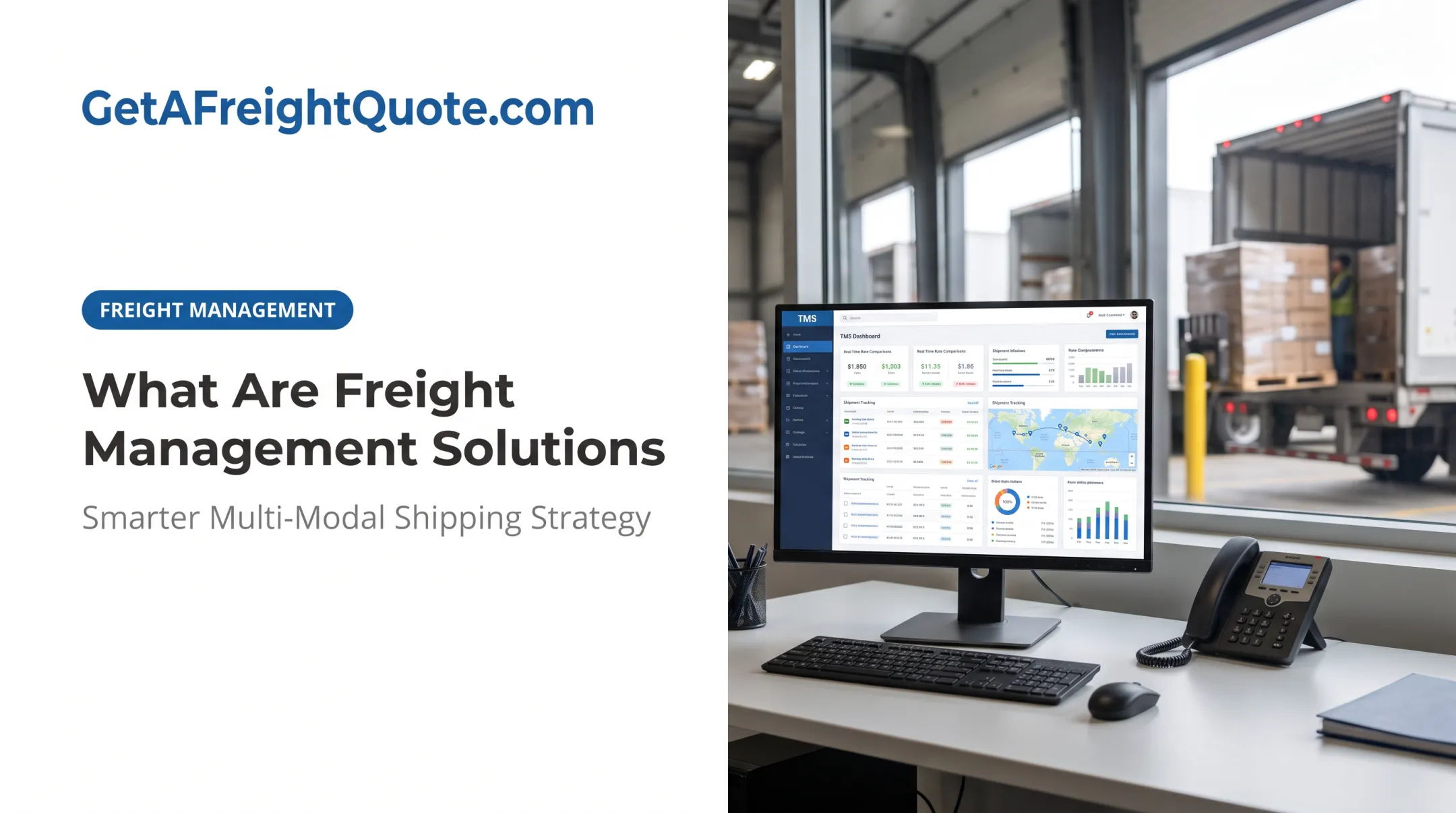
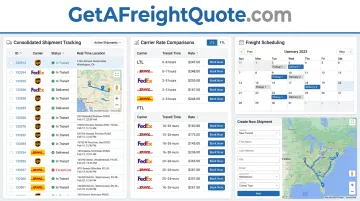
A Transportation Management System can automatically flag consolidation opportunities and compare rates across carriers and modes in one screen.
GetAFreightQuote.com, an authorized reseller of a leading TMS platform, gives small and mid-sized businesses access to this same capability:
- Enterprise-grade TMS technology previously reserved for Fortune 500-level shippers
- Pre-negotiated carrier rates across multiple carriers and modes
- TMS implementation, typically valued at $150,000 to $250,000, included at no added cost within Managed LTL Services
Prioritize Rate Transparency
Work with a partner that provides full invoice transparency, with no hidden fees eating into your savings. Every rate should be visible before you book, so the savings consolidation creates actually reach your bottom line instead of disappearing into surprise accessorials.
Ready to see where consolidation could cut your freight spend? Get in touch with GetAFreightQuote.com for a no-cost benchmark analysis of your shipment profile.
Frequently Asked Questions
What does freight consolidation mean?
Freight consolidation is the practice of combining multiple smaller shipments, often LTL or LCL, into one larger truckload or container to reduce cost and improve efficiency. Both individual shippers and third parties managing freight for multiple clients use it this way.
What is an example of freight consolidation?
Three small businesses each shipping a few pallets to the same metro area combine their freight into a single truckload instead of three separate, partially-filled LTL shipments. Everyone shares the truckload cost and gets delivered on the same route.
What is the difference between LTL and consolidation?
LTL is a shipping method where you pay for part of a trailer's capacity. Consolidation is a strategy that combines multiple LTL shipments to capture pricing and efficiency closer to a full truckload.
How much money can freight consolidation save my business?
Savings vary based on shipment volume, lane, and how well freight is combined, but they generally come from shared trailer costs and better utilization. A rate comparison against your current shipping profile is the best way to see actual numbers.
Is freight consolidation a good fit for small businesses?
Businesses with frequent smaller shipments to common destinations benefit the most. GetAFreightQuote.com helps identify these opportunities using the same TMS technology larger shippers rely on.
What is the difference between pool distribution and freight consolidation?
Pool distribution is a specific type of consolidation used by a single shipper sending goods to multiple destinations within one region. Broader freight consolidation can involve multiple shippers, suppliers, or buyers combining freight together.