Yet many business owners shipping temperature-sensitive goods for the first time run into trouble fast. They don't understand reefer terminology, why the rate is higher than a dry van quote, or what compliance paperwork a carrier actually needs. That confusion leads to real costs: spoiled product, rejected loads, and unexpected fees.
This guide breaks down what reefer freight actually is, how the equipment works, when to choose FTL versus LTL, what it costs, and how shippers can find competitive rates without the guesswork.
Key Takeaways
- Insulated, refrigerated trailers keep frozen, chilled, or temperature-sensitive cargo within a set range
- 53' reefer trailers carry less payload than dry vans due to added insulation and equipment weight
- Reefer rates run higher than dry van, driven by fuel, specialized equipment, and compliance overhead
- GetAFreightQuote.com gives small and mid-sized shippers access to enterprise-level reefer rates with full transparency
What Is Reefer Freight?
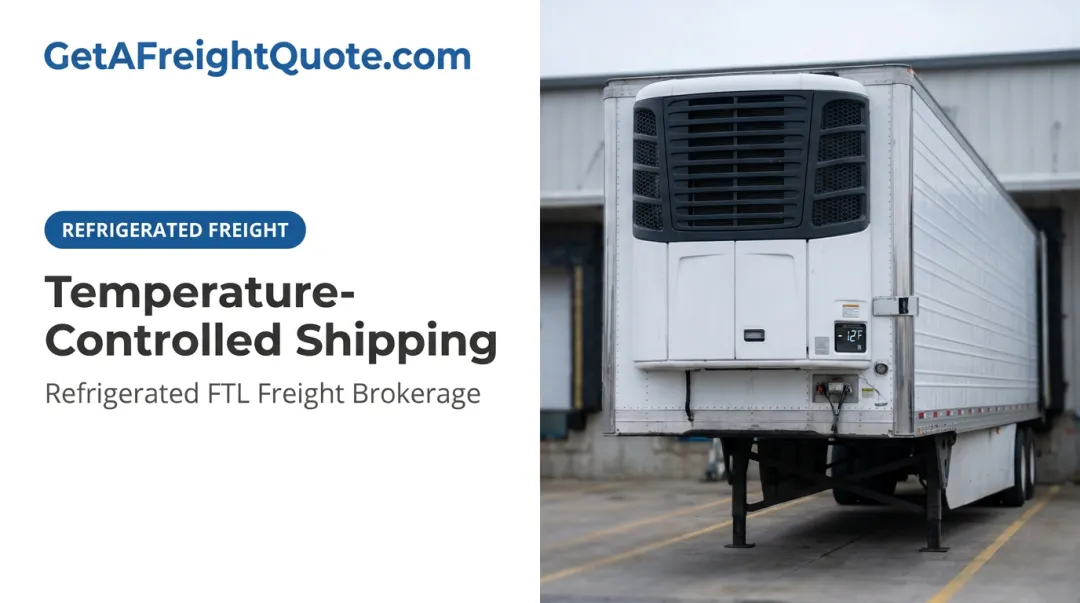
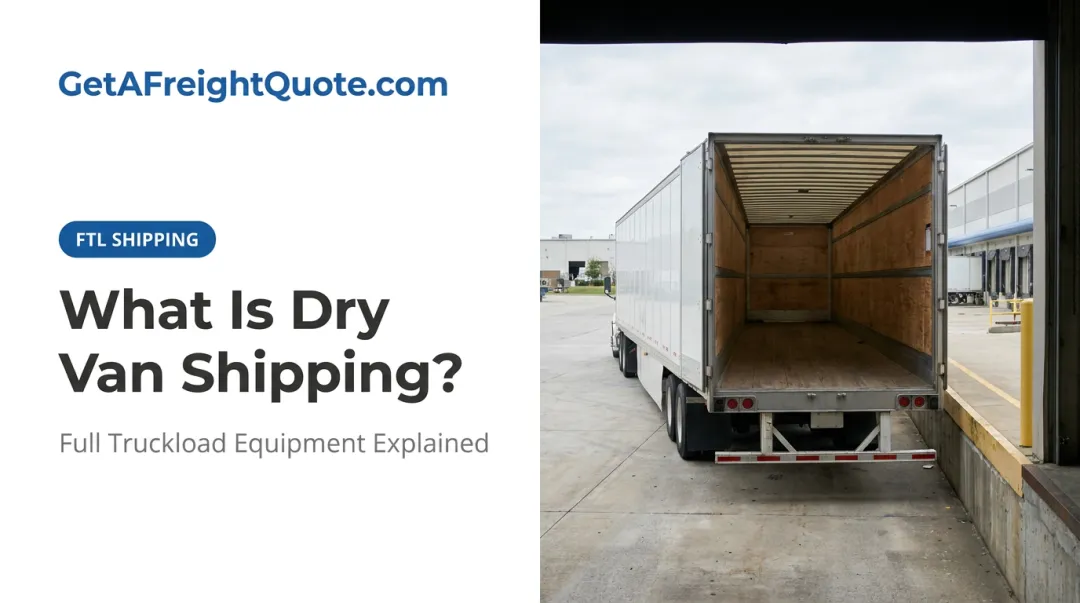
Reefer freight is shorthand for "refrigerated" freight: cargo hauled in an insulated trailer equipped with a refrigeration unit that holds a set temperature from pickup to delivery. Unlike a dry van, which offers zero climate protection, a reefer actively manages the air inside the box for the entire trip.
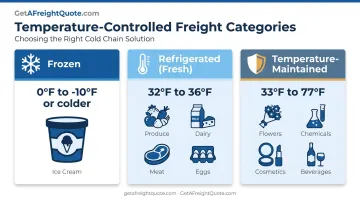
That active management is calibrated to specific ranges, and temperature-controlled freight generally falls into three categories:
- Frozen: typically 0°F to -10°F or colder for products like ice cream
- Refrigerated (fresh): typically 32°F to 36°F for produce, dairy, meat, and eggs
- Temperature-maintained (protect from freeze/heat): a wider 33°F to 77°F band for goods like flowers, chemicals, cosmetics, and beverages
How Does a Reefer Trailer Work?
A common misconception is that a reefer unit "makes cold air." It doesn't. The refrigeration unit removes heat from the trailer's interior air using an evaporator coil, a compressor, and a small diesel or electric engine, then rejects that heat outside through the condenser.
That distinction matters for one big reason: the unit maintains temperature but can't correct it. Cargo must already be at its proper temperature before it's loaded. A reefer can't cool down a load of produce that arrives warm.
Carriers also choose between two operating modes:
- Cycle-Sentry: the unit starts and stops automatically to hold setpoint, saving fuel
- Continuous: the unit runs nonstop, preserving constant airflow
Sensitive commodities like ripening produce typically need continuous airflow to prevent hot spots and uneven cooling throughout the trailer.
Reefer vs. Dry Van Trailers
Reefer trailers aren't just dry vans with a refrigeration unit bolted on. Construction differs in ways that directly affect what shippers can load:
- Reefer walls use metal or fiberglass, not wood, to prevent odor absorption and improve insulation
- Insulated liners and foam-in-place construction add weight the trailer has to carry everywhere it goes
- That extra weight, combined with the refrigeration unit itself, reduces the maximum payload compared to a standard dry van
Shippers planning freight weight and load counts need to build this into their calculations early, not discover it at the scale.
Types of Freight and Industries That Rely on Reefer Shipping
Fresh produce, dairy, meat, seafood, and pharmaceuticals are the obvious reefer commodities, but the list runs longer than most shippers expect. Chemicals, cosmetics, floral products, and even candles all need protection from temperature extremes at some point in transit.
Industries that depend most heavily on reliable reefer capacity include:
- Grocery and retail distribution — delays directly threaten shelf life
- Food service — restaurants and institutional kitchens need consistent, on-time delivery
- Healthcare and pharma — some products lose efficacy outside a narrow range
- Floral wholesalers — flowers typically ship in the 33°F to 36°F range and degrade quickly outside it
Reefers also protect against the opposite problem: in cold weather, a standard dry van offers no defense against freezing. That makes reefer trailers valuable for shipping beverages, electronics, and chemicals through winter months when a frozen load is just as costly as a spoiled one.
Reefer FTL vs. LTL vs. Dry Van: Key Differences
Choosing the right shipping method affects both cost and cargo safety. Here's how the three options compare.
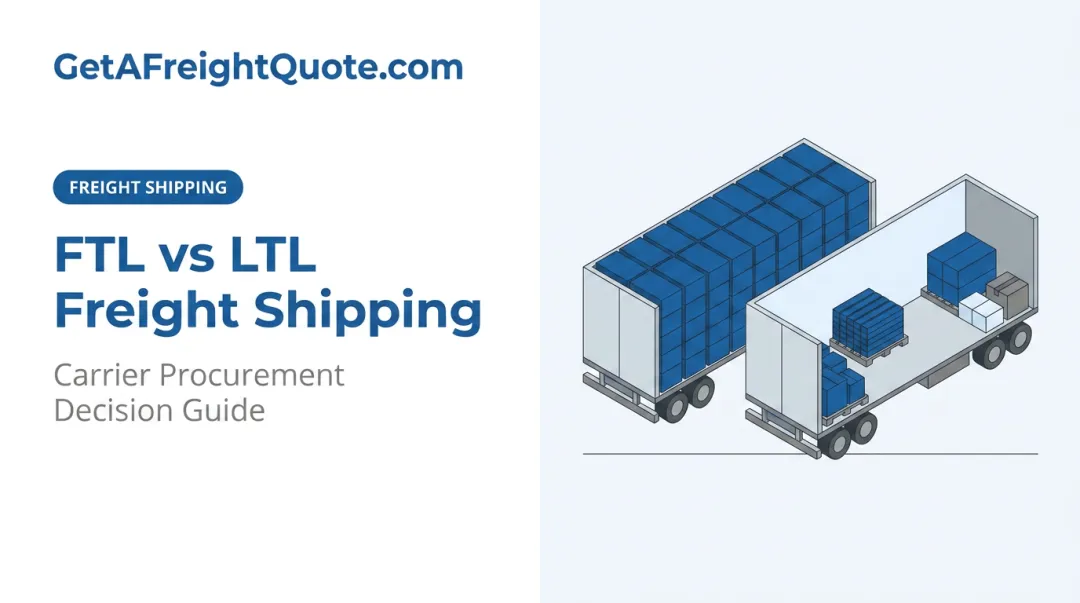
Full Truckload (FTL) reefer dedicates an entire trailer to one shipper's temperature-controlled freight. It's the right call for large-volume perishable shipments where consolidation risks or handling delays aren't worth the tradeoff.
Reefer LTL consolidates multiple shippers' temperature-sensitive loads by zone, such as:
- Frozen: -10°F to 0°F
- Refrigerated: 33°F to 39°F
- Controlled room temperature: 55°F to 75°F
This lets each shipper pay only for the trailer space they use, making it a better fit for smaller volumes.
Weight capacity is another factor that shapes this decision.
How Much Weight Can a Reefer Actually Carry?
Because of heavier insulation and refrigeration equipment, a standard 53' reefer trailer typically has a lower maximum loadable weight than a comparable dry van. Shippers moving dense product need to confirm actual capacity with their carrier, not assume dry van numbers apply.
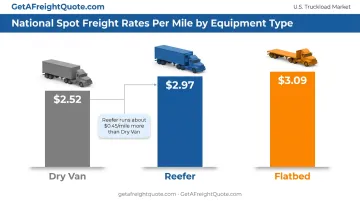
Rate comparisons back up what most shippers already suspect: reefer costs more. DAT's matched national spot averages showed dry van at $2.52 per mile, reefer at $2.97 per mile, and flatbed at $3.09 per mile — a roughly $0.45 premium for reefer over dry van in that snapshot.
One advantage reefer offers that dry van can't match: flexibility. Carriers can run a reefer trailer without refrigeration on a return trip if no temperature-controlled freight is available, cutting deadhead costs that would otherwise get passed along to shippers.
GetAFreightQuote.com's rate-shopping platform compares FTL, LTL, and dry van pricing side-by-side, making this tradeoff easier to evaluate.
Key Considerations When Shipping Reefer Freight
Reefer shipping comes with variables that don't exist in dry van freight. Planning around them prevents both spoilage and unnecessary cost.
Seasonality drives capacity crunches. Produce season, which typically starts in the southern U.S. each spring, pulls reefer capacity nationwide toward agricultural regions. FreightWaves reports that peak produce season can push reefer spot rates up $0.30 to $0.50 per mile. Shippers who lock in capacity commitments early avoid getting squeezed later.
Compliance matters just as much. The FDA's FSMA Sanitary Transportation Rule sets standards for vehicles and equipment, operational controls, driver training, and record-keeping.
Carriers must prove they maintained the required temperature range on request — downloadable reefer temperature logs make this possible. Confirm your carrier's compliance before the load ships, not after a claim.
Beyond regulation, commodity handling varies:
- Produce may need pre-icing
- Other goods need pre-cooling before loading, not during transit
- Clear specs communicated to the carrier upfront prevent rejected or spoiled shipments
Extra costs add up fast, beyond compliance and handling requirements. Reefer rates reflect more than mileage:
- Fuel for the refrigeration unit itself
- Reefer breakdown insurance
- Lumper fees at receiving docks
- Equipment maintenance on specialized trailers
Finally, choose a carrier or logistics partner with genuine cold chain experience. GetAFreightQuote.com's managed FTL services include refrigerated equipment sourcing and carrier vetting, pairing tracking technology with reliable on-time performance to keep spoilage claims off your books.
How GetAFreightQuote.com Helps You Ship Reefer Freight Smarter
Small and mid-sized businesses often get stuck with weaker reefer rates simply because their shipment volume doesn't match what large shippers negotiate. GetAFreightQuote.com's TMS platform closes that gap by giving smaller shippers access to pre-negotiated carrier rates typically reserved for Fortune 500-level freight programs.
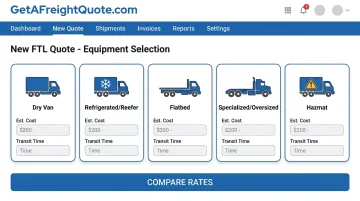
That advantage carries over directly to temperature-controlled freight. Refrigerated/reefer is listed as a named FTL equipment category on the platform, alongside dry van, flatbed, specialized/oversized, and hazmat. Reefer is built into the FTL offering from the start, with the same dedicated handling as any other equipment type.
A few things worth knowing before you request a quote:
- Full rate transparency: no hidden fees before booking, which matters more for reefer than any other mode given fuel surcharges and insurance line items
- Bring Your Own Rates (BYOR): shippers can add existing carrier accounts alongside GetAFreightQuote.com's negotiated rates for side-by-side comparison on every load
- Hands-on support: a real team is available for carrier questions and shipment-specific help, with responses typically within one business day
One practical note: FTL instant quoting, including reefer, currently requires free account registration rather than an instant no-login quote. Setup takes under two minutes, and a Test Drive account lets you explore live rates before entering any payment information.
Frequently Asked Questions
What is reefer freight?
Reefer freight is temperature-controlled cargo shipped in insulated, refrigerated trailers that maintain a set temperature throughout transit. It covers frozen, refrigerated, and temperature-maintained (heated) categories, depending on the product.
What is the maximum weight a reefer can haul?
A standard 53' reefer trailer typically maxes out around 42,000-44,000 lbs, compared to roughly 45,000 lbs for a comparable dry van. The added insulation and refrigeration equipment weight eat into available payload capacity.
What's the difference between reefer FTL and reefer LTL shipping?
FTL reefer dedicates an entire trailer to one shipper's freight, ideal for large perishable volumes. Reefer LTL consolidates multiple shippers' loads by temperature zone, so you pay only for the space you use.
How much more does reefer freight cost compared to dry van?
Reefer typically runs $0.40 to $0.50 more per mile than dry van, driven by fuel, specialized equipment, and compliance requirements. Rates shift seasonally, so check current benchmarks before budgeting a lane.
What temperature should a reefer trailer be set to?
Frozen freight typically runs 0°F to -10°F or lower, refrigerated freight runs 32°F to 36°F, and controlled room temperature freight runs roughly 55°F to 75°F. The exact setpoint always depends on the specific commodity.
Do I need special insurance to ship reefer freight?
Standard motor truck cargo insurance doesn't automatically cover temperature-related spoilage. Reefer breakdown coverage is typically an optional add-on, so confirm your carrier carries it before booking a load.