Here's the good news: heavy and large item shipping isn't inherently overpriced. It gets expensive because of carrier choice, sloppy packaging, and a lack of rate comparison. This guide breaks down exactly where those costs come from and what you can actually do about them.
Key Takeaways
- Heavy shipment costs build from stacked surcharges (weight, DIM, zone, oversize), not one flat fee
- The cheapest method (parcel, regional, or LTL freight) depends on weight, dimensions, and destination
- Packaging and service-level choices can cut costs before a shipment ever reaches the carrier
- Small businesses can now access freight discounts once reserved for enterprise-level shippers
How Shipping Costs for Heavy and Large Items Typically Build Up
Heavy shipment invoices rarely arrive as a single number. They accumulate through layered surcharges applied at booking, then adjusted again after the carrier audits the package.
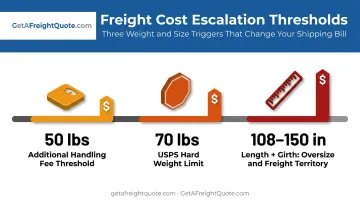
These charges don't scale gradually; they jump the moment a shipment crosses a specific threshold:
- 50 lbs: Triggers Additional Handling fees at UPS and FedEx
- 70 lbs: The hard ceiling for USPS parcels
- 108–150 inches (length plus girth): Pushes a package into oversize or freight territory
A box weighing 49 lbs and one weighing 51 lbs can cost dramatically different amounts, even though they're nearly identical. That's the nature of threshold-based pricing.
The real problem: many of these fees stay invisible at quote time. A rate you see during checkout often excludes additional handling, residential delivery, or oversize charges until after pickup, when the carrier's own measurement and audit systems reassess the package.
Key Cost Drivers for Shipping Heavy and Large Items
Four separate factors combine to determine your final rate, and missing any one of them is how quotes go wrong.
Weight and Dimensional (DIM) Weight
Crossing roughly 50 lbs actual weight triggers Additional Handling at both major carriers. UPS's 2025 accessorial schedule shows just how steep this gets:
| Trigger | Zone 2 | Zones 3–4 | Zones 5–6 | Zone 7+ |
|---|---|---|---|---|
| Weight-based | $43.50 | $47.50 | $52.75 | $55.00 |
| Dimension-based | $28.00 | $31.00 | $36.00 | $38.00 |
Source: UPS 2025 Small Business Rate Guide
Dimensional weight adds a second layer. Carriers calculate a "theoretical" weight using length × width × height ÷ a divisor (typically 139 for UPS/FedEx, 166 for USPS on larger cubes). They then bill whichever number, actual or DIM, is higher. A large, lightweight item like a lampshade or a foam cooler can get billed as if it weighs far more than it actually does.
Shipping Zones and Distance
Weight and dimensions set the baseline, but distance multiplies it: carriers price by zone, not just weight. The identical 51-lb box above can jump from $43.50 in Zone 2 to $55.00 in Zone 7+ for the same Additional Handling fee alone. Ship the same item across town versus across the country, and the base rate plus surcharges compound differently every time.
Oversize Rules and Service Level
Zone and weight surcharges are one thing, but exceed a carrier's absolute limits, and pricing changes entirely:
- UPS/FedEx parcel maximum: 150 lbs, roughly 108–119 inches in length
- USPS maximum: 70 lbs, hard limit, no exceptions
Push past these limits, and the shipment gets reclassified as freight entirely, triggering a different pricing structure. Add expedited service on top of any of this, and costs multiply again. Ground shipping stays reasonable for flexible timelines; air or next-day options can cost several times more for the same heavy box.
Choosing the Right Shipping Method: Parcel, Regional, or Freight
There's no single cheapest carrier. The right answer shifts based on weight, size, and how far the item is traveling.
Here's a general framework:
| Shipment Profile | Best Option | Why |
|---|---|---|
| Under 70 lbs, short distance | USPS flat rate | Fixed price regardless of zone, if the item fits the box |
| 5–150 lbs | UPS/FedEx Ground | Most versatile, widest service network |
| Within a limited regional footprint | Regional carriers | Often undercut national carriers on in-region lanes |
| Over 150 lbs, or palletized | LTL freight | Avoids stacked parcel surcharges entirely |
Why Freight Wins Above 150 Pounds
Once an item exceeds a parcel carrier's weight or size limits, freight generally becomes the cheaper option per pound. According to NMFTA's comparison of parcel and LTL shipping, parcel carriers typically top out around 150 lbs, while LTL freight is built for shipments in the 150–10,000-lb range.
The savings come from how freight is priced. Parcel carriers stack a fresh set of surcharges on every single package. LTL freight consolidates handling and charges by class and pallet, not by individual box. The trade-off: freight moves slower and often requires a loading dock or liftgate at delivery.
The Freight Pricing Gap for Small Shippers
Freight's savings don't stop at surcharges, though. Pricing has historically rewarded volume over everything else, which is the catch that trips up most small and mid-sized businesses. Large shippers negotiate contract rates. Everyone else pays close to retail LTL pricing, even though their freight class and lane might be identical.
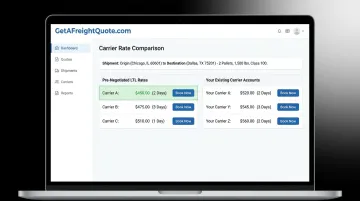
This is the exact gap GetAFreightQuote.com was built to close. Its platform gives small and mid-sized shippers access to pre-negotiated LTL rates, and lets you load your own existing carrier accounts alongside those rates for a direct, side-by-side comparison before you book. You can see exactly which carrier is cheapest before you book, instead of guessing.
Cost-Reduction Strategies for Shipping Heavy and Large Items
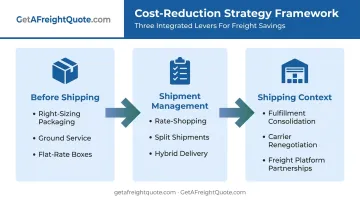
The right strategy depends on what you're changing: the shipment itself, how you manage it, or the environment around it.
Decisions Made Before Shipping
- Right-size packaging. Every extra inch of box feeds into the DIM weight formula. Disassemble what you can and use tighter-fitting boxes.
- Choose ground over expedited unless a contract requires faster delivery. The price gap between ground and air service on heavy items is substantial.
- Use flat-rate boxes for dense items. USPS Priority Mail Flat Rate and UPS Simple Rate work well when weight is high but the item is compact.
Better Shipment Management
- Rate-shop every shipment. The cheapest carrier changes by weight, zone, and destination, so defaulting to one provider guarantees overpaying somewhere.
- Split shipments strategically. Two boxes at 45 lbs each can beat one 90-lb box that triggers Additional Handling and Large Package surcharges.
- Use hybrid ground-to-postal options for non-urgent residential deliveries when available, since these often undercut standard ground rates.
Changing the Shipping Context
Beyond the item itself, the surrounding shipping setup often drives the bigger costs.
- Consolidate fulfillment locations. One centralized warehouse frequently beats several scattered ones once you account for duplicated inventory and storage costs.
- Renegotiate carrier accounts regularly. Surcharge waivers and better rates exist, but carriers rarely offer them without being asked.
- Partner with a freight rate platform for recurring pallet shipments. GetAFreightQuote.com's managed LTL services pair negotiated carrier rates with freight audit and invoice recovery, flagging billing errors like misapplied freight class before they hit your invoice.
Conclusion
Cutting heavy and large item shipping costs starts with knowing exactly where the cost comes from: a surcharge, a method mismatch, or simply not having access to better rates. Chasing a "cheap carrier" without knowing where those costs originate rarely works.
The biggest savings almost always come from combining two things: smarter packaging and service-level decisions, plus access to properly negotiated rates. That access can come through higher shipment volume, a fulfillment partner, or a platform like GetAFreightQuote.com. However you get there, the businesses paying the least are the ones actively managing shipping as an ongoing system rather than simply accepting whatever a carrier invoices.
Frequently Asked Questions
What is the cheapest way to ship heavy items?
It depends on weight and distance. USPS flat rate works well for dense items under 70 lbs, UPS/FedEx Ground suits 5–150 lbs, and LTL freight becomes cheaper per pound for anything heavier or palletized.
Is it cheaper to ship heavy items by freight or parcel carrier?
Freight (LTL) typically wins once an item exceeds 150 lbs or needs a pallet. Parcel carriers stack multiple surcharges per package that freight pricing avoids.
How does dimensional weight affect the cost of shipping a large item?
Carriers bill whichever is higher: actual weight or dimensional weight (calculated from the box's size). A bulky, lightweight item can cost far more than its scale weight suggests.
Do UPS and FedEx charge extra fees for heavy packages?
Yes. Both apply Additional Handling fees above roughly 50 lbs and require freight classification for anything over 150 lbs, plus separate oversize dimension surcharges.
What's the maximum weight USPS will ship?
USPS caps parcels at 70 lbs. Flat-rate boxes up to that weight remain a cost-effective option for dense items traveling short to medium distances.
How can a small business get negotiated freight rates like a large company?
Platforms like GetAFreightQuote.com pool smaller shippers together to unlock pre-negotiated carrier rates and transparent invoicing once limited to high-volume enterprise shippers.