Introduction
Freight costs keep climbing, customers expect faster delivery, and most shippers now juggle a mix of parcel, LTL, and truckload carriers just to keep freight moving.
U.S. business logistics costs hit $2.37 trillion in 2023, or 8.7% of GDP, according to the CSCMP State of Logistics Report. That pressure isn't going away.
That's where a transportation management system (TMS) comes in. Many teams still treat it as an abstract upgrade, but in practice, its value shows up in numbers your team already tracks: cost per shipment, on-time delivery rate, and hours spent chasing carrier quotes.
This article breaks down eight concrete benefits of a TMS and shows how businesses of any size, not just Fortune 500 shippers, can put them to work.
Key Takeaways
- A TMS centralizes freight planning, booking, and tracking across every carrier and mode
- Cloud-based platforms put Fortune 500-level tools and rates within reach of small and mid-sized shippers
- Benefits span cost savings, visibility, compliance, service quality, analytics, and sustainability
- Pairing the software with negotiated rates and hands-on support can cut shipping costs by 20-50%
What Is a Transportation Management System (TMS)
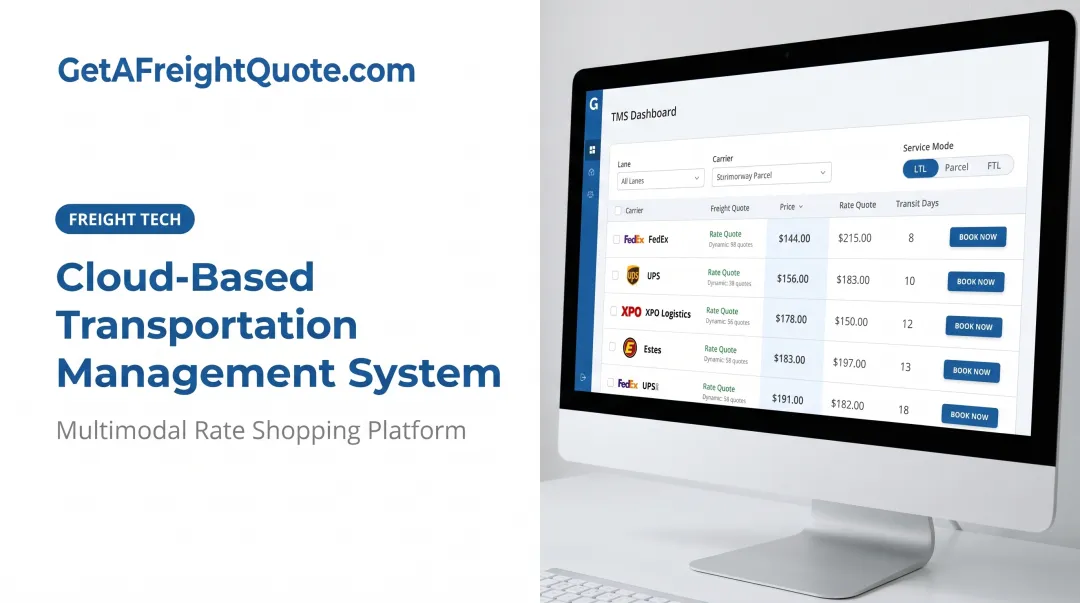
A TMS is software that helps businesses plan, book, and track freight shipments across carriers and modes, all from one dashboard. Gartner defines it as software supporting multimodal sourcing, planning, and execution of physical goods movement.
In practical terms, a TMS handles:
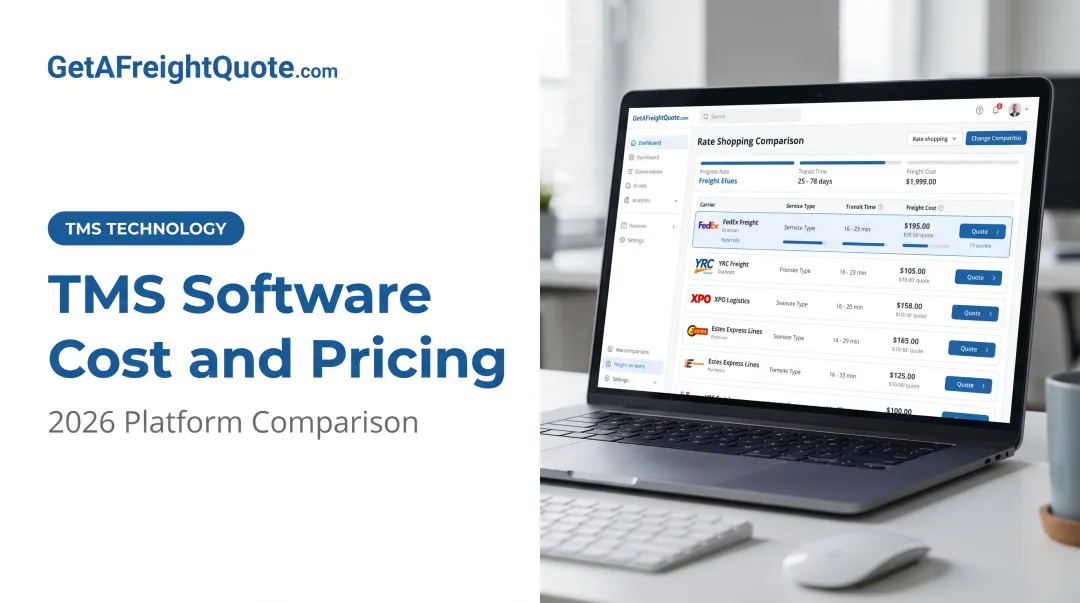
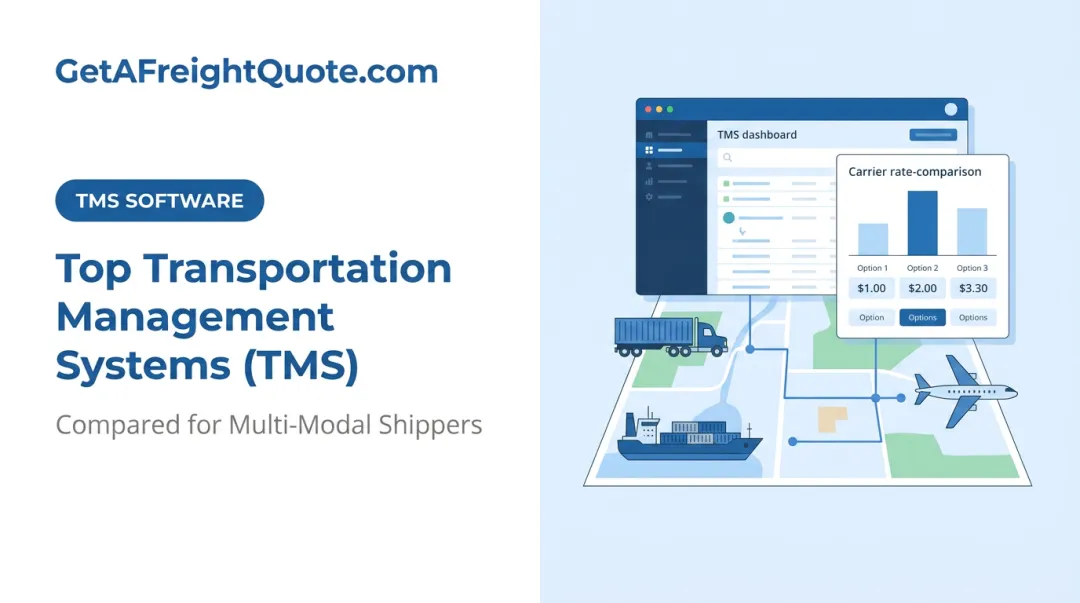
- Carrier selection and rate comparison: pulling live quotes across parcel, LTL, and FTL
- Shipment booking and tendering: confirming pickups without phone calls
- Tracking: status updates from dock to delivery
- Freight audit: catching billing errors before or after payment
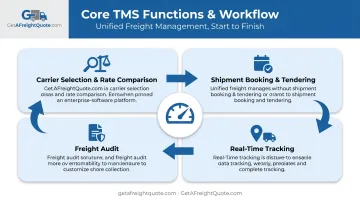
What matters most is the result: lower shipping costs, better service, and fewer hours spent on manual freight work.
Who Needs a Transportation Management System
TMS adoption used to be an enterprise-only conversation. That's changed. Mid-size manufacturers, distributors, and e-commerce sellers with growing shipment volume are now strong candidates, especially once they hit certain friction points.
Common trigger signs include:
- Managing multiple carriers or shipping modes without a single view of rates
- Spending hours each week on manual rate comparisons or phone-based quotes
- Lacking visibility into total freight spend or where money is being lost to overcharges
Gartner-cited estimates put TMS adoption at roughly 50% of large shippers but only 10% of small shippers. That gap exists largely because small businesses historically received second-class freight rates simply due to lower volume.
GetAFreightQuote.com built its model to close that gap, helping small and mid-sized businesses without Fortune 500-level shipment volume access the same negotiated rates and technology so fragmented, manual processes stop costing them money.
8 Key Benefits of a Transportation Management System
Each benefit below ties to a measurable outcome, cost, time, service quality, or risk, rather than a theoretical advantage.
Benefit 1: Freight Cost Savings
Rate shopping across carriers, consolidating shipments, and running freight audits catches overcharges that would otherwise slip through. Nucleus Research found TMS users decreased transportation spending by 11% on average, based on interviews with supply-chain professionals actively using these platforms, according to their TMS cost analysis.
This matters most for KPIs like cost per shipment, invoice accuracy, and freight spend as a percentage of revenue. GetAFreightQuote.com's platform validates shipment weight, dimensions, and freight class before booking, then flags unwarranted accessorials automatically before a customer pays them. Businesses managing multiple carriers without dedicated rate-negotiation staff tend to see the biggest gains here.
Benefit 2: Real-Time Visibility & Tracking
More than half of surveyed shippers still rely on check calls for shipment status, according to FreightWaves research on visibility gaps. That's a lot of phone tag for information a dashboard could show instantly.
GPS-fed carrier data, EDI, and API integrations give shippers and customers a live status view from origin to delivery. This reduces "where is my shipment" calls and lets teams reroute proactively when delays crop up.
GetAFreightQuote.com's platform pulls tracking data from over 100 carrier partners into a single dashboard. It uses EDI for pickup requests and API integration for status updates, so shippers aren't logging into a dozen separate carrier portals.
Benefit 3: Regulatory Compliance & Safety
Under 49 CFR 395.8, motor carriers must retain drivers' records of duty status for at least six months, and drivers must submit supporting documents within 13 days under 49 CFR 395.11. These obligations sit with carriers, not shippers, but a TMS still plays a role in exchanging and retaining the paperwork tied to each shipment.
This matters most for businesses shipping across state lines or internationally, where documentation complexity multiplies. GetAFreightQuote.com supports cross-border shipping to and from Canada and Mexico through partnerships with licensed customs brokers, helping ensure shipments stay compliant without adding internal headcount.
Benefit 4: Simplified, Automated Operations
Before adopting a TMS, most shippers are stuck calling carriers one by one, tracking rates in spreadsheets, and confirming bookings over email. A TMS replaces all three with a single automated workflow.
What gets eliminated:
- Phone-based rate checks across individual carriers
- Manually updated spreadsheets for cost tracking
- Email chains for booking confirmations and documentation
- Ad hoc shipment status calls
GetAFreightQuote.com includes a full TMS implementation, valued between $150,000 and $250,000 if purchased independently, at no additional cost within its Managed LTL Services. That means the automation typically reserved for enterprise budgets becomes available without the capital expense.
Benefit 5: Enhanced Customer Service
When customer service reps can see real shipment data instead of guessing, they give accurate delivery windows and respond to inquiries faster. Only 20% of shippers report satisfaction with their current shipment visibility, per a FreightWaves and Tive survey, suggesting plenty of room for improvement.
Faster, more accurate answers translate directly into customer satisfaction scores and repeat business. A TMS closes the information gap between what's actually happening with a shipment and what your team can tell a customer on the phone.
Benefit 6: Data Analytics & Smarter Decision-Making
Built-in reporting reveals which carriers perform well on which lanes, where spend is trending upward, and which contracts need renegotiating. That 11% average cost reduction from Nucleus Research isn't magic. It comes largely from businesses finally having the data to negotiate from a position of strength.
GetAFreightQuote.com's ParcelSpend Intelligence platform delivers over 25 actionable insights, including margin analysis, billing error detection, and service-level inefficiency identification. Clients have used this data to recover more than $350 million in savings, turning raw shipment numbers into negotiating leverage.

Benefit 7: Scalability for Growing Businesses
Cloud-based TMS platforms let businesses add carriers, markets, or sales channels without a matching jump in headcount. That matters most during rapid growth phases or seasonal demand spikes, when manual processes tend to break down fastest.
GetAFreightQuote.com structures its subscription tiers around exactly this kind of growth, moving businesses from a QuickShip tier (0-3 shipments weekly, no label fee) up through Platinum (2,501+ shipments weekly at 5 cents per label) without requiring a platform switch. The per-label fee drops as volume increases, so scaling up doesn't mean scaling costs proportionally.
Benefit 8: Reduced Environmental Impact
Route optimization and load consolidation reduce fuel use, which matters both for cost and for sustainability reporting. Since 2004, EPA SmartWay partners have collectively saved $55.4 billion in fuel costs and avoided 170 million metric tons of CO2, according to EPA's SmartWay program results.
Those figures reflect the broader program rather than any single TMS, but they show what's achievable when route efficiency becomes a priority.
Customers and partners increasingly expect visibility into a company's environmental footprint, making consolidated freight data useful well beyond the finance department.
What Happens When a TMS Is Missing or Ignored
Manual freight management tends to produce the same problems repeatedly: inconsistent rates across carriers, higher invoice error rates, and reactive firefighting instead of proactive planning.
- Inconsistent pricing — without side-by-side rate comparison, businesses default to whichever carrier they called first
- Unnoticed invoice errors — no systematic audit process means overcharges slip through
- Headcount-heavy scaling — each new customer or shipping lane adds hours of manual quoting, tracking, and reconciliation work
- Weak negotiating position — no consolidated spend data means no leverage when contracts come up for renewal
Businesses stuck in this pattern often don't realize how much they're leaving on the table until they see a side-by-side comparison against negotiated rates.
How to Get the Most Value from a TMS
A TMS delivers the most value when paired with negotiated carrier rates and hands-on support, not left as standalone self-service software.
This is the model GetAFreightQuote.com built its business around, combining an authorized TMS platform with pre-negotiated rates and full invoice transparency. As a result, small and mid-sized businesses compete on the same footing as much larger shippers.
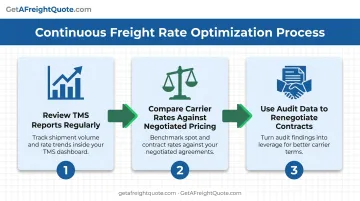
Practical steps to maximize value:
- Review TMS reports regularly: carrier performance and spend trends lose their value if nobody looks at them
- Compare your own carrier accounts against negotiated rates: GetAFreightQuote.com's Bring Your Own Rates feature lets shippers connect existing carrier accounts and automatically book whichever rate is lower, theirs or the platform's
- Use audit data to renegotiate contracts — spend patterns revealed by the platform are the same data enterprise shippers use at the negotiating table
Conclusion
The value of a TMS comes down to cost control and operational visibility across all eight benefit areas covered here. These advantages compound as more shipment data flows into the system, turning each quarter's freight activity into an advantage for the next one.
That advantage no longer requires an enterprise budget. GetAFreightQuote.com now gives businesses of any size the same TMS technology and negotiated rates that once separated Fortune 500 shippers from everyone else, with full rate transparency.
Frequently Asked Questions
How much does a Transportation Management System cost?
Pricing varies by provider. Some charge subscription fees, while GetAFreightQuote.com's model is self-funded through the shipping savings it generates, covering the label fee through negotiated rate savings.
What are the signs that a TMS is working for your business?
Look for lower freight spend, fewer invoice discrepancies, faster responses to delivery inquiries, and less staff time spent on manual carrier coordination. If those metrics aren't improving within a few months, it's worth reviewing your setup.
Is a TMS only useful for large enterprises?
Not anymore. Cloud-based TMS platforms have made tools once reserved for large shippers accessible to small and mid-sized businesses, often at little to no cost.
How long does it take to implement a TMS?
Implementation timelines vary based on integration needs. Reseller-supported platforms can often onboard businesses in minutes to weeks, compared to the 6-18 months typical of a from-scratch enterprise deployment.
Can a TMS integrate with my existing systems like ERP or WMS?
Most modern TMS platforms connect with ERP and WMS systems through EDI or APIs, letting shipment data flow into your existing operations without manual re-entry.
What's the difference between a TMS and working directly with a freight broker?
A TMS gives shippers direct visibility and control over rates and bookings, while a broker acts as an intermediary that typically marks up carrier rates. Some providers, including GetAFreightQuote.com, combine both: a rate-shopping platform plus negotiated pricing.