Multimodal freight transport exists to solve this. It combines two or more transport modes, truck, rail, ocean, or air, under a single contract with one carrier taking full responsibility for the journey.
This article breaks down what multimodal transport actually means, how it differs from intermodal transport (a distinction that trips up even experienced shippers), and how businesses of any size can tap into these solutions without needing Fortune 500 shipment volume.
Key Takeaways
- Multimodal transport combines multiple modes under one contract, with one liable carrier
- Intermodal splits liability across carriers; multimodal centralizes it under one contract
- One Multimodal Transport Document replaces separate paperwork for each leg of the journey
- Modern TMS platforms now offer small businesses rates once reserved for major shippers
What Is Multimodal Freight Transport?
Multimodal freight transport is the movement of goods using two or more modes, truck, rail, ocean, air, under a single contract managed by one Multimodal Transport Operator (MTO). The MTO acts as the sole point of contact and the sole liable party for the entire journey, from pickup to final delivery.
Here's the part that surprises a lot of shippers: the MTO doesn't need to own the ships, planes, or railcars it uses. It subcontracts individual legs to "actual carriers," but it remains fully accountable to the shipper no matter which leg experiences a delay or loss.
How the Documentation Works
Instead of stacking separate paperwork for each mode, multimodal shipments run on one document, often called a Combined Transport Bill of Lading. It functions as both the contract and the cargo receipt for the entire door-to-door movement, regardless of how many transfers happen along the way.
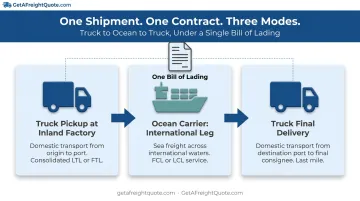
Picture a shipment leaving an inland factory:
- A truck carries it to the port
- An ocean carrier handles the international leg
- A truck picks it up again for final delivery
All three legs, one contract, one liable carrier, one bill of lading.
This model isn't new. The container revolution made it standard practice: the first interregional container service launched on the North Atlantic in 1967, and cellular containerships expanded rapidly through the following decade, according to UNCTAD's 2018 review of container shipping history.
The UN Convention on International Multimodal Transport of Goods formalized this framework in 1980, though it never officially entered into force. It still shapes how modern multimodal contracts and liability terms are structured today.
Multimodal vs. Intermodal Transport: What's the Difference?
This is the distinction that confuses almost everyone, and it matters more than most shippers realize.
Multimodal transport means one contract, with a single liable carrier, known as the Multimodal Transport Operator (MTO), managing every leg of the journey. Intermodal transport, by contrast, technically refers to moving the same loading unit (like a container) across two or more modes without unloading the goods at each transfer point. In practice, though, intermodal is often used to describe arrangements where a shipper holds separate contracts with a different carrier for each leg. Here's how the two approaches compare on the factors that matter most:
| Factor | Multimodal | Intermodal |
|---|---|---|
| Contracts | One, with the MTO | Often separate, per leg |
| Liability | Held by the MTO throughout | Follows whichever carrier/mode was active |
| Tracking | Single point of contact | Can be fragmented across carriers |
| Cost structure | Bundled pricing | Potential to negotiate each leg separately |
| Shipper involvement | Low, MTO handles coordination | Higher, shipper manages relationships |
Which Model Fits Your Business?
The trade-off is straightforward. Multimodal works better if you lack dedicated logistics staff and want simplicity over squeezing out every last dollar. Intermodal may suit businesses with the bandwidth to manage multiple carrier relationships and negotiate each leg independently.
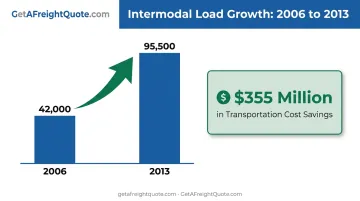
The EPA documented that Kimberly-Clark grew its intermodal loads from 42,000 in 2006 to 95,500 in 2013 as reported in the EPA's Clean Freight Strategies review. That growth translated to roughly $355 million in transportation cost savings, according to the company's internal estimate, illustrating what modal shifts can deliver at scale.
That's not a universal benchmark, since it reflects a large shipper managing its own carrier relationships. Still, it shows the scale of savings possible when a business has the internal capacity to coordinate modes directly.
Common Multimodal Transport Combinations
Most multimodal shipments follow a handful of predictable patterns, each suited to a different priority: cost, speed, or full international reach.
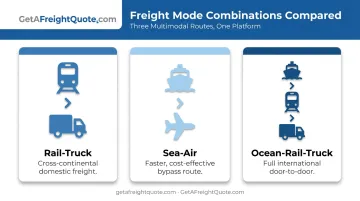
- Rail-truck: Containers travel long distances by rail, with trucks handling the shorter connections to and from terminals. Common for cross-continental domestic freight.
- Sea-air: Cargo moves by ocean to an intermediate port, then switches to air for the final leg, a faster, cheaper middle ground between pure ocean and air freight. This combination gained traction as shippers sought bypass routes during Red Sea shipping disruptions.
- Ocean-rail-truck: The full international door-to-door combination. A container moves from ship to rail to truck without ever being unpacked.
Multimodal transport doesn't replace standard freight categories like FTL, LTL, ocean, air, or rail. It simply sits on top of them, coordinating multiple modes under unified management instead of leaving the shipper to book each one separately.
Why Standardization Makes It Possible
None of this works without standardized containers. ISO's technical committee for freight containers, established in 1961, standardized dimensions, stacking systems, and twistlock interfaces.
These standards let a single box move seamlessly from ship to rail car to truck chassis. That's what minimizes handling and reduces damage risk every time cargo changes hands at a transfer point.
Benefits and Challenges of Multimodal Transport for Growing Businesses
Multimodal transport offers real advantages, but it's not free of trade-offs. Here's the honest breakdown.
Benefits:
- Simplified tracking through a single point of contact instead of chasing updates from three different carriers
- Reduced administrative overhead, one contract, one invoice, instead of separate paperwork per leg
- Optimized routing that can lower total shipping costs by combining modes strategically
Challenges:
- Potentially higher per-shipment pricing compared to self-managed intermodal shipping, where you shop each leg individually
- Less flexibility to renegotiate individual legs once you're locked into a single-provider contract
- Dependence on one provider's network reliability rather than diversifying across carriers
Even with those trade-offs, the macro-level case for combining modes holds up. The EU has documented meaningful cost benefits from shifting freight off the road entirely: a 2023 European Commission proposal cites average external costs of just €0.013 per ton-kilometer for rail and €0.019 for inland waterways, compared to €0.042 for heavy goods vehicles on the road.
That gap translates to as much as €2.1 billion in annual external-cost savings from modal shift in 2011 alone, though the Commission notes not all of it can be attributed to combined transport specifically. The pattern holds regardless of geography: combining modes strategically pays off.
How Technology Closes the Gap
This is where modern TMS platforms change the equation. Small and mid-sized shippers used to face a real choice: accept a multimodal provider's bundled pricing without much visibility, or take on the coordination burden of intermodal shipping themselves.
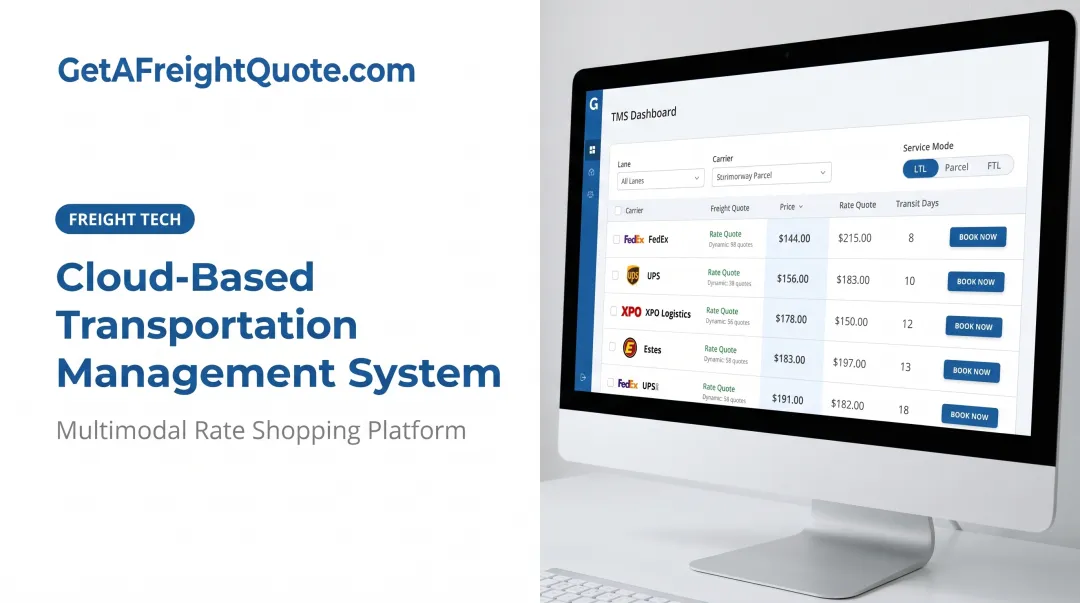
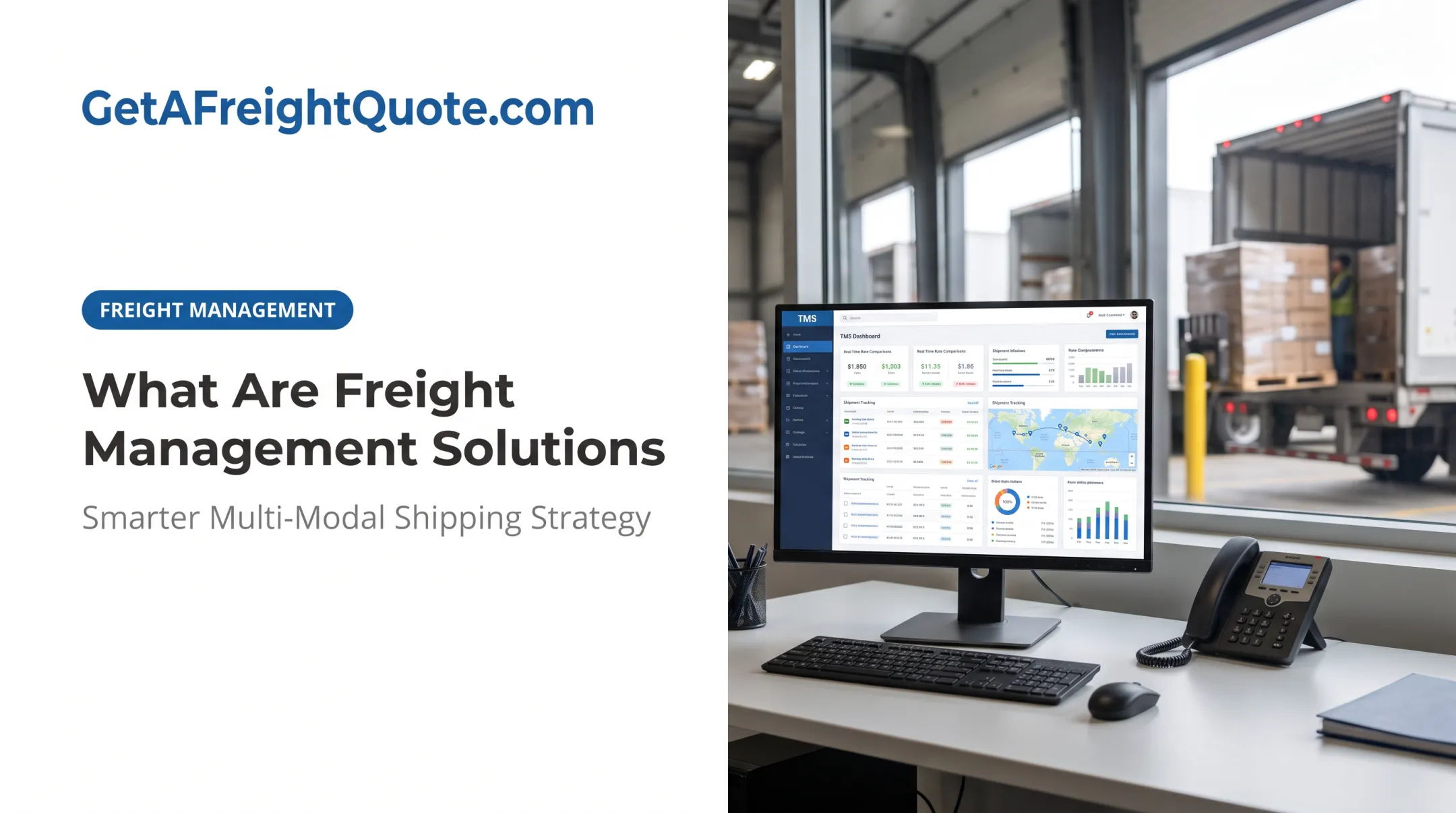
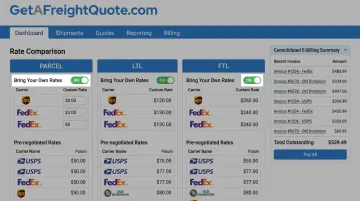
GetAFreightQuote.com's TMS platform addresses this by giving shippers a side-by-side view of rates across parcel, LTL, and FTL modes in a single dashboard. A few features worth noting:
- Bring Your Own Rates (BYOR): Shippers can connect existing UPS, FedEx, or LTL carrier accounts and compare them directly against GetAFreightQuote.com's pre-negotiated rates, which typically run 20-50% below retail pricing
- Consolidated e-billing: One invoice across every mode and carrier, instead of reconciling separate bills
- Tiered access with no volume minimums: QuickShip (0-3 loads/week) and Platinum (2,501+/week) get identical rate visibility—only the per-label fee differs
For businesses that need true multi-leg coordination, like a truck-to-ocean-to-truck move, the self-service platform pairs with hands-on logistics support to structure those shipments. That combination means you're not stuck choosing between DIY complexity and paying a premium for simplicity.
Multimodal Transport Documents and the Bill of Lading
These two terms get used interchangeably, but they're not quite the same thing.
A multimodal transport document is the umbrella term for any paperwork issued by the MTO covering the full journey. A bill of lading is a specific document type, traditionally associated with the ocean freight leg.
Every bill of lading can be part of a multimodal transport document, but not every multimodal transport document is technically a bill of lading.
The Combined Transport Bill of Lading, often issued as FIATA's Multimodal B/L (or "FBL"), bridges this gap. It functions as both the transport contract and the cargo receipt for the entire multi-leg journey, replacing what would otherwise be separate documents for each mode.
FIATA's own guidance traces the FBL format back to 1968. FIATA verifies membership and liability insurance before allowing any forwarder to issue one under its mark.
What you'll typically find on this document:
- Consignor and consignee details
- Full cargo description
- Transfer points along the route
- Liability terms based on the network principle
That last point deserves explanation. Under the network principle, liability for a loss follows whichever mode was in use when it happened:
- Ocean leg damage: ocean liability rules apply
- Road leg damage: road liability rules apply
One contract, one document, but liability rules shift depending on where in the journey something went wrong.
Frequently Asked Questions
What is multimodal freight forwarding?
Multimodal freight forwarding means coordinating a shipment's movement across two or more transport modes under a single contract. One carrier stays responsible for the entire journey, from pickup to delivery.
What are the different types of freight forwarding?
The main categories are air, ocean, rail, and road (including FTL and LTL), plus multimodal and intermodal combinations that link these modes together. Each suits different priorities: speed, cost, or route flexibility.
What's the difference between multimodal and intermodal?
Multimodal transport uses one contract and one liable carrier for the whole journey. Intermodal typically involves separate contracts with a different carrier managing each leg.
Are multimodal transport documents and bill of lading the same?
No. A bill of lading is one specific type of transport document, historically tied to ocean freight. A multimodal transport document is the broader term covering the entire multi-leg contract and cargo receipt.
Is multimodal transport more expensive than intermodal transport?
It can carry a premium in exchange for simplicity and single-carrier liability. Intermodal may cost less, but it requires more hands-on coordination across multiple carrier relationships.
How can a small business get started with multimodal freight shipping?
Start with a TMS platform or freight partner offering negotiated rates and rate transparency without volume minimums. Platforms like GetAFreightQuote.com let businesses compare rates across modes from day one, no matter their shipment size.