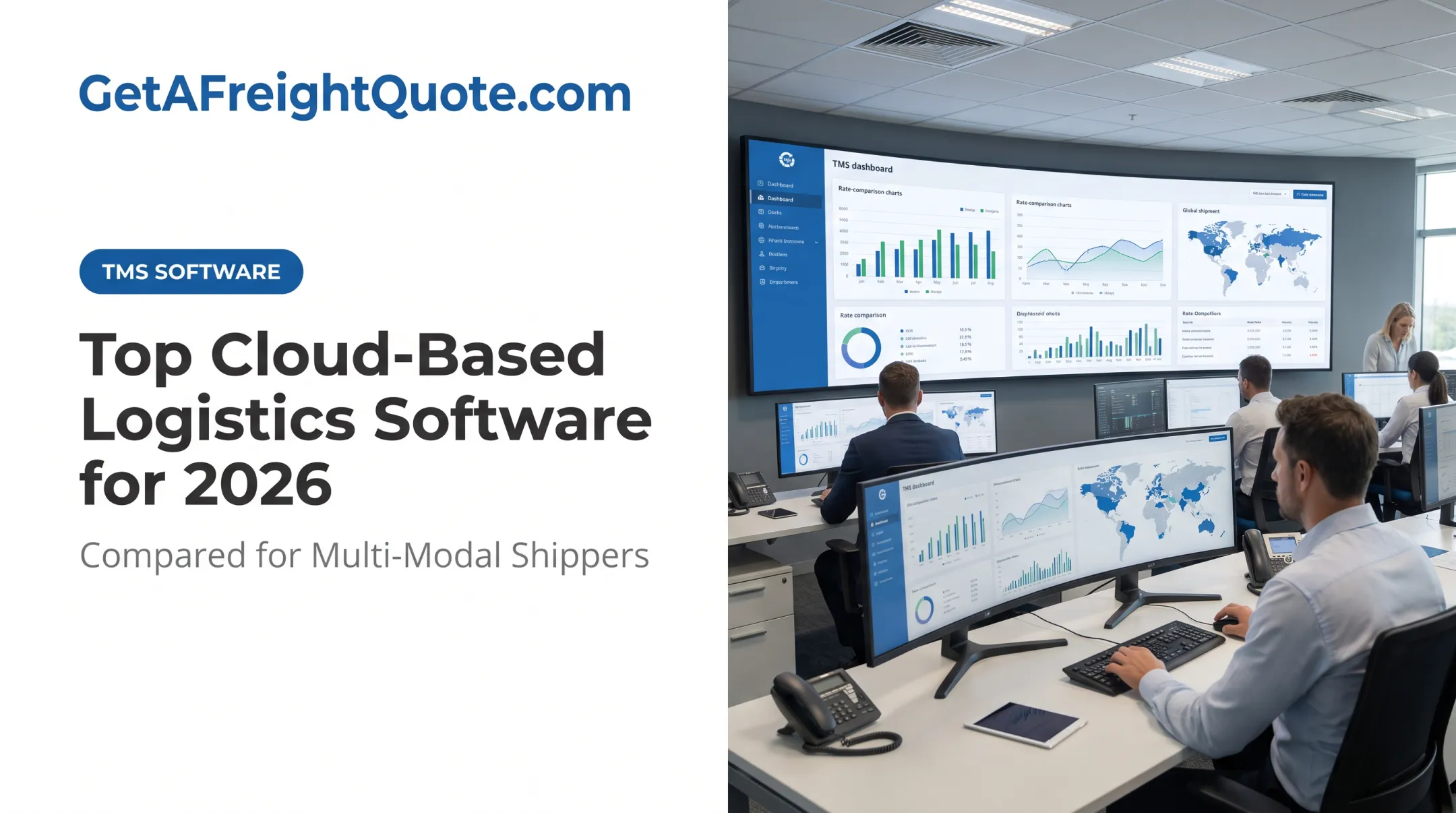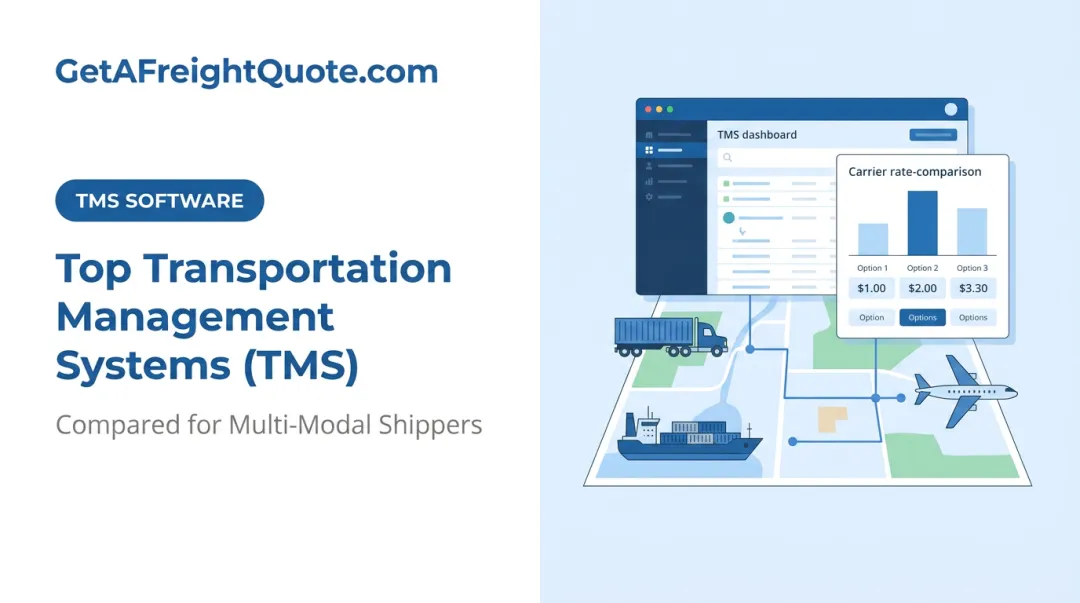
This guide covers what cloud TMS is, the top providers in the 2026 market, and how to choose the right solution for your business size and budget—including access models that make enterprise technology self-funding through the freight savings it generates.
Key Takeaways
- Cloud TMS runs on vendor-managed servers, cutting on-premise IT costs and ongoing maintenance
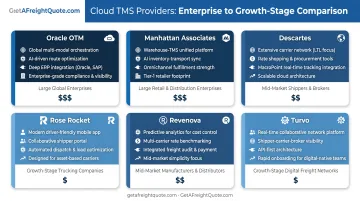
- Top providers (Oracle, Manhattan Associates, Descartes, Rose Rocket, Revenova, Turvo) serve different business sizes and complexity levels
- Small businesses can get cloud TMS via SaaS, 3PL partnerships, or reseller programs with negotiated carrier rates
- Evaluate providers on implementation speed, integrations, uptime, support quality, and total cost of ownership
What is Cloud TMS and How Does It Work?
Cloud TMS is transportation management software hosted on remote servers and accessed via the internet. Companies log in through a web browser, so you don't need on-site servers or an in-house IT team to run the infrastructure. The vendor handles all system updates, security patches, data backups, and server maintenance.
Cloud TMS differs from on-premise TMS in three critical ways:
- Cost structure: Cloud TMS uses predictable monthly subscription fees; on-premise requires large upfront spend on hardware and licenses
- Maintenance: The vendor owns infrastructure, updates, and support; on-premise puts that burden on your IT team
- Accessibility: Use it from any internet-connected location—no VPN maze for remote or multi-site teams
Core Cloud TMS Functionality
Modern cloud TMS platforms provide:
- Order management: Centralized shipment entry and documentation
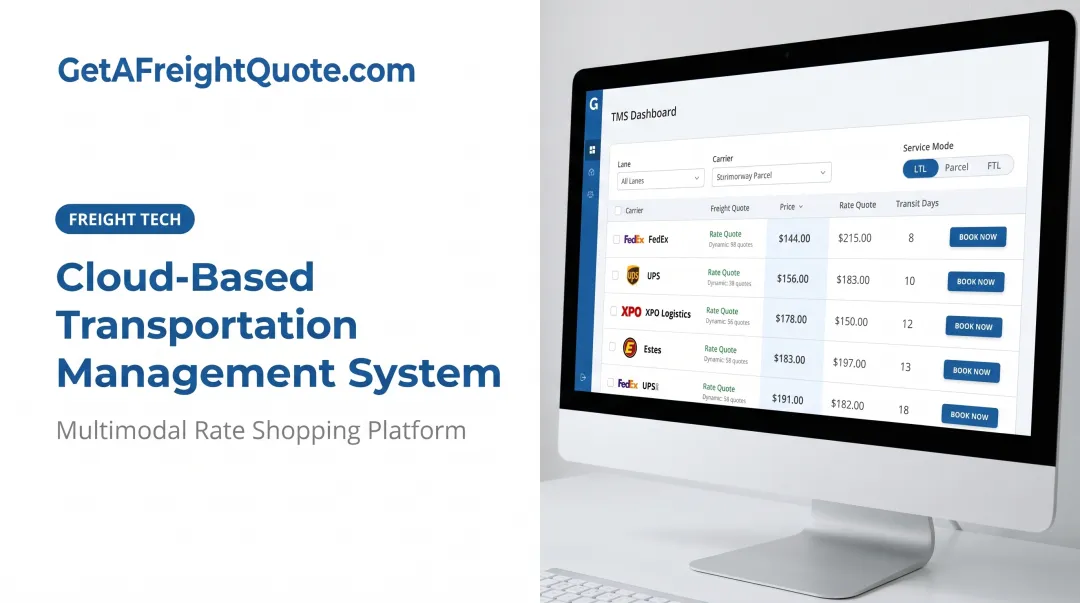
- Carrier selection and rate shopping: Real-time comparison across multiple carriers and service levels
- Route optimization: Automated selection of the most efficient routing and mode
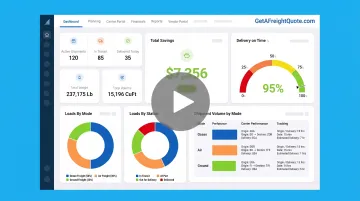
- Shipment tracking and visibility: Real-time status updates across all carriers in one dashboard
- Freight audit and payment: Automated invoice validation and consolidated billing
- Analytics and reporting: Spend analysis, carrier performance metrics, and cost-saving opportunities
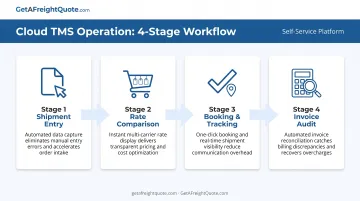
How cloud TMS works in practice:
- Log into the web platform and enter shipment details (origin, destination, weight, dimensions)
- Compare carrier rates and service levels in real time
- Book the best option—the TMS generates docs and tracks the load
- Audit invoices automatically against contracted rates to catch billing errors
Most modern platforms are cloud-native, not legacy tools moved online. They're built for scale, automatic updates, and access from any device.
Top Cloud TMS Providers for 2026
Oracle Transportation Management (OTM)
Oracle OTM earned its 19th consecutive Gartner Magic Quadrant Leader placement in 2026, supporting complex multimodal operations across global supply chains. The platform uses machine learning for carrier selection and ETA prediction, with perfect scores for air, ocean, and rail support.
Native integration with the Oracle ecosystem (including ERP, WMS, and Global Trade Management) makes it a natural fit for enterprises already standardized on Oracle infrastructure.
Best fit: Large enterprises with global operations and existing Oracle technology stacks. Typical implementation timeline runs 4-6 months, with enterprise-level pricing requiring a custom quote.
Manhattan Associates TMS
Manhattan Active TMS runs on cloud-native microservices that ship continuous updates without disruptive version upgrades. It earned its eighth consecutive Gartner Leader recognition in 2026. Embedded AI agents optimize shipments and reduce empty miles, and the unified platform covers warehousing and transportation through Manhattan's supply chain convergence approach.
The company surpassed $1 billion in annual revenue during 2024.
Best fit: Large retailers, manufacturers, and distributors seeking a unified supply chain platform. Pricing requires a custom quote.
Descartes Systems Group
Descartes provides comprehensive multimodal TMS covering domestic and international logistics. The company acquired 3GTMS for $115 million in March 2025 and was named the top provider in ARC Advisory Group's 2025 Global TMS Report with 18.7% cloud-first TMS market share.
Key capabilities include:
- Advanced route optimization and last-mile delivery planning
- AI-powered cross-border trade documentation to reduce compliance risks
- Multimodal support spanning parcel, LTL, truckload, ocean, and air freight
Best fit: Mid-to-large enterprises with complex multimodal operations requiring global trade compliance. Pricing requires a custom quote.
Rose Rocket (TMS.ai)
Rose Rocket launched its TMS.ai brand at Manifest 2025 after a decade building cloud TMS. The platform is AI-native, with intelligence embedded in every workflow rather than bolted on.
TED AI converts emails and PDFs to orders automatically, while Rosie co-pilot assists with load matching and backhaul identification. A no-code workflow builder keeps configuration flexible for growth-stage operations.
Pricing starts at $2,080 per month, with a guaranteed 90-day go-live timeline. The platform processes more than $2.7 billion in freight annually.
Best fit: Growth-stage brokers, carriers, and shippers who need flexibility and fast deployment without long enterprise implementation cycles.
Revenova
Revenova built its TMS natively on the Salesforce platform, offering the most customizable option for teams already in the Salesforce ecosystem. Inbound Logistics named Revenova a 2026 Top 100 Logistics & Supply Chain Technology Provider.
The native CRM and TMS on the same platform eliminate data silos between sales and operations. Artimus AI handles capacity matching, while LaneIQ provides lane intelligence and real-time spot-market pricing optimization. The platform supports multimodal freight including truckload, LTL, intermodal, ocean, and air.
Best fit: Freight brokers and 3PLs who use Salesforce and need deep CRM integration. Pricing requires a demo and custom quote.
Turvo
Turvo earned the #1 ranking on SelectHub's TMS Software directory, with an 88% satisfaction score from 22 reviews. The cloud-native platform focuses on real-time supply chain execution and multi-party visibility, with a collaboration layer connecting shippers, brokers, carriers, and drivers through shared real-time data.
Google-like search works across inventory, orders, and shipments, while an extensive partner network includes DAT, project44, and Truckstop.com. Predictive analytics help identify exceptions before they disrupt service.
Best fit: Freight brokers and 3PLs prioritizing visibility and customer collaboration. Pricing starts around $500-$1,000 per month based on market data, but requires vendor confirmation.
Additional Notable Providers
Other strong cloud TMS options include:
- McLeod Software: Serves truckload carriers, private fleets, and 3PLs with a customizable all-in-one package and 260+ tested integrations
- SAP TMS: 2026 Gartner Leader for companies already standardized on the SAP ecosystem
Across tiers, AI-assisted planning, carrier selection, and exception management are now baseline expectations—not premium add-ons.
Understanding TMS Types: SaaS vs Cloud vs On-Premise
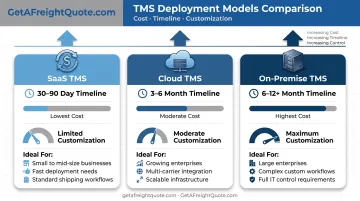
TMS platforms ship in three main deployment models. Each one trades off cost, control, customization, and time-to-go-live differently.
SaaS TMS
SaaS TMS is subscription-based software running on the vendor's multi-tenant infrastructure. You typically pay per user per month.
The vendor handles updates and maintenance. You get out-of-the-box functionality with limited customization. Implementation runs 30-90 days, with the lowest upfront cost and fastest time-to-value.
Cloud TMS
Cloud TMS is a broader category that includes SaaS plus private cloud and single-tenant options. Companies may lease server space or purchase equipment housed at a data center.
You get more customization than pure SaaS without owning on-premise infrastructure. Implementation takes 3-6 months at moderate cost.
On-Premise TMS
On-premise TMS runs on your own physical servers. You get maximum control and customization, but you also take on backup power, redundant internet, in-house IT, and ongoing maintenance.
Implementation takes 6-12+ months with the highest upfront cost. This model usually makes sense only when data sovereignty is critical or internal IT policies prohibit cloud hosting.
When each type makes sense:
| Business Profile | Recommended TMS Type |
|---|---|
| Small business, <100 shipments/week, minimal IT resources | SaaS TMS entry tier |
| Mid-market, 100-500 shipments/week, moderate customization needs | SaaS or cloud TMS |
| Enterprise, >500 shipments/week, complex integrations | Cloud or on-premise TMS |
| Highly regulated industry with strict data controls | On-premise or private cloud TMS |
Cloud TMS Access Options for Small Businesses
Small businesses shipping fewer than 50 loads per month or spending under $10 million annually on freight often struggle to justify $3,000-$6,000 per month TMS subscriptions. Several access models make cloud TMS more affordable:
SaaS TMS Entry Tiers
Many providers offer scaled-down versions starting under $500 per month for businesses with lower shipment volumes. Functionality is limited compared to enterprise tiers, but core capabilities—rate shopping, booking, tracking, and reporting—remain available.
3PL-Provided TMS Access
Some third-party logistics providers include TMS platform access as part of their service, so small shippers can use full-featured tools without a separate software fee.
Important consideration: Know how the 3PL makes money, and whether you can negotiate carrier rates on your own or are locked into their pricing.
TMS Reseller and Bundled Models
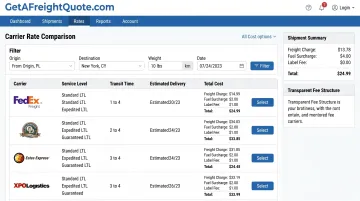
Some logistics companies act as authorized resellers of leading TMS platforms and bundle technology access with pre-negotiated carrier rates. This model makes enterprise-grade TMS self-funding through the shipping savings it generates, so you avoid a separate software subscription.
GetAFreightQuote.com uses this reseller model to give small businesses Fortune 500-level carrier rates and TMS technology without a large monthly platform fee.
How the pricing works:
- Label fees run about 5¢–9¢ based on volume tiers
- Most shippers recover that cost within their first few shipments via 20–50% carrier rate reductions
- Connect your own UPS, FedEx, and LTL accounts alongside GetAFreightQuote.com rates
- Rate-shop both sides and book the lowest-cost option every time
How to Choose the Right Cloud TMS Provider
Shortlist providers on four practical checks: uptime, integrations, support, and total cost. Work through each before you sign.
Assess Uptime and Reliability
Look for a minimum 99.9% uptime guarantee. Stronger published SLAs are better when the vendor can prove them. Oracle maintains a 99.9% application-uptime SLA for its Fusion Cloud Applications as one example.
Ask vendors about redundancy architecture, disaster recovery plans, and planned maintenance windows. Request references from current customers about system stability during peak shipping periods.
Evaluate Integration Capabilities
Confirm the TMS connects with your existing WMS, ERP, accounting software, and e-commerce platforms through pre-built integrations or open APIs. Ask specific questions:
- Which systems have certified, maintained integrations versus custom API work?
- What data fields sync automatically versus requiring manual mapping?
- What implementation support is included for custom integrations?
- Are there transaction limits or API rate limits that could constrain operations?
Generic "API available" claims don't guarantee smooth integration. Verify actual connector availability for your specific tech stack.
Review Customer Support Structure
Ensure 24/7 support through phone, email, and chat. Ask about dedicated account management, training resources, and onboarding timelines.
Check user reviews on Capterra or SelectHub for support quality ratings from current customers.
Calculate Total Cost of Ownership
Look beyond monthly subscription fees to include:
- Implementation and onboarding fees
- Training costs for staff
- Integration expenses for custom connectors
- Transaction fees or per-shipment charges
- Annual maintenance or upgrade costs
- Internal administration time
Compare that total to expected freight savings and efficiency gains to set a realistic ROI timeline. A $5,000-per-month TMS that saves $15,000 monthly in freight costs is an easy case; one that saves $6,000 monthly may not justify the cost.
Frequently Asked Questions
How much does a TMS system cost?
Cloud TMS pricing depends on business size and features. Entry-level SaaS often starts around $500/month, mid-market runs about $2,000–$5,000/month, and enterprise deals are custom—often $10,000+ monthly. Some vendors bill per user, shipment, or order instead of a flat fee.
What does TMS provider mean?
A TMS provider builds and sells software that helps shippers, carriers, brokers, and 3PLs plan, execute, and optimize freight. Delivery models include SaaS subscriptions, on-premise licenses, or managed service bundles.
What is the difference between cloud TMS and on-premise TMS?
Cloud TMS runs on vendor-managed servers over the internet, so you skip owning infrastructure and heavy in-house IT. On-premise TMS sits on your servers and needs ongoing maintenance, security updates, and technical staff. Cloud usually costs less upfront and goes live faster (often 30–90 days vs. 6–12 months).
Do small businesses need a TMS?
If you ship fewer than about 50 loads a month, spreadsheets or lightweight tools may be enough. At 50+ loads—or with multi-carrier complexity—a TMS usually pays off through automated rate shopping, faster documentation, and better visibility that cuts manual work and improves carrier pricing.
How long does it take to implement a cloud TMS?
Basic SaaS setups can go live in about 30 days; enterprise rollouts with heavy integrations or multi-site scope often take 6+ months. Timeline hinges on data migration, how many systems you connect, and how quickly your team can test and train.
Can I use a TMS without buying expensive software?
Yes. Many small businesses get TMS capabilities through 3PL partnerships, freight forwarder portals, or reseller programs that bundle the platform with negotiated carrier rates—so you use enterprise-grade tools without a large standalone software buy.