Introduction
Small and mid-sized businesses across the US are shifting from manual spreadsheets and phone calls to automated, data-driven logistics platforms. Many still wrestle with scattered tracking, unpredictable freight spend, and little leverage on carrier rates. In a market where shipping efficiency shapes competitiveness, that move has become a practical necessity.
Digital logistics platforms help businesses cut transportation costs, improve shipment visibility, automate workflows, and reach better carrier rates. Those capabilities once sat mainly with Fortune 500 companies. Cloud-based tools now put enterprise-grade options within reach for smaller operations at accessible price points.
This article explores the top digital solutions available for small to mid-sized logistics operations in the US, focusing on platforms that balance affordability, functionality, and ease of integration.
Key Takeaways
- Automate shipping, optimize routes, and gain real-time supply chain visibility with digital logistics platforms
- Small businesses can access enterprise-grade TMS tools and competitive rates without Fortune 500 volume
- Evaluate platforms on cost transparency, carrier integrations, scalability, and measurable ROI
- Strong platforms pair TMS with rate comparison, automated documentation, and shipping analytics
- Choose based on business size, shipping volume, existing systems, and your biggest operational pain points
Overview of Digital Logistics Solutions in the US Market
Digital logistics solutions are software platforms that digitize and automate core shipping work, moving businesses off spreadsheets, phone calls, and manual processes. These tools typically centralize:
- Carrier rate comparison and booking
- Label generation and shipment tracking
- Documentation, invoice auditing, and analytics
All of it sits in one cloud-based dashboard.
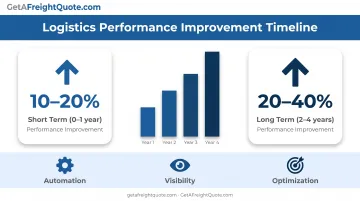
A 2023 McKinsey survey of 258 global shipper and provider leaders found that leading logistics players achieved 10-20% performance improvement in the short term and 20-40% within two to four years. Those results come from larger operations, but the same automation, visibility, and optimization principles apply to smaller shippers still managing freight by hand.
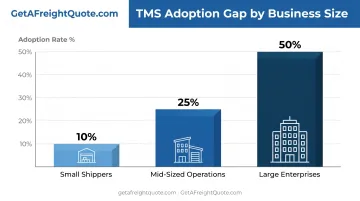
Adoption remains uneven. FreightWaves reported in 2022 that TMS adoption stood at roughly:
- 10% among small shippers
- 25% among mid-sized operations
- 50% among large enterprises
Businesses that pick the right platform early gain a measurable edge on freight cost, delivery speed, and customer experience.
The following section profiles five leading digital solutions suited for small to mid-sized US shippers, chosen for affordability, functionality, customer satisfaction, and integration capabilities.
Top 5 Digital Logistics Solutions for Small and Mid-Sized Businesses
These platforms were selected based on cost-effectiveness, ease of implementation, integration flexibility, customer reviews, and proven ability to deliver measurable savings for businesses without Fortune 500 shipping volumes.
GetAFreightQuote.com
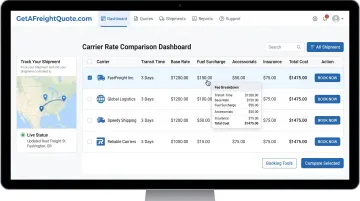
GetAFreightQuote.com is an authorized reseller of a leading TMS platform, founded to address the inequity in freight pricing by giving small businesses access to enterprise-grade technology and pre-negotiated carrier rates typically reserved for high-volume shippers.
It pairs negotiated carrier rates with TMS tools in one place. Standout points include:
- Full invoice transparency with no hidden fees
- Option to add your own carrier accounts for side-by-side rate comparison
- Hands-on support alongside self-service booking
- Pricing that is typically covered by the savings it creates (many users offset platform cost within the first few shipments)
| Aspect | Details |
|---|---|
| Key Features | TMS + pre-negotiated rates (often 20–50% savings); own-carrier comparison; no surprise fees; 24/7/365 support; automated audit; real-time tracking |
| Ideal For | SMB and mid-market shippers who want stronger rates without Fortune 500 volume; parcel, LTL, or FTL (domestic or international) |
| Integration & Scalability | ERP (NetSuite, SAP), eCommerce (Shopify, WooCommerce), QuickBooks; six tiers from 0–3 shipments/week to 2,501+/week |
When to choose this solution: Choose it when rate savings, fee transparency, and multi-modal support (parcel, LTL, FTL) matter more than a parcel-only tool—and you want tech that is expected to pay for itself.
FreightPOP
FreightPOP is a cloud-based TMS founded in 2015, designed for manufacturers, distributors, and retailers managing multiple shipping modes (LTL, FTL, parcel, ocean, air). The platform positions itself for mid-market and enterprise shippers needing centralized freight management across diverse transportation networks.
It connects to a large network of carriers, brokers, and marketplaces (1,500+ listed connections across ERP, carrier, marketplace, and logistics systems). Core capabilities include real-time tracking, load optimization, automated documentation, and analytics for multi-modal freight.
| Aspect | Details |
|---|---|
| Key Features | Multi-modal (LTL, FTL, parcel, ocean, rail, air); broad carrier/marketplace connections; rate shop, book, track, audit; automated docs and workflows |
| Ideal For | Mid-market manufacturers, distributors, and retailers with multi-modal freight—not parcel-only stacks |
| Integration & Scalability | Cloud TMS; ERP/eCommerce via API/EDI; fits teams moving from simple to more complex shipping networks |
When to choose this solution: Best when you ship across several modes, need carrier coverage beyond parcel, and want one system for optimization and reporting.
Shippo
Shippo was founded in 2013 after its founders hit shipping friction while trying to launch an online store and pivoted to multi-carrier software. It now serves 4.6M+ businesses and advertises label rates up to 90% below retail.
Focus is eCommerce parcel: discounted rates across 40+ carriers (including USPS, UPS, FedEx, and DHL Express) for domestic and international labels, plus label printing, automated international docs, tracking, returns tools, unlimited store connections, and API webhooks for custom workflows.
| Aspect | Details |
|---|---|
| Key Features | 40+ carriers; labels up to 90% off retail; international docs; tracking; returns; label print; API webhooks |
| Ideal For | eCommerce, DTC, and small retailers with parcel volume—not complex LTL/FTL freight |
| Integration & Scalability | Shopify, WooCommerce, and similar stores; API for custom builds; free Starter (up to 30 labels/month) through Premier (quote) |
When to choose this solution: Best for parcel-first eCommerce sellers who want fast store setup and clear per-label pricing (including a free tier for light volume).
Uber Freight
Uber Freight launched on May 16, 2017, as a logistics technology provider that pairs TMS software with procurement and marketplace capacity across modes and regions.
The TMS covers planning, execution, visibility, payments, quotes, auctions, and contract/routing-guide work. Shippers get weather and traffic context for routes, KPI tracking, disruption alerts, a Parcel TMS with optimization tools, and 24/7 domain support.
| Aspect | Details |
|---|---|
| Key Features | Multi-mode TMS visibility; weather/traffic analytics (National Weather Service data); KPIs and disruption alerts; Parcel TMS; 24/7 expert support |
| Ideal For | Teams that need deeper visibility and disruption management, including mixed FTL and parcel, plus marketplace capacity |
| Integration & Scalability | API-driven; ties into existing systems; software plus managed transportation options for larger rollouts |
When to choose this solution: Pick it for visibility beyond basic tracking, proactive risk tools on complex networks, and a model that can blend software with procurement services.
Easyship
Easyship is a cloud-based shipping platform founded in 2014, specifically designed for global eCommerce businesses looking to simplify and optimize international shipping processes. The platform serves online sellers, cross-border merchants, and crowdfunding campaigns needing customs automation and multi-courier access.
Differentiators include 550+ courier services (UPS, DHL, FedEx, and regional carriers) with discounts up to 91% off retail, real-time rate comparison, automated customs docs, and dynamic checkout rates aimed at reducing cart drop-off. It connects to major eCommerce platforms and includes unlimited marketplace integrations on all plans.
| Aspect | Details |
|---|---|
| Key Features | 550+ couriers (up to 91% off retail); live rate compare; automated customs; dynamic checkout; order sync; auto labels |
| Ideal For | Cross-border eCommerce, customs-heavy workflows, checkout rate optimization, crowdfunding fulfillment |
| Integration & Scalability | Major eCommerce platforms; order sync and tracking; grows with international volume; annual plans save 20%; fees limited to subscription, postage, and insurance |
When to choose this solution: Best for international eCommerce teams buried in customs paperwork and sellers who want dynamic checkout rates to protect conversion.
How We Chose the Best Digital Logistics Solutions
Businesses often pick logistics platforms for the wrong reasons. They chase feature lists instead of outcomes, overlook integration complexity, underestimate training needs, or buy enterprise tools that are too complex and expensive for what they actually need. The longest feature list rarely delivers the best fit or fastest ROI.
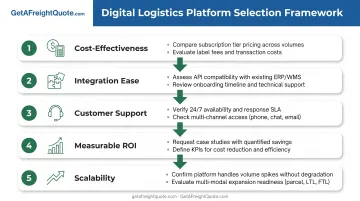
We evaluated platforms on factors that matter most to small and mid-sized businesses:
- Cost-effectiveness and transparent pricing: Total cost of ownership (subscriptions, per-label fees, implementation) and whether advertised discounts match typical results
- Ease of implementation and integration: Speed of connection to ERP, eCommerce, WMS, or accounting systems via pre-built connectors versus custom work
- Customer satisfaction and support quality: Hands-on help, response times, included vs. paid support, and proof of success with similar-sized businesses
- Measurable ROI: Documented savings ranges, baseline tracking, and clear expectations for realistic results
- Scalability: Volume-based pricing tiers and performance limits that support growth without a platform switch
Conclusion
The right digital logistics solution should align with your specific business needs, shipping volumes, and growth goals, not just the longest feature list or the biggest brand name. The platforms profiled here represent proven options across different use cases: from parcel-focused eCommerce tools to multi-modal freight management systems.
Evaluate platforms on:
- Total cost of ownership, including accessorials, integration costs, and training time
- Ease of integration with your existing systems
- Customer support quality beyond initial onboarding
- Proven savings for businesses similar to yours in size and industry
Request demos, test rate-shopping tools with your actual shipment data, and ask for customer references in your industry and size range.
For small and mid-sized businesses seeking enterprise-grade carrier rates, accessible TMS technology, and full cost transparency, GetAFreightQuote.com gives you a platform built to compete on shipping costs regardless of volume.
Frequently Asked Questions
What is digital logistics?
Digital logistics uses software, data, automation, and connected technologies to run logistics operations instead of spreadsheets and phone calls. Integrated platforms deliver real-time visibility, automated decisions, and data-driven insights across planning, execution, and settlement.
Which software is used in logistics?
Common tools include TMS, WMS, freight marketplaces, multi-carrier shipping platforms, and supply chain visibility systems. Many cloud platforms now combine quoting, booking, documentation, tracking, auditing, and analytics in one interface.
What is a digital supply chain platform?
A digital supply chain platform connects procurement, inventory, transportation, and delivery in one system. It gives end-to-end visibility and coordinates partners through APIs, real-time data sharing, and centralized dashboards.
What is the best CRM for logistics?
It depends on your needs. Logistics-focused CRMs like Logitude add freight features, while Salesforce and HubSpot can be customized for logistics. Pick one that connects to your TMS via APIs or EDI so customer, order, and shipment data flow automatically.
What are the 5 main areas of digital transformation?
In logistics, the five main areas are:
- Automating manual work such as quoting and booking
- Real-time visibility and tracking across shipments and carriers
- Analytics and AI for routing and carrier selection
- Digital documentation and workflows that replace paper
- System and partner integration via APIs and cloud platforms