The stakes are real: U.S. carriers moved 22.37 billion parcels in 2024, up 3.4% from the year before. That volume means more competition for capacity, more nuanced pricing rules, and more room for costly mistakes.
This guide breaks down the cost, size, handling, and use-case differences between parcel and LTL so you can confidently choose the right mode for every shipment, not just guess and hope.
Key Takeaways
- Parcel covers packages under 150 lbs; LTL handles palletized freight above that threshold up to carrier maximums
- Small, light shipments cost less via parcel but face more handling touchpoints and higher damage risk
- LTL protects bulky freight through palletization, though transit is slower and pricing depends on freight class
- Choosing the wrong category risks unauthorized package charges or reweigh fees
- Comparing live rates across both modes is the fastest way to stop overpaying
Parcel vs LTL: Quick Comparison
Before covering definitions, here's the side-by-side breakdown shippers ask for most.
| Factor | Parcel | LTL |
|---|---|---|
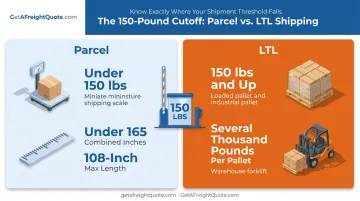
| Weight limit | Under 150 lbs, liftable by one person | 150 lbs and up, often several thousand pounds per pallet |
| Dimensions | Under 165 combined inches (length + girth) | Larger or irregular dimensions, usually palletized |
| Pricing basis | Weight, dimensions, distance | NMFC freight class, density, dimensions, distance, accessorials |
| Transit time | Faster: ground, 2-day, overnight, same-day options | Longer: freight moves through multiple terminals |
| Damage/loss risk | Higher, due to multiple sorting facilities | Lower, since freight is palletized and secured |
| Best suited for | E-commerce, D2C, residential deliveries | B2B bulk orders, manufacturers, wholesalers |
Weight and Size Thresholds Matter More Than You Think
UPS and FedEx Ground both cap standard packages at 150 lbs, 108 inches in length, and 165 combined inches of length plus girth. Cross that line and your shipment becomes freight, whether or not you've labeled it that way.
Cost Structure Isn't Apples-to-Apples
Parcel pricing is fairly predictable: weight, dimensions, and zone. LTL pricing pulls in NMFC freight class, density, accessorial services like liftgate or inside delivery, and negotiated carrier discounts. That complexity is exactly why side-by-side rate comparisons matter before you commit to a mode.
What Is Parcel Shipping?
Parcel shipping covers individual packages generally under 150 lbs, handled by carriers like UPS, FedEx, DHL, and USPS. For businesses shipping direct-to-consumer, it's the default mode, and for good reason.
Core benefits include:
- Fast transit options ranging from ground to same-day
- Multi-point tracking through several scan checkpoints
- Flexible pickup and drop-off locations
- Lower per-package costs for small, light items
Beyond those benefits, packaging stays simple: individual boxes, no pallets, and each unit must be liftable without equipment. That simplicity is also the trade-off. More checkpoints and hand-offs mean more chances for a package to get lost, delayed, or damaged compared to a single palletized freight shipment.
Where Parcel Fits in Fulfillment
Parcel dominates e-commerce order fulfillment and low-volume B2C shipping. Think apparel, small electronics, accessories, and subscription boxes, products that are light, boxable, and headed to residential addresses.
The scale here is enormous. U.S. carriers handled 22.37 billion parcels in 2024, a 3.4% jump from 2023. That growth also means more surcharges, more dimensional weight pricing, and more reasons to shop rates rather than default to one carrier.
What Is LTL Shipping?
LTL, or less-than-truckload, shipping covers freight roughly between 150 lbs and several thousand pounds that shares trailer space with other shippers' cargo. It's the backbone of B2B distribution for businesses moving bulk or oversized goods that don't fill an entire truck.
Core benefits include:
- Cost savings from sharing trailer space instead of paying for a full truck
- Better stability and protection through palletization
- Access to accessorial services like liftgate delivery, inside delivery, and white-glove handling
Why Freight Class Determines Your Price
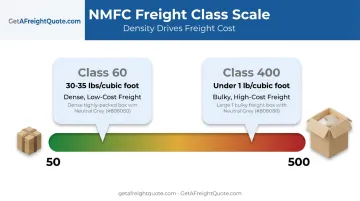
LTL pricing runs on NMFC (National Motor Freight Classification) codes, which assign a class from 50 to 500 based on density, handling difficulty, stowability, and liability. Denser, easier-to-handle freight gets a lower class and a lower rate; bulky, fragile, or awkward freight climbs the scale.
For example, freight running 30 to 35 pounds per cubic foot lands around class 60, while anything under 1 pound per cubic foot hits class 400. That's a massive pricing swing for what might look like a similarly sized shipment on paper.
Where LTL Fits in Supply Chains
LTL is the standard for wholesale distribution, bulk order fulfillment, and B2B freight. Furniture, industrial machinery, and building materials all move this way because they're too heavy or bulky for parcel networks but don't justify a dedicated truck.
Fewer touchpoints generally mean less handling damage. That said, pairing your freight with a carrier unfamiliar with your product type (fragile glass, irregular shapes) can still increase mishandling risk. Carrier fit matters as much as mode selection.
Parcel vs LTL: Which Is Better for Your Business?
There's no universal answer here. The right mode depends on a handful of concrete factors:
- Total weight and dimensions of the shipment
- Budget and how sensitive your margins are to per-shipment cost
- Delivery speed requirements
- Destination type, residential doorstep versus a commercial dock with a loading bay
Choose parcel if you're shipping light, individual packages that need speed and routing flexibility. Choose LTL if you're shipping bulky, palletized, or high-volume freight where consolidating cost matters more than next-day delivery.
The Real Cost of Misclassification
Getting this wrong carries a steep cost. FedEx's own 2026 fee schedule lists an unauthorized package charge of $1,875 for parcels that exceed weight or dimension limits. On the LTL side, reweigh and inspection fees (often around $47 per request) apply when a shipment's declared weight or class doesn't match reality.
Neither charge is something you want to discover after the fact. If a shipment is anywhere near the 150-lb or 165-inch threshold, it's usually safer to book it as LTL from the start.
This is exactly the guesswork GetAFreightQuote.com's TMS-powered quoting tool is built to remove. The platform displays live parcel, LTL, and FTL rates from UPS, FedEx, USPS, and 100+ LTL carriers in one screen. Shippers see which mode is actually cheaper before they book, not after a reclassification fee shows up on an invoice.
Real-World Example: When Parcel Stops Making Sense
Picture a growing home goods company shipping small furniture accessories. Early on, everything moved through a single parcel carrier because volumes were low and items were light. As the product line expanded into larger items, oversize surcharges and dimensional weight charges started showing up on nearly every invoice.
The trigger for change was simple: recurring oversize fees plus a rising number of damage claims on items that were too bulky to survive parcel handling.
That's the point where a formal benchmarking step pays off. GetAFreightQuote.com's Managed LTL Services start by analyzing existing shipment data, weights, dimensions, and lane history, to identify exactly which shipments should shift to LTL.
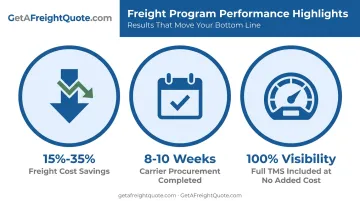
Businesses using this approach typically see:
- 15% to 35% in freight cost savings
- Carrier procurement completed in 8 to 10 weeks
- Full TMS visibility included at no added cost
The takeaway: audit your shipment mix periodically. What made sense at 50 shipments a week might be costing you real money at 500.
Ready to see where you're overpaying? Compare live parcel and LTL rates side-by-side through GetAFreightQuote.com and find out in minutes whether your current shipments are sitting in the wrong mode.
Conclusion
There's no single "better" mode between parcel and LTL. The right choice comes down to a few key factors:
- Shipment weight and dimensions
- Available budget
- Required delivery speed
Get that decision right consistently, and you'll avoid misclassification fees and damage claims, while keeping shipping costs under control as your volume grows.
Frequently Asked Questions
What is the difference between LTL and parcel?
Parcel handles individual packages typically under 150 lbs through carriers like UPS and FedEx. LTL handles larger, palletized freight up to several thousand pounds, with pricing based on freight class rather than simple weight and distance.
What qualifies as a parcel vs LTL shipment?
Parcel covers items under 150 lbs and within 165 combined inches of length and girth. Anything heavier, bulkier, or palletized qualifies as LTL freight instead.
Are services like UPS Ground, FedEx Ground, and FedEx Freight classified as parcel or LTL?
UPS Ground and FedEx Ground are parcel services for individual packages under 150 lbs. FedEx Freight, by contrast, is explicitly an LTL service built for palletized freight shipments.
Which is cheaper: parcel or LTL shipping?
Parcel is usually cheaper for small, light shipments since pricing is simpler and more predictable. As weight and volume climb, LTL typically becomes the more cost-effective option due to shared trailer space.
What happens if I misclassify a shipment between parcel and LTL?
Misclassifying a shipment can trigger unauthorized package charges on the parcel side or reweigh and inspection fees on the LTL side. When a shipment is close to the 150-lb threshold, it's generally safer to book it as LTL.
How does freight class affect LTL shipping costs?
NMFC freight class, based on density, handling ease, stowability, and liability, directly determines your LTL rate. Denser, easier-to-handle freight earns a lower class and a lower cost; bulky or fragile freight costs more.