You've probably also seen "rate shopper" used outside of shipping. Hotels use rate shopping tools too, but they're built to track competitor room prices, not to save money on transportation. In logistics, the term means something entirely different.
This post breaks down what a rate shopper actually is in shipping and freight, how it works step by step, and why it matters if you're a small or mid-sized business competing against shippers with far bigger volume. We'll also cover the ShipStation rate shopper specifically, since it's one of the most common searches on this topic.
Key Takeaways
- A rate shopper compares live carrier rates across parcel, LTL, and FTL shipments on one screen.
- It pulls quotes from multiple carriers at once, displaying cost, transit time, and service level side by side.
- Hotels use similarly named software, but for competitor price benchmarking, not shipping.
- Standalone tools only show pricing; a full TMS adds booking, tracking, and negotiated rates.
What Is a Rate Shopper?
A rate shopper is a tool or feature that automatically compares shipping rates from multiple carriers for a given shipment. It uses shipment details—weight, dimensions, origin, destination, and service type—to pull quotes and rank them so you can pick the best option before you commit.
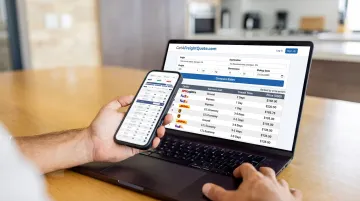
You'll find rate shoppers in two main shipping contexts:
- Parcel shipping — small package and e-commerce shipments through carriers like UPS, FedEx, and USPS
- Freight shipping — LTL and FTL loads, where pricing depends on freight class, weight, and lane conditions
Both use cases share the same goal: preventing you from overpaying because you only checked one carrier.
Clearing Up the Cross-Industry Confusion
If you searched "rate shopper" and landed on hotel software results, that's not a mistake. It's just a different industry using the same term. Hotel rate shopping software benchmarks a property's room rates against local competitors. It has nothing to do with comparing carrier pricing.
In shipping, rate shopping is about finding you the best carrier price. There's no competitor benchmarking involved, just a direct comparison of what different carriers will charge to move your freight.
From Phone Calls to Real-Time Quotes
Rate shopping used to mean calling or emailing carriers one at a time, then manually maintaining spreadsheets as fuel surcharges and seasonal pricing shifted. Descartes notes that freight forwarders traditionally searched multiple carrier websites for prices and continuously updated rate tables as conditions changed.
Now, software pulls live rates through carrier APIs or pre-negotiated rate tables in seconds. What used to take a full afternoon of phone tag now takes one form submission.
Who Uses Rate Shoppers
Rate shoppers aren't limited to large logistics teams. They're used by:
- E-commerce sellers comparing parcel rates before every label purchase
- Warehouses shipping high volumes across multiple carriers
- Freight brokers quoting LTL and FTL loads for clients
- Small business shippers who don't have a dedicated logistics team
Any of these groups can end up defaulting to a single carrier simply because it's convenient, not because it's cheap.
How Does a Rate Shopper Work?
A rate shopper follows a consistent process regardless of shipment mode.
- Enter shipment details. You input origin, destination, weight, dimensions, freight class (for LTL), and desired service level, ground, expedited, or standard LTL.
- The tool queries carriers simultaneously. Rather than checking one carrier at a time, the system pulls live quotes from multiple carriers' rate APIs or pre-negotiated rate tables at once.
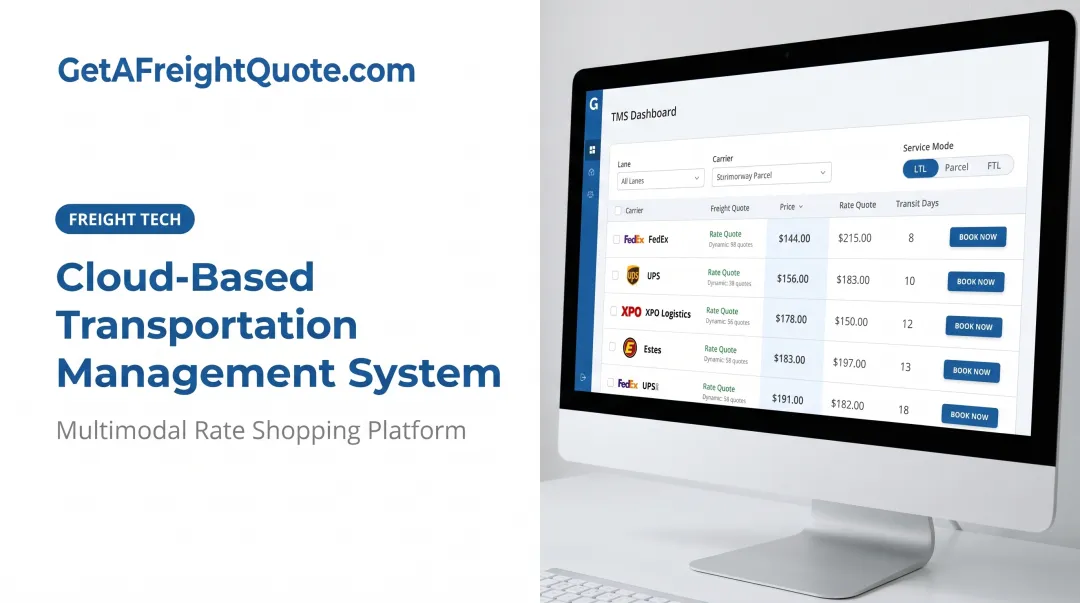
- Results display side by side. They're typically ranked by price, transit time, and service reliability, so you can compare apples to apples.
- Fees get factored in. The better tools include accessorial charges, fuel surcharges, and other add-ons, so you see a true all-in cost instead of a misleadingly low base rate.
- You book directly. Once you pick a rate, many platforms let you generate labels or paperwork right there, moving you from quote to shipment without switching systems.
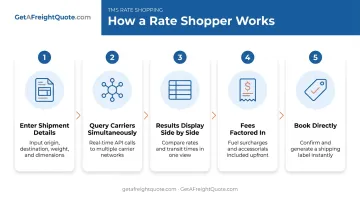
That fee-inclusion step matters more than it sounds. A base rate can look great on paper, but these costs often push the final number up fast:
- Residential delivery charges
- Dimensional weight adjustments
- Fuel surcharges
Skipping that step is how "cheap" quotes turn into expensive invoices. GetAFreightQuote.com's rate shopper folds these fees into every quote upfront, so the number you see is the number you pay.
Why Rate Shopping Matters for Small and Mid-Sized Businesses
Cost savings is the obvious benefit, but it's not the only one.
ShipStation reports an average savings of 3.4% per label for shippers using its rate shopper feature. That's a vendor-reported figure specific to their platform, and actual results vary by shipment volume, carrier mix, and how competitive your current rates already are.
Still, it illustrates a real pattern: comparing rates on every shipment adds up over time, even when the per-label difference looks small.
Beyond savings, rate shoppers deliver:
- Time savings: no more requesting quotes from three or four carriers separately for every shipment
- Fee transparency: seeing accessorials and surcharges upfront instead of discovering them on the final invoice
- Smarter carrier selection: matching each shipment to the carrier best suited for cost, speed, or reliability instead of defaulting to the same option every time
That transparency piece connects to a bigger issue in freight: hidden accessorial fees. UPS notes that fuel surcharges may apply to domestic transportation and certain accessorial charges, on top of residential delivery and delivery-area fees that can stack quickly. A rate shopper that skips these numbers isn't giving you the real picture.
Leveling the Playing Field
This is where access to negotiated rates changes the equation. GetAFreightQuote.com works as an authorized reseller of a leading TMS platform, giving small and mid-sized businesses rate shopping across pre-negotiated, Fortune 500-level carrier rates. You can also add your own existing carrier accounts into that same comparison, so you're seeing every option, negotiated and personal, in one view.
That combination matters because volume-based pricing has traditionally rewarded only the biggest shippers. A business moving 50 packages a week doesn't get the same negotiating power as one moving 50,000. Bringing enterprise-level rates into reach for smaller shippers closes that gap without requiring them to hit enterprise volume first.
Rate Shopper vs. Full Transportation Management System (TMS)
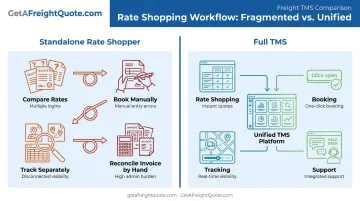
A standalone rate shopper does one job well: it shows you pricing comparisons. That's it.
What a standalone tool typically doesn't handle:
- Booking the shipment after you've picked a rate
- Tracking the shipment once it's moving
- Managing documentation and paperwork
- Maintaining carrier relationships over time
That gap creates extra work:
- Compare rates in one tool
- Book manually in a different system
- Track the shipment through a third platform
- Reconcile the invoice by hand afterward
Each handoff is a chance for errors or delays.
A full TMS, like the platform GetAFreightQuote.com resells, folds all of that into one workflow: rate shopping, booking, tracking, and hands-on support, alongside negotiated carrier rates. You execute the entire shipment from one dashboard instead of just comparing prices. For a business without a dedicated logistics team, that consolidation often matters as much as the rate savings themselves.
Key Features to Look for in a Freight Rate Shopping Tool
Not every rate shopper is built the same way. Before committing to one, check for these three things:
- Real-time rate data. Look for tools pulling live quotes from multiple carriers at the moment you need them, not cached numbers from last week.
- Your own carrier accounts, included. Add existing carrier contracts alongside negotiated rates for a true apples-to-apples comparison instead of guessing which option wins.
- Full rate transparency. The quoted price should match the final invoice, with no hidden accessorials or surprise surcharges after the shipment moves.
These three features separate a useful rate shopper from one that just looks good in a demo.
Frequently Asked Questions
What is a rate shopper?
A rate shopper is a tool that compares live shipping rates across multiple carriers based on your shipment's weight, dimensions, and destination. It helps you find the best combination of price and service before you book.
What is the rate shopper on ShipStation?
ShipStation's rate shopper compares rates across connected carriers, including USPS, UPS, and FedEx, before you purchase a label. Platforms like GetAFreightQuote.com offer similar comparisons across parcel and freight, including LTL and FTL.
Is rate shopping only for parcel shipments, or does it apply to freight too?
Rate shopping applies to both parcel and freight shipments, including LTL and FTL. The carriers, pricing structures, and comparison factors differ between the two, but the core concept of comparing multiple options stays the same.
How much money can a business save by using a rate shopper?
Savings vary by shipment volume and carrier mix, so there's no single universal number. Businesses using GetAFreightQuote.com's platform have seen carrier rate reductions of 20-50%, though results vary based on your current rates and shipping profile.
Do I need a full TMS to use a rate shopper?
No. Many carriers and platforms offer standalone rate shopping tools on their own. A full TMS bundles rate shopping with booking, tracking, and negotiated pricing, giving you a more complete solution in one place.
Can I compare my own carrier accounts alongside negotiated rates in a rate shopper?
Some platforms allow this, including GetAFreightQuote.com. You can add your existing carrier accounts into the same comparison view as negotiated rates, so you're seeing every real option before choosing the best price.