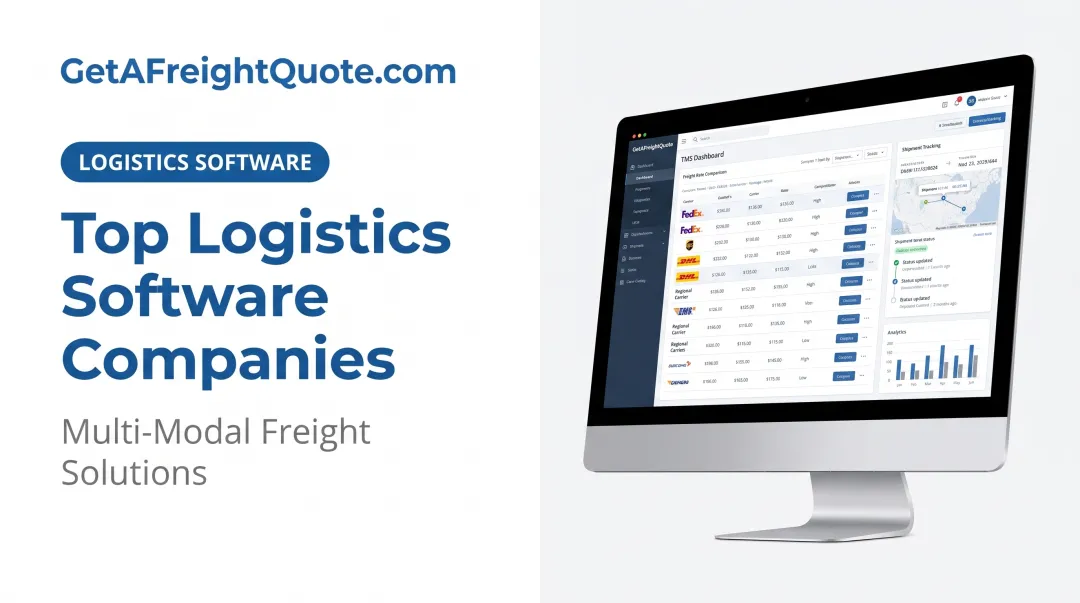
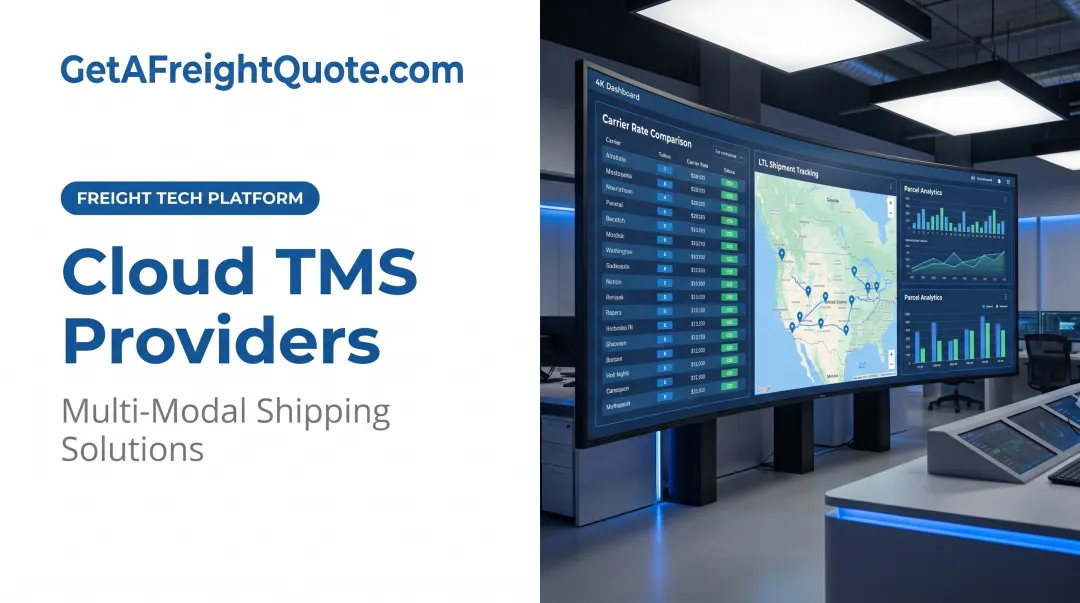
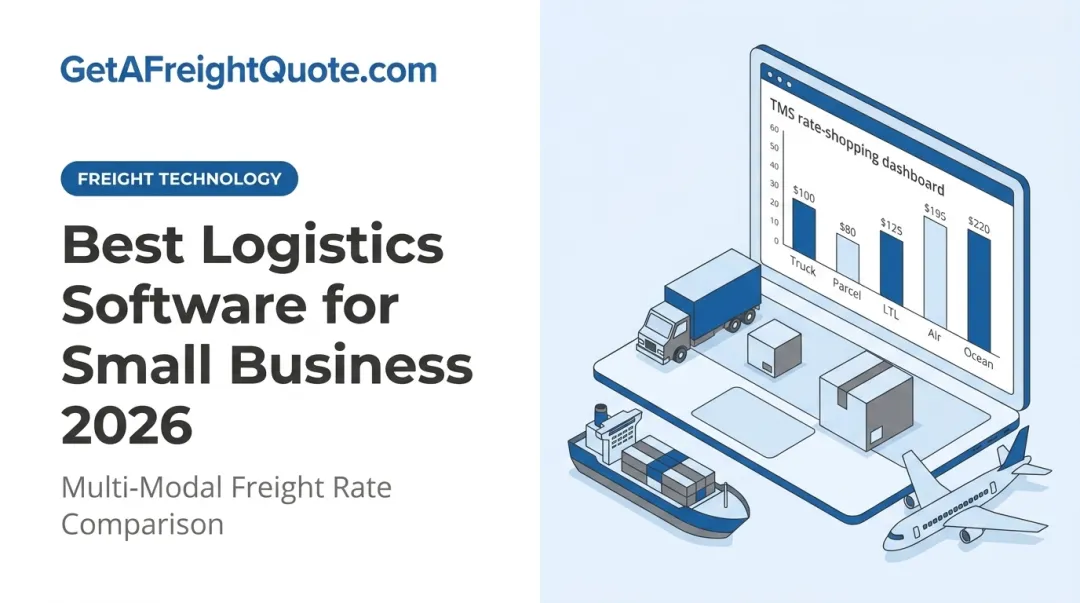
Real-time visibility isn't optional anymore. As customer expectations rise and shipment complexity grows, transportation management systems (TMS) have moved from "nice to have" to table stakes for shippers of every size. This article ranks the top cloud-based logistics platforms heading into 2026 and breaks down how to pick the right one for your business.
TL;DR
- Centralizes rate management, tracking, and inventory without on-site infrastructure
- Serves small shippers through global enterprises with flexible workflows and real-time data
- Top 2026 platforms differ by strength: freight forwarding, e-commerce fulfillment, or enterprise supply chain
- Choose based on integration ease, scalability, transparent pricing, and support quality
- Smaller shippers can pair any platform with GetAFreightQuote.com for negotiated carrier rates
Overview of Cloud-Based Logistics Software in the US Market
Cloud-based logistics software manages transportation, inventory, tracking, and order fulfillment through internet-hosted platforms instead of on-premises servers.
Annual spend on supply chain management software is projected to jump from $29 billion in 2023 to $62 billion in 2028, a 16.3% five-year growth rate, according to Gartner's 2024 forecast. Much of that growth is flowing into cloud platforms.
E-commerce volume is a major driver. The US Census Bureau reported $340.2 billion in Q2 2026 e-commerce sales, up 12.2% year-over-year and now representing 17.1% of total retail sales. That scale pushes shippers toward cloud tools for multi-carrier rating, tracking, and fulfillment.
Yet TMS adoption remains uneven:
- ~50% of large shippers
- ~25% of medium-sized shippers
- ~10% of small shippers

That gap matters. Smaller shippers miss the visibility and rate tools larger competitors already treat as standard. Below, we rank the platforms best positioned to close that gap in 2026.
Top Cloud-Based Logistics Software for 2026
Each platform below was evaluated on real-time visibility, scalability, integration capability, and proven adoption across shipper types.
Flexport
Flexport operates as an end-to-end digital freight forwarder, serving 13,000+ customers from emerging brands to Fortune 500 companies.
What sets it apart is dashboard depth. Flexport pulls live shipment and milestone data across air, ocean, truck, and rail, then layers in landed-cost tracking and 90-day performance trends. It connects with more than 80 ERP and TMS systems, making it a strong fit for businesses juggling multiple existing tools.
| Feature | Detail |
|---|---|
| Key Features | Real-time freight visibility, analytics, multi-mode integration |
| Best For | Businesses needing end-to-end freight management |
| Pricing Model | Custom/quote-based |
Descartes Systems
Descartes runs the Global Logistics Network (GLN), connecting over 30,000 shippers, carriers, and logistics providers worldwide.
Scale and compliance set it apart more than flashy dashboards. Descartes handles customs documentation, regulatory processes, and route optimization for companies that move freight across borders regularly.
| Feature | Detail |
|---|---|
| Key Features | Route planning, customs compliance, global network messaging |
| Best For | Companies needing global trade compliance and network reach |
| Pricing Model | Enterprise/custom pricing |
Kuebix (a Trimble Company)
Kuebix built its reputation as a modular SaaS TMS that scales from small shippers up to large enterprise operations.
Its Community Load Match feature connects users to more than 20,000 shippers and Trimble's 1.3 million commercial trucks, so you can find capacity fast. Multimodal support spans LTL, FTL, parcel, and rail.
| Feature | Detail |
|---|---|
| Key Features | Multimodal TMS, load matching, analytics dashboard |
| Best For | Shippers wanting an all-in-one modular TMS |
| Pricing Model | Tiered/subscription-based (Free Shipper, Business Pro, Enterprise) |
Oracle Fusion Cloud SCM
Oracle's suite targets enterprise-scale operations with deep supply chain planning built in. It brings product development, procurement, order management, and logistics under one roof instead of acting as a point solution.
Its AI capabilities stand out: demand forecasting that factors in past sales, market trends, and even weather patterns, plus an Autonomous Sourcing Assistant that automates low-value procurement events.
| Feature | Detail |
|---|---|
| Key Features | AI/ML forecasting, procurement automation, logistics analytics |
| Best For | Large enterprises with complex, global supply chains |
| Pricing Model | Enterprise/custom licensing |
ShipBob
ShipBob is purpose-built for e-commerce sellers, not general freight shippers. Its 60+ fulfillment centers and distributed inventory model let brands store stock closer to customers.
The analytics dashboard tracks SKU velocity, stockout predictions, and delivery performance, and it plugs directly into Shopify, BigCommerce, WooCommerce, Wix, and Squarespace.
| Feature | Detail |
|---|---|
| Key Features | Distributed warehousing, Shopify/BigCommerce integration, order analytics |
| Best For | E-commerce businesses scaling fulfillment |
| Pricing Model | Usage-based/subscription |

How We Chose the Best Cloud-Based Logistics Software
The biggest mistake businesses make? Picking a platform because of brand recognition rather than fit. A platform built for enterprise-scale complexity will overwhelm a shipper moving a few hundred parcels a week. A lightweight e-commerce tool won't handle multi-modal freight compliance.
We weighed each platform against:
- Real-time visibility across shipment modes
- Integration ease with existing ERP/CRM systems
- Scalability as shipment volume grows
- Pricing transparency that surfaces true total cost, not just sticker rates
- Support quality through implementation and early go-live

FreightWaves' 2024 buyer research points to ERP/WMS integration and implementation ease as recurring pain points, particularly for smaller shippers without dedicated IT teams. For those teams, fit beats brand recognition every time.
Conclusion
The right cloud logistics platform matches your shipment volume, growth stage, and operational complexity—not the biggest brand name on the market. Before committing, evaluate:
- Total cost of ownership, not just the sticker price
- Rate transparency across carriers and modes
- Ongoing performance once you're past the sales pitch Software solves visibility and workflow problems. Competitive rates are a separate challenge. Pairing your platform with GetAFreightQuote.com closes that gap. Its TMS shows parcel, LTL, and FTL rates side by side, and Bring Your Own Rates lets you connect existing UPS, FedEx, and LTL accounts to compare against negotiated pricing typically 20–50% below retail. Get a freight quote to see how it fits alongside your current software stack.
Frequently Asked Questions
What is cloud-based logistics?
Cloud-based logistics refers to internet-hosted software that manages transportation, inventory, and order operations without requiring on-premise servers. Businesses access it through a browser, and the provider handles hosting, updates, and security.
What are examples of cloud-based platforms?
Common examples include transportation management systems (TMS) like Kuebix, warehouse management systems (WMS), and end-to-end freight platforms such as Flexport and Descartes.
Is cloud-based logistics software secure for sensitive shipment data?
Reputable providers use encryption, access controls, and compliance certifications such as SOC 2 and ISO 27001. ShipBob, for instance, publishes an updated SOC 2 Type 2 report and ISO 27001:2022 certificate through its Trust Center.
How much does cloud-based logistics software typically cost?
Most platforms use subscription or usage-based pricing that scales with shipment volume and feature access. Kuebix, for example, offers tiers from a free Shipper plan up to Enterprise, while Oracle and Descartes use custom enterprise licensing.
Can small businesses benefit from cloud logistics software?
Yes. Low upfront costs and scalable pricing make these platforms accessible without enterprise budgets. GetAFreightQuote.com, for example, lets smaller shippers add their own carrier accounts and compare them against negotiated rates.
How do I choose the right cloud logistics platform for my business?
Match the platform to your shipment volume, integration needs, and growth stage. Prioritize pricing transparency and support quality over brand recognition, and confirm the platform connects cleanly with your existing ERP or CRM system.