Without Fortune 500-level shipment volume, many businesses end up stuck paying retail rates while competitors quietly access negotiated pricing. This guide breaks down the types of Minnesota freight shipping companies available, what to evaluate before signing a contract, the real cost drivers behind your quotes, and how technology-driven platforms are changing who gets access to competitive rates.
Key Takeaways
- Minnesota’s Twin Cities, Duluth, and Rochester hubs make it a critical Midwest shipping corridor
- Providers span asset-based carriers, brokers, and TMS platforms—each with different pricing models
- Small businesses can access enterprise-grade rates without enterprise-level shipment volume
- Judge partners on rate transparency and technology, not only the lowest quoted price
Understanding the Minnesota Freight Shipping Landscape
Minnesota sits at the crossroads of three major interstates: I-35, I-94, and I-90. That geography is a primary reason the state moves so much freight.
I-94 alone carries over 20,000 trucks per day near Monticello and St. Cloud, according to Minnesota's state freight planning data. I-35 stretches from Duluth all the way to the Mexican border, and I-35W carries the highest truck traffic volume in the Twin Cities metro.
The scale here is significant. Nearly 400 million tons of freight move on Minnesota roads annually, and freight-related industries account for 40.5% of the state's employment, per Minnesota's Department of Employment and Economic Development.
Where the Freight Actually Moves
Minnesota's freight network isn't limited to highways:
- Twin Cities — rail intermodal terminals from BNSF, CPKC, and Union Pacific
- Duluth — the largest freshwater port in the United States, plus intermodal rail connections
- Rochester — over 4% of the state's total air-cargo tonnage
- Eagan and St. Cloud — established LTL terminal locations serving regional distribution

This concentration creates a market that's competitive on paper but fragmented in practice. Rates and service quality vary considerably depending on which terminal, carrier, and lane you're using. Comparison shopping matters more here than in less complex freight markets.
Types of Freight Shipping Companies Serving Minnesota Businesses
Not all freight providers work the same way. Understanding the differences helps you know what you're actually buying.
Asset-based carriers own their own trucks and trailers. You get direct control and accountability, but best pricing typically requires consistent, higher-volume shipping. That can be a tough ask for a growing Minnesota business shipping a few pallets a week.
Freight brokers act as intermediaries. The Federal Motor Carrier Safety Administration defines a broker as the "middle person" arranging transportation between a shipper and a motor carrier. Brokers can offer flexibility, but your rates depend heavily on that broker's carrier relationships and negotiating leverage.
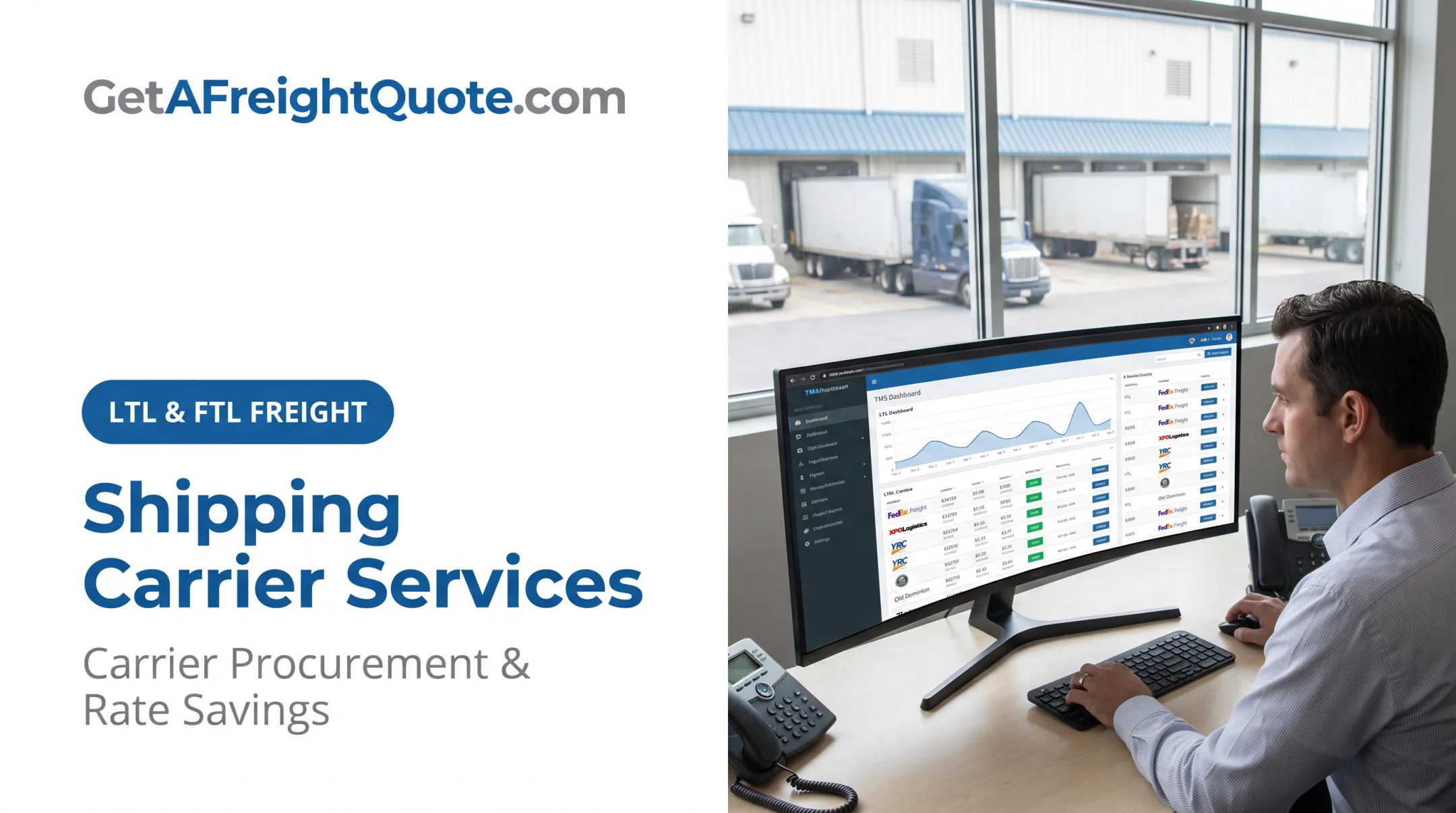
Technology-enabled TMS platforms combine software with negotiated carrier rates. Instead of calling five carriers separately, you compare options in one interface. This model gives smaller shippers access to competitive rates without Fortune 500 volume.
LTL vs. FTL: Choosing the Right Fit
Once you know who you're working with, match the mode to the freight:
LTL (Less-Than-Truckload) works for shipments that don't fill a trailer. Pricing depends on weight, freight class, and density, per NMFTA's shipping guidance.
FTL (Full-Truckload) means you pay for the entire trailer, typically a 53-foot dry van, regardless of how much space you use. It usually fits when you can fill most of the trailer or need dedicated transit.
Specialized Equipment for Minnesota's Industries
Minnesota's manufacturing and agricultural base often calls for specialized equipment:
- Flatbed for machinery, steel, and construction materials
- Reefer (refrigerated) for temperature-sensitive agricultural goods
- Tanker for liquid or gaseous materials under FMCSA's tank-vehicle regulations
- Hazmat-certified carriers for regulated hazardous materials under a separate FMCSA compliance program

What To Look for When Choosing a Minnesota Freight Shipping Partner
Price alone tells you almost nothing about whether a freight partner is good. Here's what matters.
Rate transparency. Get the base freight charge in writing, along with every accessorial fee and its trigger condition. Old Dominion's own tariff documentation confirms accessorial charges are common in LTL; the question is whether they're disclosed upfront or buried after booking.
Carrier network breadth. A provider locked into one carrier's rates can't actually shop your freight. Look for platforms that compare multiple options simultaneously.
Technology and tracking. Real-time visibility, automated documentation, and reporting tools are baseline expectations for any serious freight partner.
Customer support model. Is support purely self-service, or is there a human available when a shipment gets stuck at a terminal or a claim needs filing?
Safety and compliance record. Before booking with any carrier, check its FMCSA Safety Measurement System data. The SMS uses two years of inspection and crash data, updated monthly, across seven safety categories called BASICs.

FMCSA itself warns that SMS percentiles shouldn't be read as a complete safety rating. They're a screening tool, not a verdict.
Common Freight Shipping Challenges for Minnesota Small Businesses
Minnesota small businesses run into the same three walls repeatedly:
- Higher per-shipment rates compared to what high-volume enterprise shippers pay for identical lanes
- Limited negotiating power, since a single business rarely has enough shipment volume to command carrier attention
- No access to enterprise shipping technology, including the rate-comparison and tracking tools larger competitors take for granted
Freight pricing rewards volume. Shippers with more leverage consistently lock in better contract rates on the same lanes. You do not need to ship more on your own to close that gap—you can pool volume with other businesses in the same position.
How GetAFreightQuote.com Levels the Playing Field for Minnesota Shippers
This is exactly the gap GetAFreightQuote.com was built to close. As an authorized reseller of an enterprise-grade TMS platform, the company gives Minnesota businesses access to negotiated carrier rates typically reserved for Fortune 500-level shippers, without requiring Fortune 500-level volume.
How the savings work:
- The platform pools shipping volume across hundreds of businesses, using that combined leverage to negotiate with FedEx, UPS, USPS, and LTL carriers
- Rate reductions typically run 20–50% below retail pricing
- Under the platform's Off-Bill Incentive model, carriers pay GetAFreightQuote.com's fees directly. Clients keep 100% of the savings, with no line-item expense on their books

Compare your own rates side by side
Already have UPS, FedEx, or LTL accounts? Connect them to the TMS. The platform compares your negotiated rates against its own for the same shipment so you book the cheapest qualifying option.
Full invoice transparency
Every invoice line is audited automatically to flag unwarranted accessorials, incorrect fuel surcharges, or reweigh discrepancies before they hit your bill.
Support that scales with you
Quoting, booking, and tracking run 24/7/365. A dedicated operations team handles claims, exceptions, and scheduling when you need a person involved.
Subscription tiers grow with volume:
- Occasional shippers: no label fee
- High-volume distributors: scaled per-label pricing
- Included TMS technology typically valued at $150,000–$250,000, at no extra cost
Manufacturers and distributors that need full-truckload service can book through the same platform:
- Dry van and flatbed
- Refrigerated
- Specialized/oversized and hazmat
Frequently Asked Questions
Is Minnesota a strong market for freight shipping?
Yes. Steady driver demand and carrier stability point to a healthy freight market, which usually means more consistent capacity for businesses shipping goods across the state.
What freight service types are most available in Minnesota?
LTL, FTL, and specialized equipment are all widely available across Minnesota’s freight corridors. Long-haul and regional capacity support most common shipper needs statewide.
How much does freight shipping cost in Minnesota?
Costs depend on shipment weight, distance, freight class, density, and which carrier network you can access. Comparing multiple carrier rates side by side, rather than accepting one quote, typically uncovers real savings.
What is the difference between a freight broker and a freight carrier?
Carriers own the trucks that physically haul your freight. Brokers and TMS platforms don't own equipment — they connect you to multiple carriers so you can compare rates and service levels before booking.
Can small businesses get the same freight rates as large companies?
Yes, through volume pooling. GetAFreightQuote.com aggregates shipping volume across many businesses to negotiate rates comparable to what large enterprises secure on their own.
How do I choose the best freight shipping company for my Minnesota business?
Focus on rate transparency, carrier network size, technology and tracking capabilities, and support quality — not just the lowest quoted price. A cheap rate with hidden accessorials often costs more in the end.