Here's the frustrating part: small and mid-sized shippers often pay more per package than massive retailers, not because their operations are less efficient, but because they lack the volume leverage to negotiate better terms or access enterprise shipping technology.
This guide breaks down what parcel shipping optimization actually means, the tactics that reduce cost while protecting delivery performance, and how the right technology partner can level a playing field that's historically favored the biggest players.
Key Takeaways
- Parcel optimization blends carrier selection, packaging, routing, and technology to lower cost without slowing delivery
- DIM weight, accessorial fees, and General Rate Increases drive up parcel spend more than most shippers realize
- Multi-carrier rate shopping gives businesses of any size access to competitive pricing, not just Fortune 500 accounts
- GetAFreightQuote.com brings powerful TMS tools and negotiated rates to shippers without massive volume
What Is Parcel Shipping Optimization?
Parcel shipping optimization is the ongoing process of improving cost efficiency, delivery speed, and reliability across the entire shipment lifecycle, from the moment a carrier is selected to the final delivery at a customer's door.
In simpler terms: it's about matching the right carrier, service level, and route to each individual shipment so you minimize cost without sacrificing the customer's delivery experience.
Why does this matter more now than ever? Pitney Bowes projects U.S. parcel volume will reach 31 billion parcels by 2031, with the report's higher-growth scenario putting the total closer to 35 billion by 2029. That growth trajectory means shipping costs will keep compounding for businesses that don't have an active optimization strategy.
Getting parcel shipping right delivers a handful of concrete business outcomes:
- Lower per-package cost across your entire shipping volume
- Improved margins on every order, especially high-volume SKUs
- Faster delivery windows that meet rising customer expectations
- Stronger customer satisfaction and fewer support tickets
- Better scalability as order volume grows without a proportional cost increase
One of the biggest levers for hitting these outcomes is smarter route selection.
What Does Delivery Route Optimization Mean?
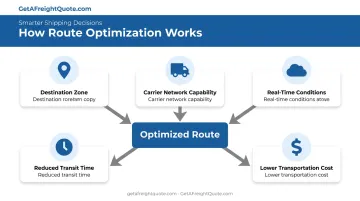
Route optimization is the process of determining the most efficient delivery path for a shipment based on destination zones, carrier network capabilities, and real-time conditions like weather disruptions or capacity constraints.
This isn't just about picking the fastest road. Route optimization directly reduces transit time and transportation costs, and it connects to bigger parcel strategy decisions such as zone skipping and choosing regional carriers over national ones for specific lanes. Get this piece right, and the savings ripple through your entire shipping operation.
Core Strategies to Optimize Parcel Shipping
This is the tactical playbook: the specific moves shippers make across carrier selection, packaging, routing, and fulfillment automation to reduce cost and improve service simultaneously.
Multi-Carrier Rate Shopping & Negotiation
Relying on a single carrier limits your leverage from day one. Multi-carrier rate shopping lets you compare real-time quotes across national and regional carriers for every single shipment, rather than accepting whatever rate your one carrier relationship offers.
Carriers are actively fighting for small and mid-volume shippers right now. According to Supply Chain Dive's coverage of the TD Cowen/AFS Freight Index, UPS and FedEx discounting resumed an upward trend in late 2025. Average discounts rose 0.3 percentage points for Ground and 0.7 points for Express in a single quarter.
Attracting SMB shippers has become a strategic priority for both carriers' ground networks.
This is exactly where a platform like GetAFreightQuote.com fits in. As an authorized TMS reseller, it offers pre-negotiated carrier rates typically reserved for Fortune 500 shipment volumes, without requiring Fortune 500 volume to access them.
Shippers can also add their own existing carrier accounts alongside these negotiated rates for direct, side-by-side comparison, so you're never guessing which option is actually cheaper.
DIM Weight & Packaging Optimization
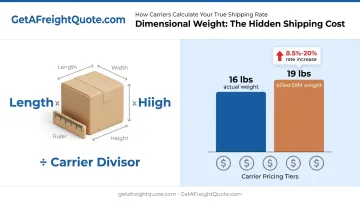
Dimensional weight (DIM) pricing charges you based on package volume, not actual weight. Both UPS and FedEx calculate DIM weight by multiplying length x width x height and dividing by a set divisor (139 for FedEx, 139–166 for UPS depending on rate type).
An oversized box for a lightweight item can push your shipment into a much costlier rate tier.
The impact is real. One industry analysis found that a package shipped in oversized packaging saw its billed weight jump from 16 pounds to 19 pounds, a rate increase of 8.5% to over 20% depending on service level.
To avoid this trap:
- Audit SKU dimensions regularly, not just once during onboarding
- Right-size packaging to eliminate wasted cubic space and void fill
- Automated right-sizing can reduce parcel cube by up to 50%, according to DC Velocity's reporting on parcel packaging trends
Consolidation & Zone Skipping
Combining orders by destination and using zone skipping (bulk-transporting parcels to a regional hub near recipients before injecting them into the carrier network) reduces per-package transportation cost by bypassing multiple expensive carrier zones.
Pitney Bowes identifies subscription boxes and high-volume drop shipments as particularly well-suited to this approach. One published example compared standard parcel movement costing $30,000 against a zone-skipping approach combining linehaul transport and per-parcel injection fees, landing at $24,000, a $6,000 savings on the same volume.
Strategic fulfillment center placement matters here too. The closer your distribution points sit to customer density centers, the fewer zones each package has to cross, and the lower your average cost per shipment.
Fulfillment Automation & Delivery Flexibility
Automating order routing, label generation, and carrier selection eliminates manual errors and processing bottlenecks that slow down fulfillment teams. Instead of a warehouse employee manually choosing a carrier for each order, the system does it based on pre-set rules and live rate data.
Offering multiple delivery speed options, economy, ground, and expedited, backed by real transit-time data ensures customers aren't overpaying for speed they don't actually need. Most buyers will choose a slower, cheaper option at checkout if the estimated delivery date is clearly displayed.
Managing Parcel Spend: Rates, Surcharges & Audits
Base shipping rates only tell part of the story. Accessorial fees, delivery area surcharges, address correction fees, and peak season surcharges often account for a surprisingly large share of total parcel spend.
Rates keep climbing, too. FedEx announced an average 5.9% increase in standard list rates for U.S. package services effective January 2026. Accessorial fees are climbing just as fast:
- Address correction fees can run as high as $175.25 per shipment under UPS's current accessorial schedule
- Peak season demand surcharges have added $8.25 per package for additional handling
- Oversized items have carried a $90.50 per package surcharge during recent holiday peaks
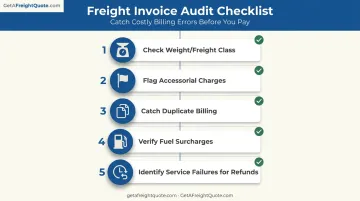
These fees compound quickly if nobody's watching them closely. That's why regular invoice audits matter:
- Check for incorrect weight or freight classifications that inflate charges without reflecting the actual shipment
- Flag unauthorized accessorial charges before they're paid, not after
- Catch duplicate billing on the same shipment or service
- Verify fuel surcharge calculations against current carrier tables (FedEx and UPS have issued more than 10 combined fuel table updates since early 2024)
- Identify service failures eligible for refunds under carrier guarantees
Even a 2–3% billing error rate compounds into significant annual losses at scale. GetAFreightQuote.com's audit process runs automated checks within its TMS platform, catching unwarranted accessorials before payment and running weekly post-audit cycles on prior shipments to surface missed refunds.
Full rate transparency before booking means shippers can budget accurately and compare true landed cost across carriers, rather than discovering hidden fees after the invoice arrives.
Historical shipment data (weight distribution, zone patterns, volume trends) also becomes leverage. Walking into a contract renegotiation with a documented shipping profile puts you in a far stronger position than showing up with rough estimates.
Technology's Role in Parcel Shipping Optimization
A Transportation Management System centralizes shipment data, automates carrier selection, and acts as a single source of truth across fulfillment, warehouse management, and order management systems. Instead of juggling separate carrier portals and spreadsheets, everything lives in one dashboard.
That said, TMS adoption among smaller shippers remains surprisingly low. One industry survey found only about 10% of smaller shippers had adopted a TMS platform, compared to roughly 25% of midsized firms. That gap represents real missed savings for businesses still managing shipments manually.
Closing that gap pays off in customer-facing visibility, too. Proactive, real-time tracking reduces "where's my package" support inquiries and protects brand reputation, since customers who can track their own shipment rarely need to contact support at all.
Beyond day-to-day tracking, predictive analytics and historical performance data let shippers model scenarios, like shifting carriers or adjusting service levels, before committing to a change. GetAFreightQuote.com's TMS implementation, valued between $150,000 and $250,000 but provided at no cost to customers, includes:
- Provides real-time shipment execution visible 24/7 across all carriers
- Automates routing and tendering
- Delivers predictive analytics and reporting
- Tracks costs with automated exception alerts
- Consolidates e-billing across every carrier and mode
For larger operations, the platform's ParcelSpend Intelligence tool adds over 25 actionable insights, including parcel margin analysis and cost variance reporting, giving spend visibility that used to require a dedicated analytics team.
Overcoming Common Parcel Shipping Challenges
Shippers today face a genuine squeeze: customer delivery expectations keep rising while margins keep tightening. Add fragmented shipment data scattered across disconnected systems and capacity constraints during peak season, and it's easy to see why so many businesses feel stuck.
Holiday volume alone is projected to hit 2.3 billion packages in the U.S., the highest total since 2022, according to Supply Chain Dive's holiday delivery forecast. That surge brings real capacity risk for shippers who haven't planned ahead.
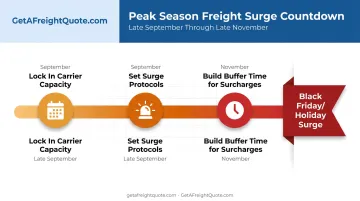
Proactive peak season planning helps avoid getting caught off guard:
- Lock in carrier capacity commitments before Black Friday and the holiday surge hit
- Set surge protocols in advance so your team isn't scrambling mid-season
- Build in buffer time for known peak surcharge windows (typically late September through late November)
These proactive strategies work best when paired with a shipping partner built to execute them. GetAFreightQuote.com pairs enterprise-grade TMS technology with negotiated carrier rates and hands-on support for small and mid-sized shippers.
The Off-Bill Incentive model keeps costs aligned: carriers fund the fees, not the shipper, so there's no upfront cost and 100% of realized savings stay with the client. Businesses can focus on running operations while shipments get optimized and delivered at the best possible price behind the scenes.
Frequently Asked Questions
What is shipping optimization?
Shipping optimization improves cost, speed, and reliability across carrier selection, packaging, and routing decisions. It matches each shipment to the right carrier and service level to minimize expense without hurting delivery experience.
What does delivery route optimization mean?
Route optimization finds the most efficient delivery path based on destination zone, carrier network capability, and real-time conditions like weather or capacity limits, reducing both transit time and cost.
How is parcel shipping different from freight shipping?
Parcel shipping covers individual small packages moved through a carrier's existing network, typically under 150 pounds. Freight or LTL shipping involves palletized goods priced by weight and freight class rather than a flat carrier rate.
What is DIM weight and how does it affect shipping costs?
DIM weight pricing charges by a package's volume (length x width x height divided by a carrier-set divisor) rather than its actual weight. Oversized packaging can push a lightweight item into a costlier rate tier.
How can small businesses get better parcel shipping rates?
Multi-carrier comparison tools and TMS platforms like GetAFreightQuote.com give smaller shippers access to negotiated rates without needing enterprise-level volume. Even shippers sending just a handful of packages weekly can access meaningful discounts through tiered subscription models.
What technology is used for parcel shipping optimization?
Core technologies include TMS platforms for centralized carrier management, rate-shopping tools for real-time price comparison, live tracking systems, and predictive analytics that model cost scenarios before changes are made.