Baymard's research on cart abandonment found that 40% of online shoppers who bailed on a purchase cited extra costs like shipping, tax, or fees, while another 20% pointed to delivery that was too slow (Baymard Institute). That's before a customer ever asks about your product quality.
For small and mid-sized ecommerce businesses, this stings extra. Larger retailers negotiate volume-based rates that smaller shippers simply can't access on their own. UPS's own 2025 rate schedule shows discount tables built for shippers billed over 20,000 packages a week. If you're shipping 200 packages weekly, you're paying a different price for the same box.
Choosing the right shipping partner isn't about finding the cheapest carrier. It's about protecting your margins while keeping customers happy enough to come back.
Key Takeaways
- Shipping partner choice drives cost, delivery speed, and customer trust together
- A multi-carrier strategy plus shipping technology outperforms any single "best" carrier
- TMS platforms and freight resellers can unlock enterprise-level rates for smaller shippers
- Evaluate partners on transparency, reliability, and flexibility, not price alone
What Is an Ecommerce Shipping Partner?
A shipping partner is any carrier, courier, or logistics platform that moves orders from your warehouse to your customer's door. In practice, most ecommerce brands choose between two categories:
- Individual carriers — UPS, FedEx, USPS, DHL. You deal directly with one network.
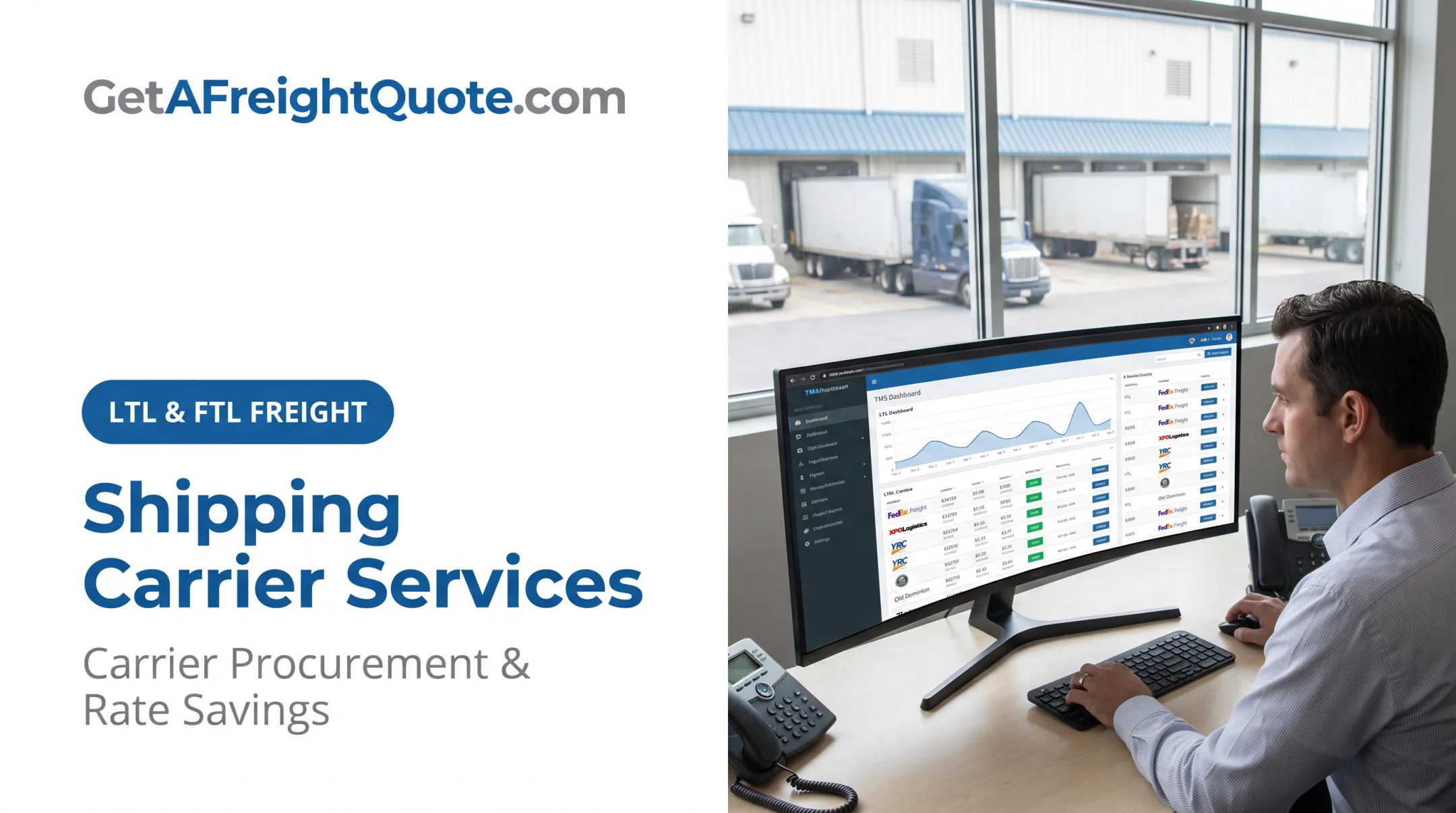
- Shipping platforms/TMS solutions — Software that aggregates multiple carriers, so you compare and book across networks from one dashboard.
Core Components of a Shipping Partnership
A strong shipping partnership is more than a truck at the dock. Three components drive the results:
- Rate access and carrier network — Negotiated rates swing hard with volume. A 20,000-package-a-week shipper sees tiers a 200-package shipper never gets, which is where smaller brands quietly lose margin.
- Technology and tracking — Real-time tracking and instant labels cut the flood of "where is my order" emails that drain support hours.
- Support and account management — When a shipment goes sideways, hands-on help beats a self-service portal.
Narvar estimates a single WISMO ("where is my order") inquiry can cost up to $6 to handle (Narvar). Multiply that by hundreds of tickets a month and the cost stacks fast.

Why Ecommerce Businesses Rely on the Right Shipping Partner
The right partner delivers measurable business outcomes:
- Lower shipping costs via negotiated or aggregated rates
- Fewer failed deliveries and damaged-package claims
- Stronger retention from reliable, predictable delivery
- Room to scale volume without building an internal logistics team
What to Consider When Choosing the Right Ecommerce Shipping Partner
These factors connect a carrier's raw capabilities to outcomes you can actually measure: cost per shipment, delivery SLA compliance, and customer satisfaction.
Cost Transparency and Scalability
Hidden fees are margin killers. UPS's 2025 demand surcharge schedule shows residential, oversize, and additional-handling fees ranging from a few dollars to over $500 per package depending on the period (UPS 2025 Demand Surcharges). A quote that looks competitive on paper can quietly balloon once surcharges stack.
Cost control also depends on peak flexibility. Your partner needs to absorb Black Friday-level spikes without a mid-surge renegotiation. If the contract locks you into fixed volume tiers, seasonal growth becomes a liability instead of an opportunity.
Track: cost per shipment and total landed shipping cost (every surcharge included), plus whether SLAs hold when volume spikes.
Reliability and Network Coverage
On-time delivery and damage-free handling directly influence whether a customer buys from you again. During Cyber Week 2024, ShipMatrix reported on-time rates of 98.9% for UPS, 98.7% for FedEx, and 97.4% for USPS across more than 100 million parcels shipped daily. That's a strong peak benchmark, but it's not a guarantee for your specific lanes.
Coverage has to grow with you. A carrier that serves your top ZIP codes well today may leave gaps as you expand into new regions. Multi-carrier access prevents service dead zones as your customer base grows.
Watch: on-time delivery percentage, claims/damage rate, share of ZIP codes covered, and delivery speed by zone.

Technology, Tracking, and Claims Handling
Real-time tracking and integrations with platforms like Shopify or WooCommerce cut manual work dramatically. If your team is manually pasting tracking numbers into emails, that's hours you could reclaim.
When something still goes wrong, speed matters. UPS says claims typically resolve in 8-10 business days barring further investigation; USPS usually issues decisions within 5-10 days. Ask any prospective partner to put their own numbers in writing.
Measure: drop in "where is my order" support tickets and average claims resolution time.
How GetAFreightQuote.com Can Help
Freight and larger parcel/LTL shipments come with their own layer of complexity: surcharges, freight class disputes, and carrier capacity limits that a standard parcel carrier account won't solve. GetAFreightQuote.com gives small and mid-sized shippers access to enterprise-grade rates built for those situations.
Here's what sets it apart from a single-carrier relationship:
- Authorized TMS reseller access to the same rate-shopping tools larger enterprises use
- Negotiated carrier rates usually reserved for Fortune 500 volumes, with documented savings of 20-50% below retail
- Full rate transparency before booking, with no hidden fees
- Parcel advisory on an Off-Bill Incentive model, so clients keep 100% of realized savings
- Bring your own UPS, FedEx, or LTL accounts for side-by-side comparison instead of locking into one network
- Hands-on support plus self-service tools, including 24/7 platform access and dedicated managed LTL teams
Pricing scales with volume. Tiers run from QuickShip (occasional shippers, no label fee) up through Platinum (2,501+ shipments weekly at 5 cents per label). A business shipping 50 orders a week isn't stuck paying enterprise software prices to reach enterprise-level rates.

Conclusion
Pick a partner aligned with your product type, customer base, and current growth stage—not the carrier with the biggest name. A furniture seller shipping heavy LTL freight has different priorities than a jewelry brand shipping small parcels nationwide.
Pricing transparency and reliability matter more over time than the lowest sticker rate you saw in a sales email. Surcharges and claims delays erase savings quickly.
Review your shipping partner relationships periodically — order volume, customer expectations, and carrier pricing all shift. What worked at 50 orders a week may cost you at 500, so reassess as you scale.
Frequently Asked Questions
Who are the major shipping companies for ecommerce?
For US parcel, the main national carriers are UPS, FedEx, USPS, and DHL. Multi-carrier platforms and freight brokers sit alongside them and help you compare rates across providers based on shipment type and volume.
What is the best shipping platform for ecommerce?
"Best" depends on your order volume, product size, and whether you need parcel or freight-level shipping. Multi-carrier platforms typically outperform single-carrier setups because they let you compare rates in real time.
How do I choose a reliable shipping carrier for my small business?
Compare rate transparency, tracking quality, and support responsiveness. Ask for claims-resolution timelines and on-time delivery data by zone—not marketing claims.
What factors affect ecommerce shipping rates?
Package weight and dimensions, shipping distance, and shipment volume all drive pricing. Negotiated rates tied to higher volume commitments typically bring the biggest cost reductions.
Should small ecommerce businesses use freight brokers for large shipments?
Yes—brokers often secure better LTL rates by aggregating volume across many shippers. Always compare a broker quote against a direct carrier quote before you commit.
How often should I review my shipping partner relationships?
Review rates and performance quarterly or biannually as your order volume changes. A partnership that made sense at 100 shipments a week may no longer be your best option at 1,000.