Here's the quick version: a standard 53-foot dry van holds 26 pallets single-stacked or up to 52 double-stacked. But that number shifts based on pallet size, loading pattern, and how much your freight weighs.
This guide breaks down trailer dimensions, pallet sizes, loading methods, weight limits, and how to pick the shipping strategy that matches your actual pallet count.
Key Takeaways
- A 53-foot trailer holds 26 standard 48"x40" pallets straight, 30 pinwheeled, or 52 double-stacked.
- Capacity depends on pallet size, loading method, and weight limits (42,000-45,000 lbs cargo).
- Non-standard pallet sizes like 42"x42" or 36"x36" change your total count significantly.
- Loads of 20+ pallets usually cost less as full truckload; smaller shipments often favor LTL.
Quick Answer: Pallet Capacity by Loading Pattern
A 53-foot dry van has an interior floor length of roughly 636 inches, an interior width around 98-101 inches, and interior height between 108-111 inches, depending on the trailer manufacturer. Those three measurements define your entire cargo envelope.
For standard 48"x40" pallets loaded straight (long edge parallel to the trailer wall), the math is simple: two pallets fit side by side across the width, and the trailer floor holds 13 rows front to back. That's 26 pallets in a single layer.
Double-stacking (placing one pallet on top of another) can push that number to 52 pallets, assuming:
- Combined stack height clears the interior ceiling
- Product can bear the weight of a second pallet without crushing
- Total shipment weight stays under legal limits
Pinwheel loading tightens up wasted space between pallets, arranging them in a rotating pattern that lifts the single-layer count to 28 pallets. A more aggressive turned loading pattern, which alternates pallet orientation row by row, can push that count to 30 pallets, depending on how well the freight interlocks.
Here's how the four patterns stack up:
| Loading Pattern | Pallets Fit |
|---|---|
| Straight (single layer) | 26 |
| Pinwheel | 28 |
| Turned | Up to 30 |
| Double-stacked | Up to 52 |
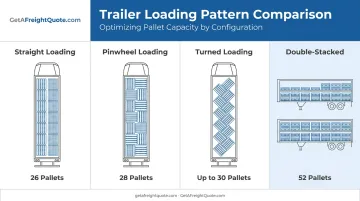
These figures assume standard GMA pallets and ideal loading conditions. Actual capacity always comes down to pallet size and cargo weight, and the next two sections break down exactly how.
Standard Pallet Sizes and How They Affect Capacity
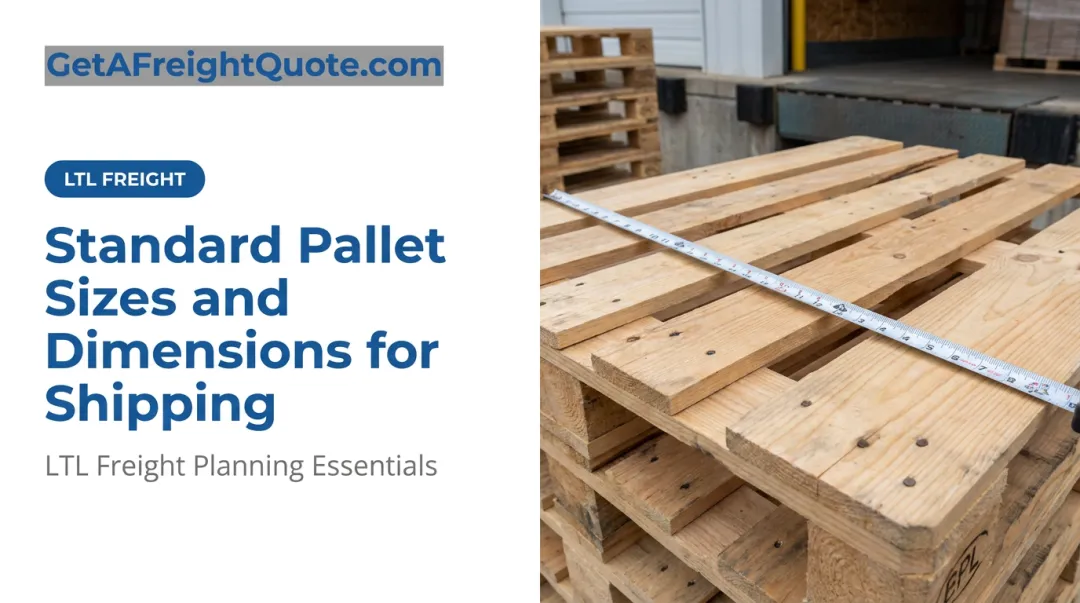
The 48"x40" GMA pallet is the default size across U.S. grocery, retail, and general manufacturing. But it's not as dominant as most shippers assume.
According to the National Wooden Pallet and Container Association, only about one-third of pallets in circulation are this standard size. Two out of every three pallets you encounter could be a different footprint entirely.
That matters because pallet size directly changes how many units fit in your trailer.
Common Pallet Sizes and Their Uses
| Pallet Size | Typical Use | Approx. 53-Foot Capacity |
|---|---|---|
| 48"x40" (GMA standard) | Grocery, retail, general manufacturing | 26 |
| 42"x42" | Paint, beverage, telecom equipment | ~30 |
| 48"x48" | Drums, barrels, industrial freight | ~26 |
| 36"x36" | Beverage distribution | ~34 |
| 40"x24" (half pallet) | Retail displays, small-batch orders | Varies by overhang |
These counts come from industry loading data, but treat them as planning estimates, not guarantees. Always verify current figures with your carrier before booking, since usable floor length varies slightly by trailer make.
Height and Overhang Still Matter
Pallet footprint is only half the equation. A 53-foot trailer's usable cargo height typically runs 8-9 feet, and that has to account for the loaded pallet height, product included, not just the empty pallet.
Product overhang eats into your available floor space too. If goods extend past the pallet edges, you lose the ability to load pallets flush against each other. Measure the full footprint of what you're shipping, not just the base pallet dimensions, before calculating how many will fit.
Pallet Loading Patterns Explained: Straight, Turned, and Pinwheel
How you arrange pallets inside the trailer changes your total count by several units — sometimes enough to avoid needing a second truck entirely.
Straight Loading
Straight loading places the pallet's long edge parallel to the trailer wall. It's the fastest method to load and unload, and it works well for standard freight that doesn't need maximum density. The tradeoff: it's less space-efficient, and pallets can shift more during transit since there's less interlocking contact between units.
Turned Loading
Turned loading rotates the pallet so its long edge faces the trailer doors instead. Because a 40-inch pallet width fits more efficiently into a 98-101-inch trailer width than a straight-loaded 48-inch length does, this method can add 2-4 more pallets to your load compared to straight loading.
It does require pallets that can handle four-way forklift access, and freight can't overhang enough to block the two-across arrangement.
Pinwheel Loading
Pinwheeling alternates orientation, one pallet straight, the next turned, interlocking the units to close gaps that straight or turned loading alone would leave open. This typically produces the highest single-layer pallet count, often reaching 28 standard pallets in a 53-foot trailer.
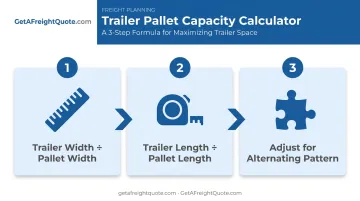
Here's the simplified math shippers can replicate:
- Divide trailer width (98-101") by pallet width to see how many fit side by side
- Divide trailer length (~636") by pallet length to estimate rows
- Adjust for the alternating pattern, which typically recovers 8-12 inches of otherwise wasted space per row
The catch is labor. Pinwheeling takes longer to load and requires more skilled forklift operators, so the extra pallets can come with added handling costs that partially offset the space savings.
When to Use Each Pattern
- Straight: Ideal for speed, simple freight, and loads that don't need maximum capacity
- Turned or pinwheel: Choose this when every available pallet position matters and skilled labor is on hand
- Alternating single/double rows: Keeps axle weight balanced on heavy freight while still using available space
Weight Limits and Cargo Considerations
Federal rules cap total gross vehicle weight at 80,000 lbs, including the tractor and trailer, according to the Federal Highway Administration. After subtracting tractor and trailer tare weight, that leaves roughly 42,000-45,000 lbs of usable cargo capacity for most 53-foot dry vans.
This is where a lot of shippers get surprised. Trailers don't just run out of floor space; they often "weigh out" before they "cube out." Here's a quick example:
- Usable cargo capacity: 44,000 lbs
- Pallet count: 26
- Allowable weight per pallet: 44,000 ÷ 26 = ~1,692 lbs per pallet
If your average pallet weighs more than that, you'll hit the weight limit before you fill all 26 floor positions, regardless of how much open space remains.
Weight isn't the only ceiling on your count, though. Fragile, top-heavy, or irregularly shaped freight often can't be double-stacked safely, no matter how much weight allowance or vertical space is left. That caps your practical capacity at floor positions only, even if the math suggests 52 pallets would fit.
Choosing the Right Shipping Strategy for Your Pallet Count
Once you know your pallet count, the next decision is which shipping method makes sense.
The general rule of thumb:
- 20+ standard pallets — usually most cost-effective as full truckload (FTL)
- 10-15 pallets or fewer — often cheaper via LTL (less-than-truckload)
- In between — worth comparing both, since rates fluctuate by lane and carrier
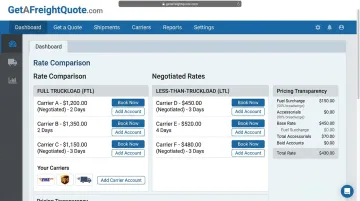
Manually comparing FTL and LTL rates across multiple carriers takes hours of phone calls and email chains. A modern TMS platform solves that by pulling negotiated carrier rates into one side-by-side view. You can see pricing transparency across service types instantly, instead of guessing which mode wins on a given lane.
That's the kind of enterprise-grade tool GetAFreightQuote.com gives small and mid-sized businesses access to. The platform also lets shippers add their own existing carrier accounts alongside its negotiated rates, so you're always comparing against your best available pricing, not just one carrier's quote.
Before booking a trailer, get an accurate, no-hidden-fee freight quote based on your actual pallet count, weight, and destination. It's the fastest way to confirm the right trailer size, the right shipping mode, and a rate you can trust before the truck ever shows up.
Frequently Asked Questions
How many skids will fit on a 53-foot trailer?
"Skids" and "pallets" refer to the same unit in most shipping contexts. The answer matches standard pallet capacity: 26-30 single-stacked or up to 52 double-stacked, depending on pallet size and loading method.
How many pallets are on a full trailer?
A "full" 53-foot trailer typically means 26-30 pallets single-stacked, depending on loading pattern, or up to 52 if double-stacked, assuming the cargo can support stacking and stays within weight limits.
How many pallets fit in a 48-foot trailer?
A 48-foot trailer holds about 24 standard pallets single-stacked and up to 48 double-stacked, roughly two fewer floor positions than a 53-foot trailer.
Can you double-stack pallets in a 53-foot trailer?
Yes, if the combined stack height fits the trailer's interior clearance, the cargo can bear the weight without damage, and total weight stays under legal limits.
What's the difference between a pallet and a skid?
The terms are used interchangeably across most of North America. Technically, a "skid" sometimes refers to a single-deck platform without a bottom set of boards.
How do I know if my shipment needs a full truckload or LTL?
Shipment size, pallet count, and delivery timeline determine the best fit. Platforms like GetAFreightQuote.com's rate-shopping tool let you compare LTL and FTL quotes side by side, making it easy to confirm the more cost-effective option.