Here's the problem: enterprise-grade visibility tools have traditionally been priced for Fortune 500 shippers, leaving small and mid-sized businesses stuck making carrier check-in calls and updating spreadsheets manually. That gap is closing.
This guide breaks down what supply chain visibility software actually does, which features matter most, and how businesses of any size can access these tools without an enterprise budget.
Key Takeaways
- Track shipments, carriers, and inventory from one real-time dashboard instead of scattered systems
- Only 20% of shippers report satisfaction with their current visibility from logistics providers
- TMS resellers now give small businesses access to the same tech and rates as large enterprises
- The right platform pays for itself through freight savings, not soft operational perks alone
What Is Supply Chain Visibility Software?
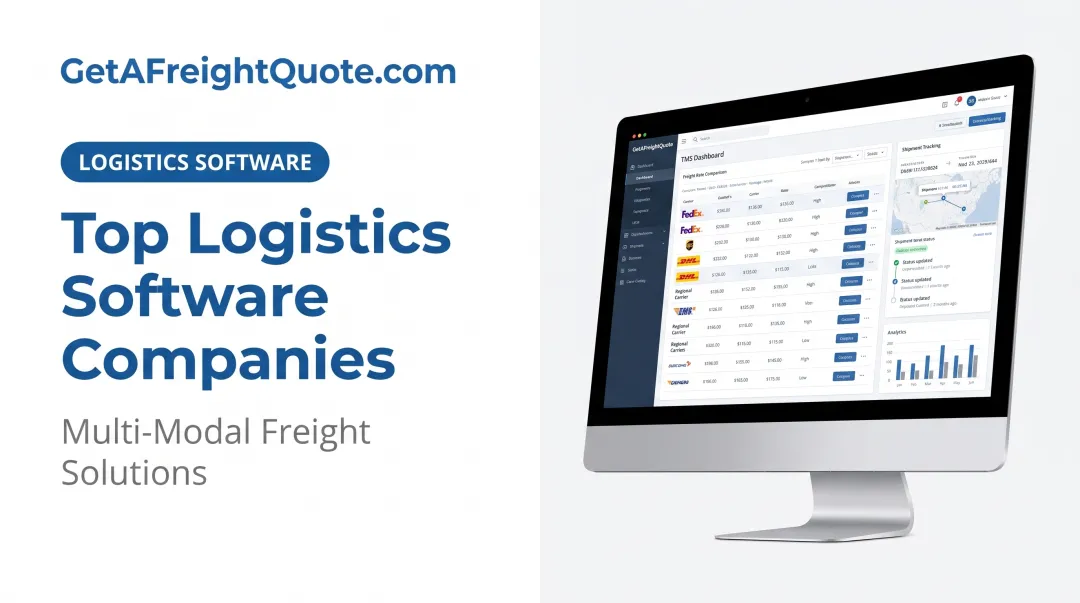
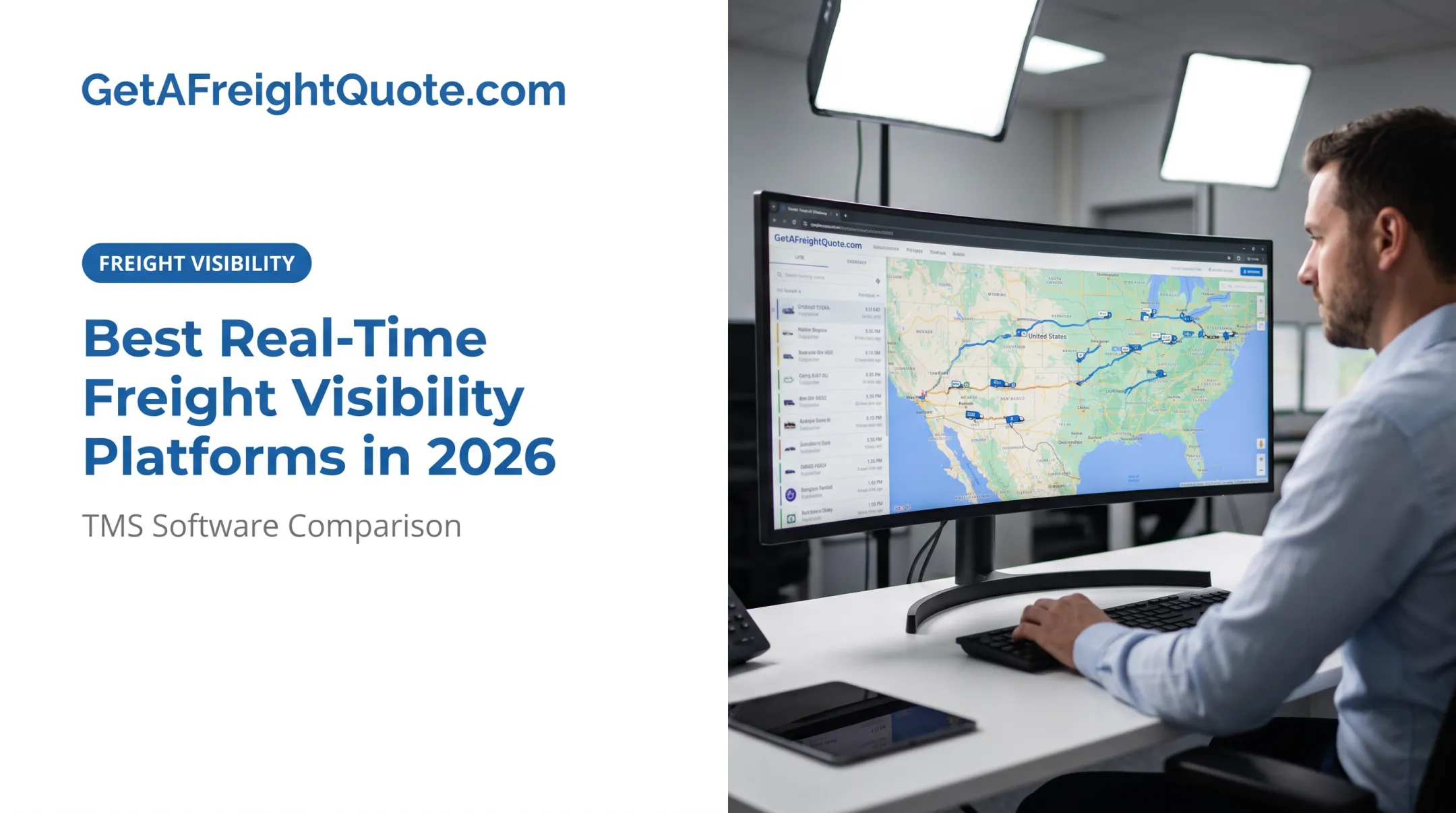
Supply chain visibility software is a digital platform that consolidates shipment and inventory data in one place. It pulls feeds from carriers, warehouses, transportation management systems (TMS), ERP platforms, and often GPS or telematics.
Instead of logging into five carrier portals to check five shipments, you work from a single dashboard.
There's a real difference between basic tracking and end-to-end visibility:
- Basic tracking tells you where a package is between point A and point B
- End-to-end visibility covers inventory levels, order status, carrier performance, and exceptions across your entire network
Visibility Software vs. TMS: What's the Difference?
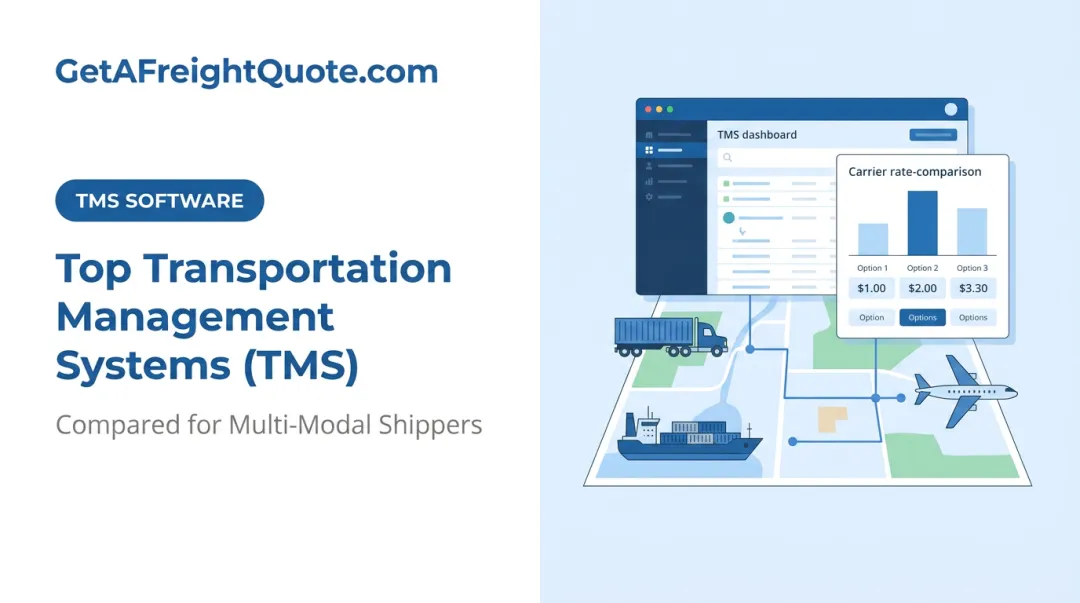
Gartner defines a real-time transportation visibility platform as software that provides live location and status insights on orders. A TMS is broader. It plans, executes, and manages freight movement — including sourcing, carrier selection, and freight audit.
Many modern platforms combine both. GetAFreightQuote.com's TMS, for example, handles electronic quoting, booking, and tendering, while also providing 24/7 shipment tracking across carriers and modes. You get execution and monitoring in a single system rather than stitching together separate tools.

Why Supply Chain Visibility Matters for Growing Businesses
Customers expect real-time updates now. A FreightWaves/Tive survey found that only 20% of shippers were satisfied with the communication and visibility they received from logistics providers. Over 80% wanted proactive alerts and real-time insights. That's a massive gap between expectation and reality.
Growth compounds the problem. Add a second regional carrier, a new 3PL, or a distribution center in another state, and blind spots multiply fast. What worked with one carrier relationship falls apart across five.
Why Reactive Tracking Falls Short
Weather delays and capacity shortages aren't rare events anymore. They're routine. Tender rejection rates (a signal of carrier capacity strain) peaked at 9.8% in 2024 ahead of storm season, up from the 4.7%–5.9% range the year before. That volatility makes reactive tracking insufficient. You need to see problems coming, not just confirm they happened.
Visibility gaps run deeper than most businesses realize. According to Zebra's 2023 study, 91% of decision-makers expect to invest in technology to improve visibility within five years. Most companies already know they're working with limited data.
Without a centralized system, smaller businesses absorb costs larger companies avoid entirely:
- Overpaying for shipments due to limited rate comparison
- Hidden accessorial fees adding hundreds of dollars per shipment
- Billing errors from wrong dimensions or missed instructions costing thousands annually
- Manual admin work eating up roughly 520 hours per employee per year

Key Features to Look for in Supply Chain Visibility Software
Feature sets vary widely. Prioritize capabilities that cut cost, prevent surprises, and keep every shipment in one place:
- Real-time tracking across all modes - parcel, LTL, and truckload in one view, not three separate logins
- Predictive ETAs - powered by traffic and weather data to cut down "where's my order" calls before they happen
- Exception management - automated alerts for delays, damage, or route deviations so problems get flagged before customers notice
- Carrier performance analytics - delivery consistency, claims ratios, and service quality so you know which carriers earn your freight
- System integrations - connections to ERP, WMS, and accounting software so data doesn't need re-entering by hand
- Rate and invoice transparency - exact costs upfront, plus invoice audits after the fact
Why Rate Transparency Deserves Special Attention
Many platforms bury fees in fine print. A solid visibility solution should show live parcel, LTL, and FTL rates side by side, with no surprise accessorial charges after the fact. Platforms built around this principle typically show negotiated parcel rates running 20-50% below retail. Automated auditing then flags unwarranted charges before they hit your bill.
Enterprise-Grade Visibility Without Enterprise Pricing
For decades, enterprise supply chain visibility tools stayed locked behind high-volume shipping commitments. A 2022 FreightWaves report found TMS adoption was about 50% among large shippers, but only 25% for medium shippers and just 10% for small shippers. Cost and integration complexity were the usual culprits.
That access barrier has come down. Authorized TMS resellers like GetAFreightQuote.com now give small and mid-sized businesses access to the same negotiated carrier rates and visibility tools that used to require Fortune 500-level volume.
How it works in practice:
- Connect your existing UPS, FedEx, or LTL carrier accounts to the platform.
- The system rate-shops your negotiated rates against the platform's own pre-negotiated rates.
- Both options appear side by side for every shipment.
- Book whichever rate is cheaper. No exclusivity required.

This means you keep your existing carrier relationships while gaining access to pooled negotiated pricing. Full invoice transparency and no hidden fees are built into the model, not an add-on.
For businesses running managed LTL services, the value gets even more direct. A full TMS implementation typically valued at $150,000–$250,000 is included at no added cost. Funding comes through an Off-Bill Incentive model: carriers cover the fee, and clients keep 100% of the savings.
How to Choose the Right Supply Chain Visibility Solution
Before you commit to any platform, work through these four questions:
- What's your actual visibility gap? Are you missing basic tracking, or do you lack insight into inventory, fleet status, or supplier performance too? Different gaps call for different tools.
- How well does it integrate with what you already run? A platform that requires manual data re-entry into your ERP or accounting software defeats the purpose.
- Will it scale with you? Look for a system that handles growing shipment volume without forcing a full platform switch a year later.
- Does the cost make sense against the return? Factor in freight savings and reduced administrative time, not just the sticker price. Many platforms are structured so savings outpace the fee within the first few shipments.
A quick gap-analysis conversation with a logistics provider—sometimes called a strategic freight assessment—can show where cost, visibility, and control are leaking from your network. Run that check before you sign anything.
8 Benefits of Supply Chain Visibility Software
The payoff for adopting visibility software shows up across several parts of the business:
- Improves on-time delivery with predictive ETAs and proactive alerts that catch delays early
- Cuts transportation costs through side-by-side carrier rate comparison, with typical LTL savings in the 15–35% range
- Speeds problem resolution via automated exception alerts instead of manual status checks
- Strengthens customer experience with accurate self-service tracking that cuts support inquiries
- Frees staff time as quoting, booking, and tracking consolidate into one dashboard instead of five
- Backs carrier negotiations with real performance data instead of guesswork
- Reduces billing errors through automated invoice auditing and consolidated e-billing
- Locks in budget predictability with rate transparency that removes surprise accessorial charges

Frequently Asked Questions
What is supply chain visibility software?
It's a platform that consolidates shipment, carrier, and inventory data from multiple sources into one real-time view. Instead of checking five carrier portals separately, you see everything in a single dashboard.
Why is supply chain visibility important for small businesses?
It helps smaller shippers compete with larger companies by reducing costly delays, cutting hidden fees, and improving how they communicate with customers about deliveries. Without it, SMBs often absorb costs bigger shippers avoid.
How is supply chain visibility software different from a TMS?
Visibility software focuses on monitoring, showing shipment status, location, and exceptions in real time. A TMS handles planning and execution, including quoting, booking, and carrier selection. Many modern platforms combine both functions.
What features should I look for in visibility software?
Prioritize real-time tracking across all shipping modes, predictive ETAs, exception alerts, ERP/WMS integrations, and full rate and invoice transparency. Carrier performance analytics matter too if you're comparing providers.
Can small businesses afford enterprise-grade visibility tools?
Yes. TMS resellers now offer volume-based pricing models, sometimes with no upfront software cost, that make enterprise-grade tools accessible at small-business pricing. Savings from better rates typically exceed any platform fees.
How do I get started with supply chain visibility software?
Start by identifying your specific visibility gaps, then request a quote to compare live rates and features. Most platforms let you review options before registering, so you can test the fit before committing.